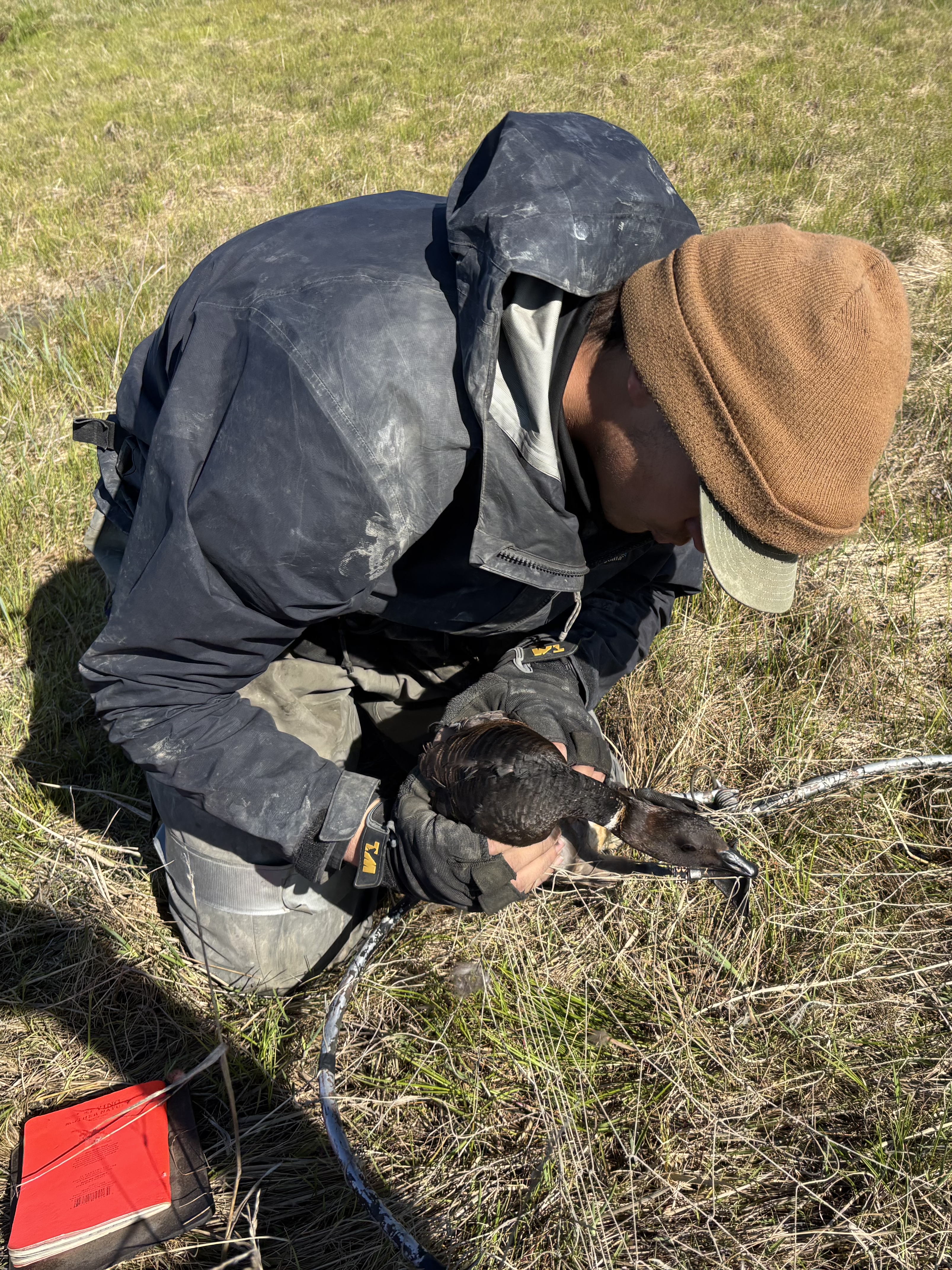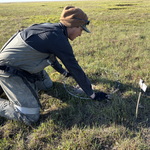

Baby development and clutch size (number of eggs laid per mating couple) are good metrics when looking at a successful population, but parents’ survival is also important. That is why scientists also work on banding adults and affixing geo trackers to assess their migration routes. Trapping geese can be tough. Geese are big, strong, smarter than you think, and…they can fly away from you! To level the playing field James Golden used two methods to trap brant geese. One is just a dip net. This is a net similar to what you may use if you are trying to land a big fish when you are out fishing. If the female is hesitant to leave her nest as you sneak up on her, you just drop the net over her body. Most females are a little craftier and don’t allow you to do the sneak up dip net method and require a bow net trap for capture. A bow net is a circular net that has a spring halfway around the circle. You pull back the net to compress the circle into a crescent.
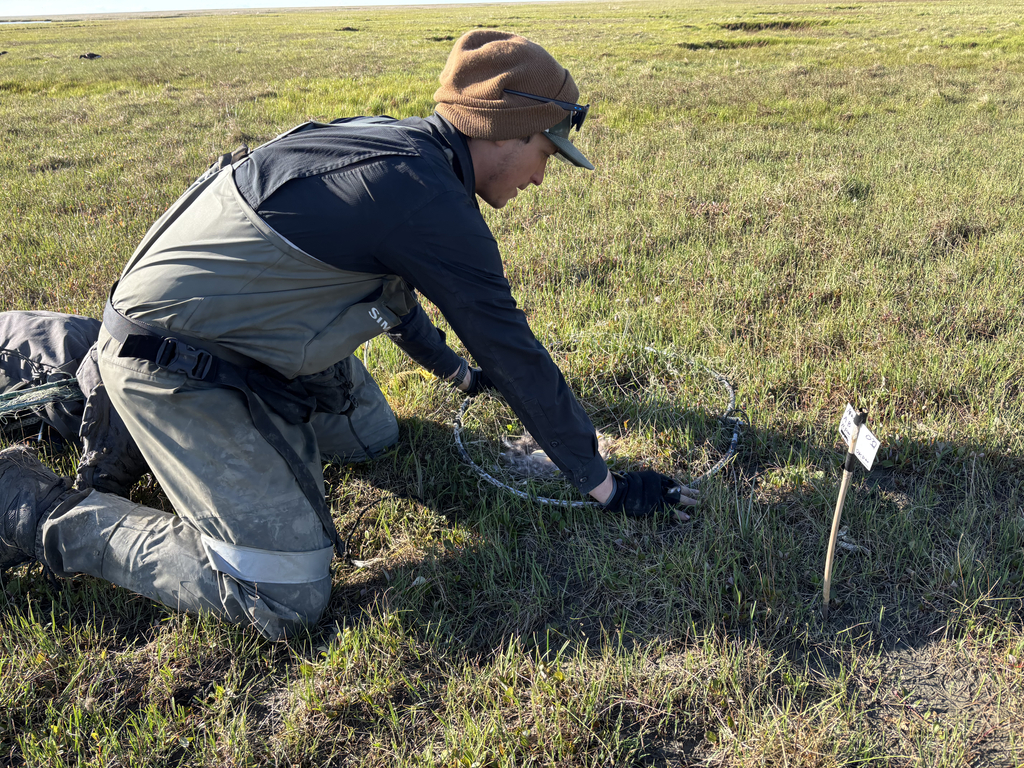
Once you have the trap pulled over you cover the edges of the net with grass to hide it from the parents. Put a trigger attached to a string to hold the net together. Then you draw that trigger line out for about 100 meters. Once you are a good distance away from the trap you make yourselves “hidden”. This is kind of tough in the flats of the tundra but lying down on your belly or back decreases your profile and in turn the threat you might be registering in the goose’s brain.
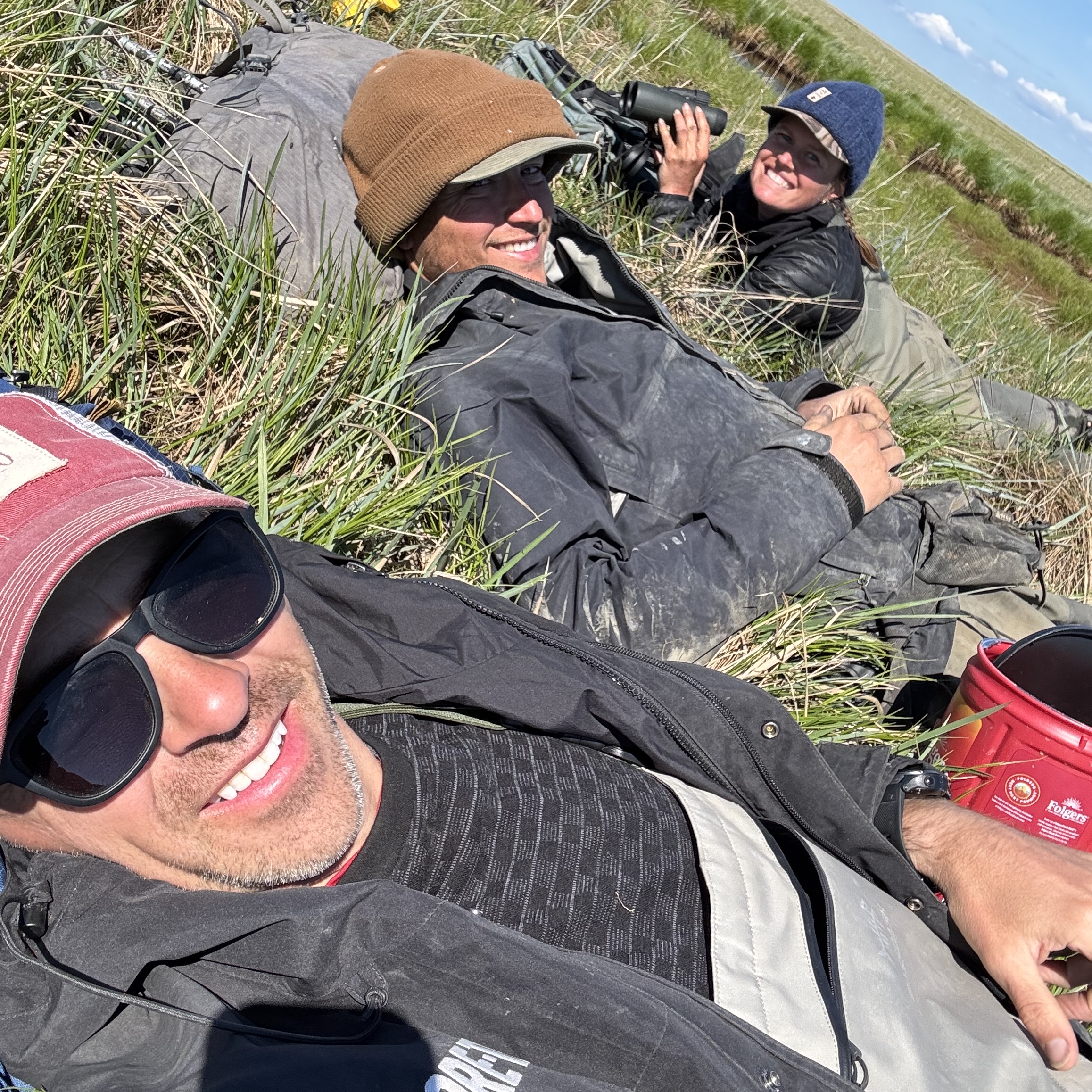
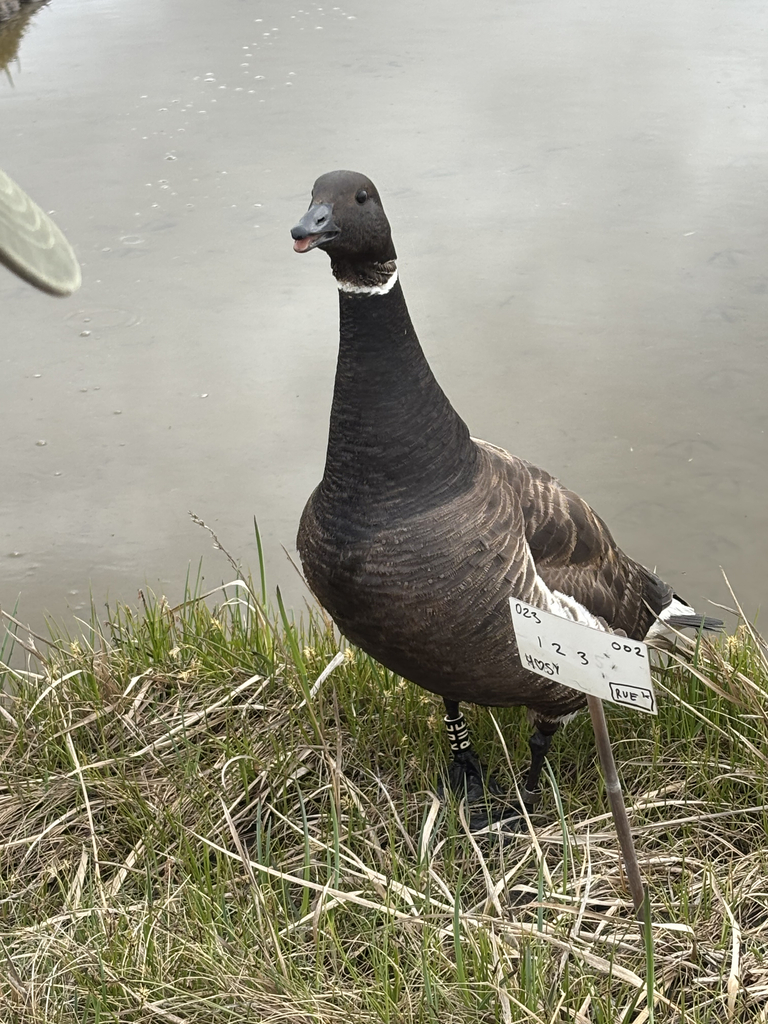
Once you see the female come back to the trap and lay down on her eggs, pull the string and spring the trap. When scientists have successfully trapped a female, they check the metal band to see if she has been already marked. If she hasn’t, we add a metal band to one leg. Then on the other leg we remove the old plastic band and add a new band with a geo locator. This geolocator works by sensing the amount of light and the date. By using these two pieces of information a general latitude can be established, thus an idea of where the bird is located along its migratory route. Before we release her back to her babies, we also get the length of her leg bone (tarsus), the length of her beak (culmen) and her weight. These are all proxy data points scientists can use to assess her health from year to year.