


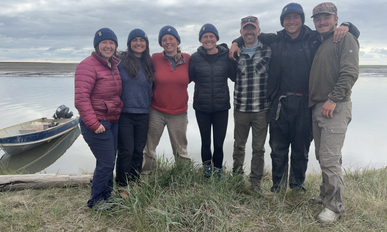
This last blog post is a hope that I can capture the entirety of this amazing arctic ecosystem known as the Yukon Delta. This place truly is special and although I was there to help with some of the bird research, I was also trying to absorb everything, all the biotic and abiotic features. As
Pace of life and differential migration in changing environments
Using a unique long-term study of brant geese, the researchers will study the dual influence of climate change and an individual’s reproductive history (how many babies they have reared to date) on migration distance, and the impact of migratory decisions on future chances of survival and reproduction. The team will then quantify the contribution of each type of migration behavior to the overall abundance of brant geese. Brant geese affect coastal economies via their role as primary grazers of eelgrass along the Pacific Coast, the same habitat that serves as the rearing ground for a myriad of fish and shellfish species. Without an abundance of brant to maintain healthy beds of eelgrass, and a solid understanding of the factors affecting brant abundance, the fishing industries that rely on eelgrass estuaries could suffer.
Participants Involved in This Project
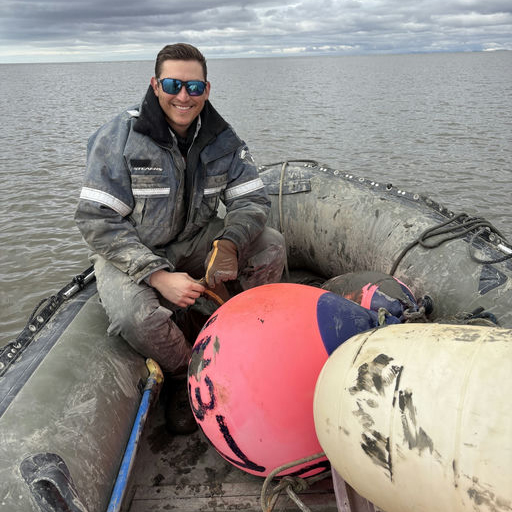
James Golden | Research Fellow
Colorado State University | Fort Collins, CO
Dave Koons | Researcher Fellow
Colorado State University | Fort Collins, CO
From the Blog
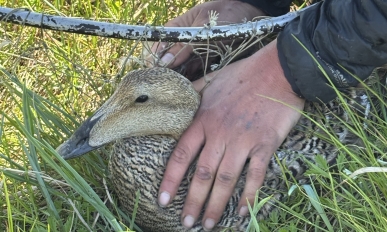
In the final couple days of Tut camp research I worked with Mairin Murphy on her project connected to spectacled and common eiders. These are large sea ducks and they too use the fertile land of the Yukon delta as a breeding ground. Mairin is also doing a population study but this species does not
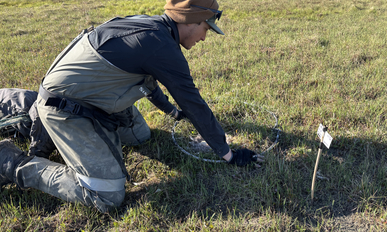
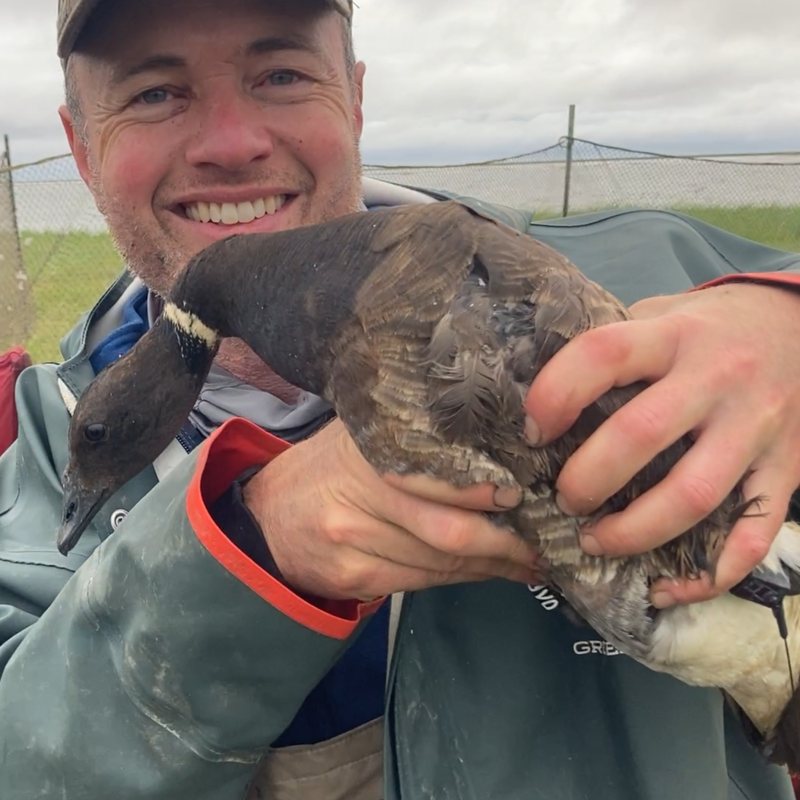
Baby development and clutch size (number of eggs laid per mating couple) are good metrics when looking at a successful population, but parents’ survival is also important. That is why scientists also work on banding adults and affixing geo trackers to assess their migration routes. Trapping geese can be tough. Geese are big, strong, smarter
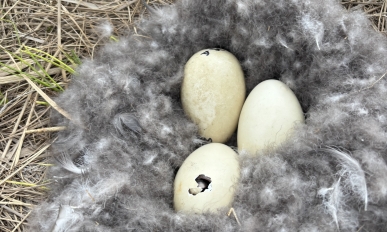
Background on one of the birds in the study: Pacific Brant Geese have a fantastic migration route. During the breeding season of late spring and summer they can be found in the Yukon Delta of Alaska. Once breeding is complete they move to their fall staging grounds of Izembek Lagoon near Cold Bay Alaska. They
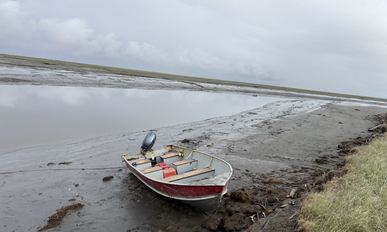
If you have never heard of experiential whiplash I will give you a breakdown. It is when you get a sudden shift of sensory input that stops your general flow of life. My month of June was one big experiential whiplash. This is not to be confused with the “normal” life of a high school



Made possible with funding by the U.S. National Science Foundation Award #2221990. The information contained here is those of the author(s) and does not necessarily reflect the views of the U.S. National Science Foundation.
Sign Up to Receive Updates
Receive regular updates to your inbox with the latest information about the Polar STEAM program.
Get Email Updates