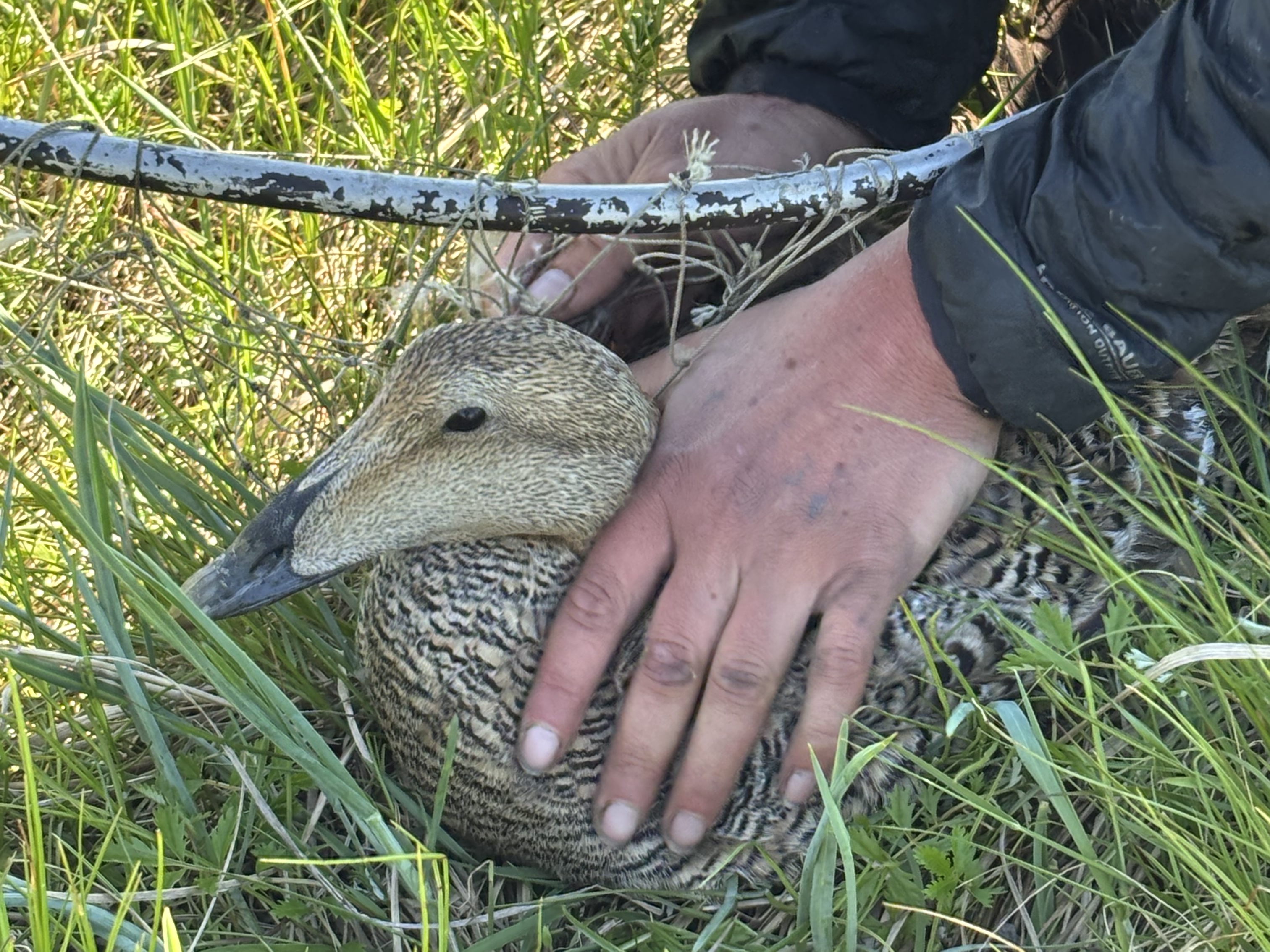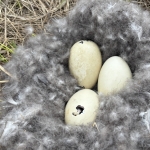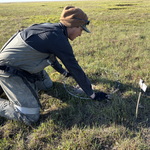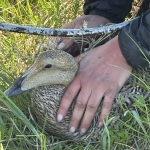

In the final couple days of Tut camp research I worked with Mairin Murphy on her project connected to spectacled and common eiders. These are large sea ducks and they too use the fertile land of the Yukon delta as a breeding ground. Mairin is also doing a population study but this species does not migrate like the brant geese. These ducks hang out solely in the Bering and Arctic Seas and changing environmental conditions, such as sea ice level, may dramatically affect their populations. Much like James, Mairin uses bow nets to trap females for banding and to collect physiological data, but due to their threatened status she must use some other “tricks”. We set the bow net traps in a similar fashion to the brant geese, but these birds are much stronger, so we need to use more stakes to hold the net down. An additional precaution that was used when trapping these strong females was decoy eggs. Instead of leaving her eggs in the nest as we waited for the female to return, we took her eggs for safe keeping in a Folgers can. In the real egg’s place, we put solid plastic egg decoys. This way when she got trapped and began to struggle, she didn’t accidentally break her own eggs. A really cool science in progress moment was when Mairin got the idea to begin to use a mist net in addition to the bow net to increase capture rates. It takes over an hour and a half to trap one female using the bow net. If we could use a mist net to get the female it would take less time.
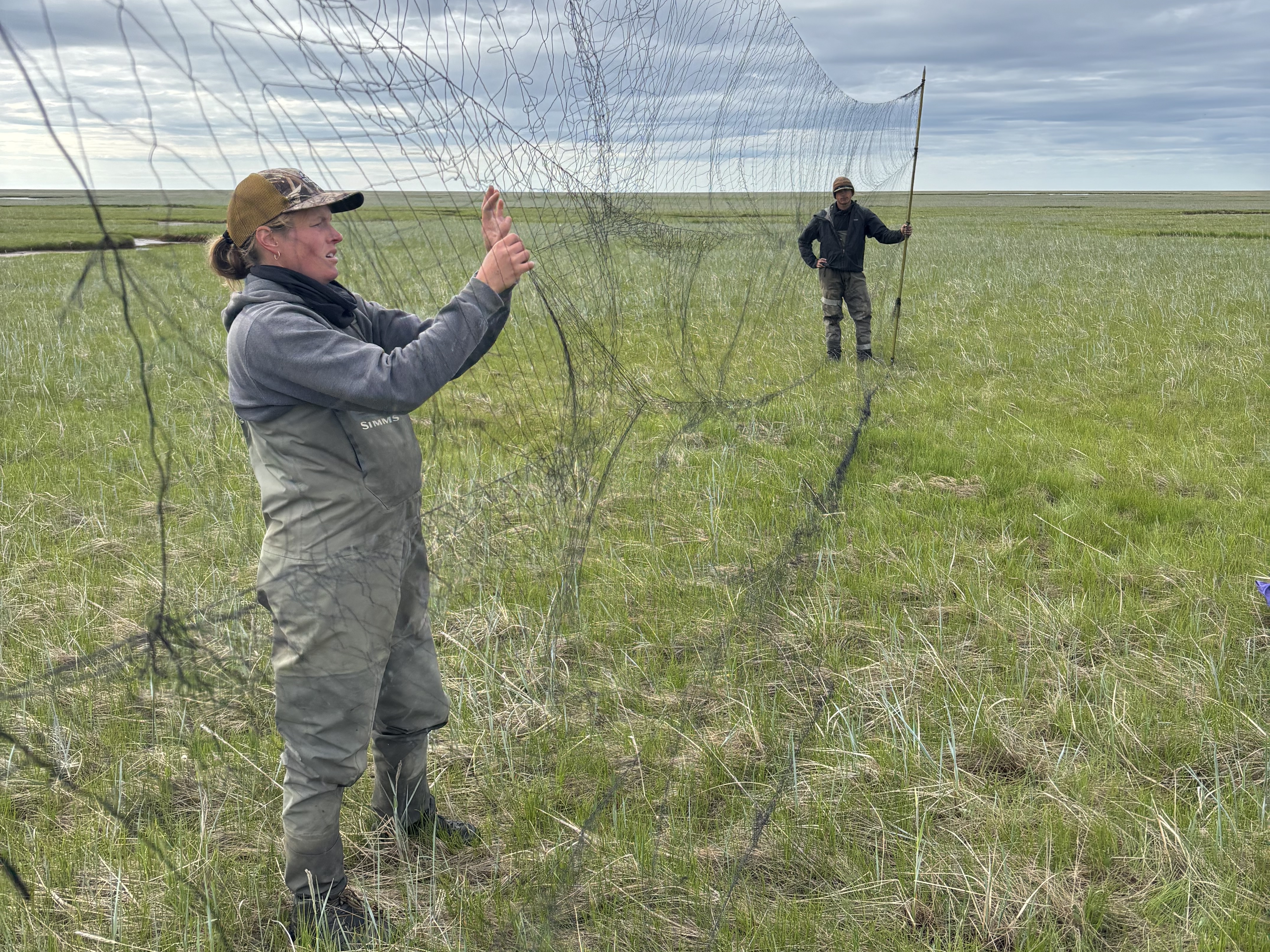
We would string a mist net across the pond and then Mairin would flush the female off the nest and into the net. The tricky element of this one was creeping slowly out into the pond and to not flush her off the nest prematurely. You also had to hope you could predict which way she was going to fly off her nest.
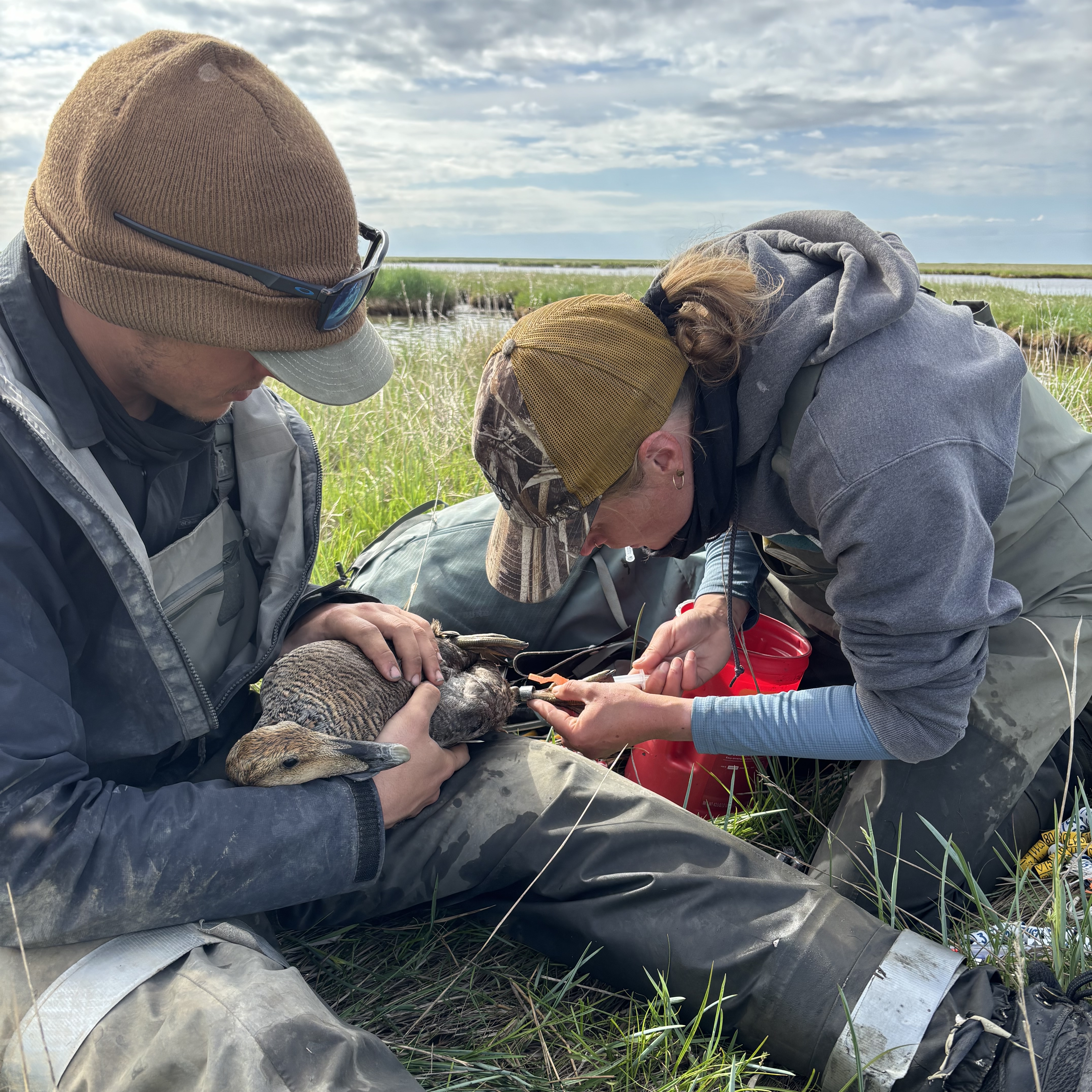
Once we caught a female we would add a metal tarsal band to one leg and a plastic ID tag to the other leg. Then Mairin took a blood sample, leg measurement, beak measurement, wing length, and a mass of each female. She was looking at cholesterol and glucose levels in the bird’s blood. These were proxy data points for the health and stress of the bird. Glucose levels could tell her if the bird recently ate and cholesterol levels are an indicator of fasting state, or more long term starvation which leads to stress.
In addition to gathering this information on females she also put ibuttons underneath the nest earlier in the season. Once a female and all of her babies left the nest for good, or if there was predation or abandonment, she would pull these ibuttons out. An ibutton is a simple computer that collects temperature data over time. This device allows Mairin to monitor nests remotely, without having to check nests in between discovery and hatching. Using this information, she could tell when and for how long a mother was sitting on the nest to incubate the babies. It can also get the precise time when mother left the nest for good.