

When most people hear the phrase dream team, they imagine a group of extraordinary individuals working together toward a common goal. The funny thing is that in our Arctic Long Term Ecological Research (LTER) aquatic team, the Dream Team is actually a box.
Yes. A box.
Not a sleek, high tech Arctic research instrument. Not a sophisticated piece of equipment worth thousands of dollars. Just a weathered box containing all the random but absolutely essential items that somehow keep field science moving forward. If you need sampling bottles, tape, markers, labels, extra cords, or some mysterious object whose purpose no one can quite explain but everyone agrees is important, chances are it lives in the Dream Team box.
One day, while preparing equipment and sorting supplies, someone casually pointed out that the Dream Team deserved better than being called a box. We laughed about it, but the comment stayed with me. The more I thought about it, the more I realized the name was never really about the container.
The real Dream Team was standing all around me.
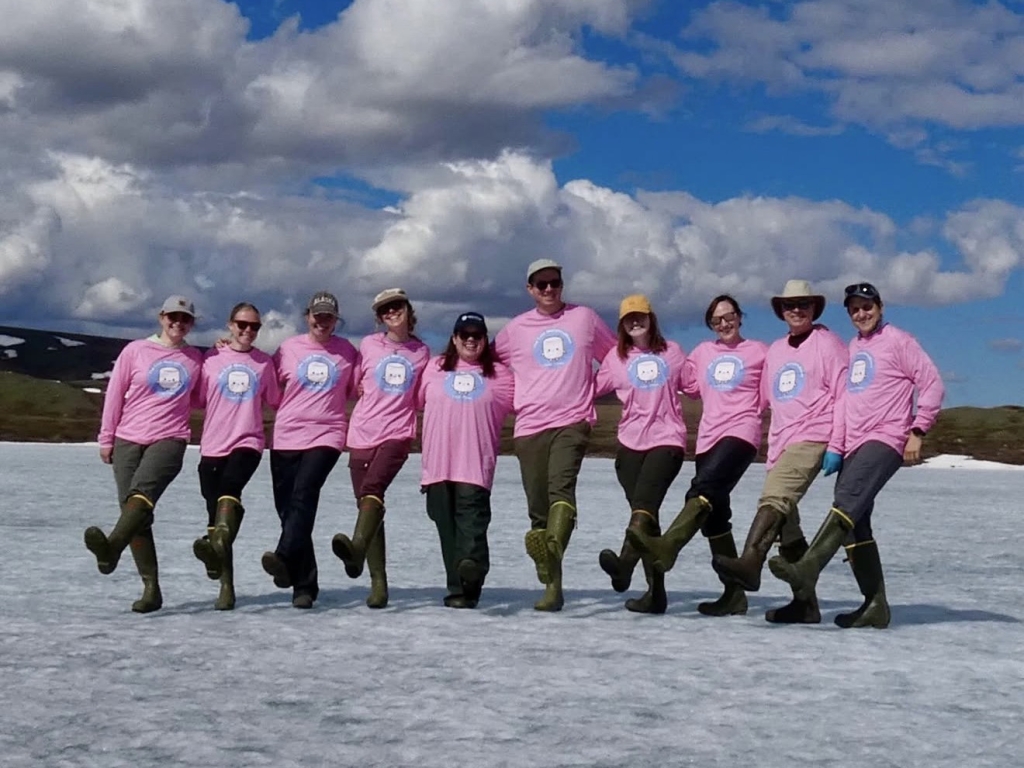
Field research in the Arctic is often portrayed as rugged scientists braving harsh conditions while collecting critical data. While that is certainly part of the story, it is only a small piece of a much larger picture. What struck me most during my time in Alaska was the incredible collaboration that made everything possible.
Researchers were studying lakes and streams that are critical features of an arctic permafrost ecosystem. Artists were documenting the experience through creative expression and helping translate complex scientific concepts into stories that resonate with broader audiences. Educators like myself were learning alongside everyone else, gathering experiences and knowledge to bring back to students and communities.
Everyone had a different role. Everyone spoke a slightly different professional language. Everyone approached the work from a unique perspective. Yet somehow, everyone was working toward the same goal.
Watching this unfold reminded me of an ecosystem itself. Scientists provided data and discovery. Artists provided interpretation and connection. Educators provided pathways for future generations. Each contribution was different, yet none felt more important than another.
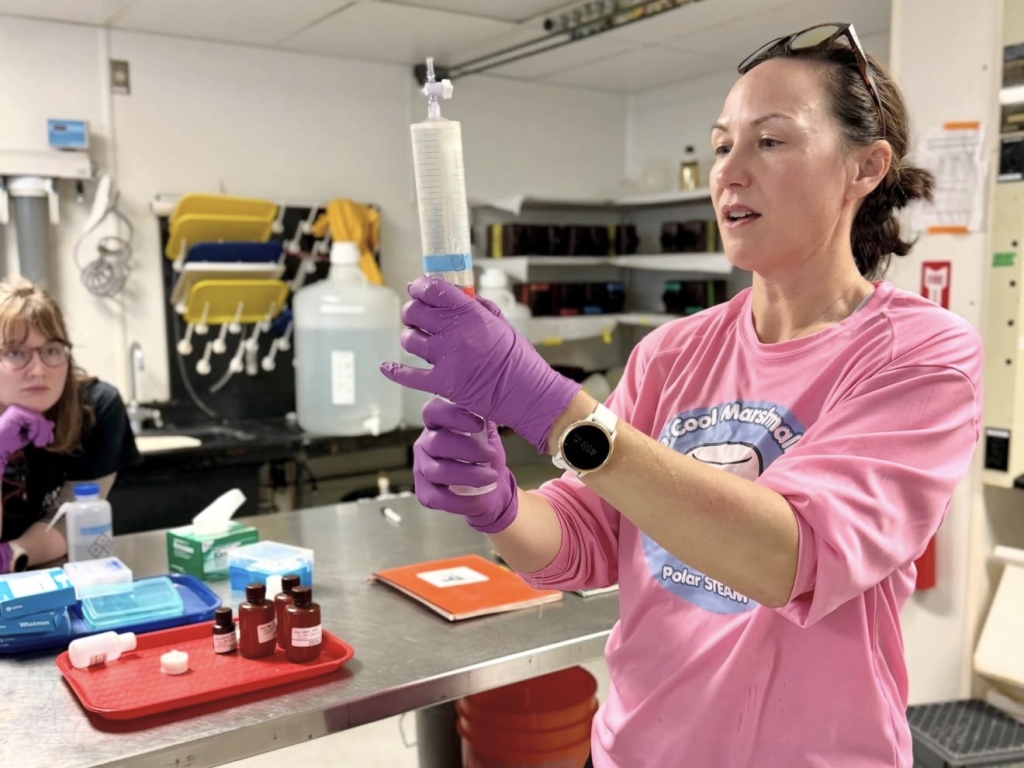
Just like the Dream Team box.
No one item inside that box is particularly impressive on its own. A roll of tape does not look revolutionary. Neither does a pair of scissors or a stack of labels. Yet remove any one of them at the wrong moment and suddenly an entire operation slows down. Together, however, those simple items become something far greater than the sum of their parts.
The same principle applied to our team.
Throughout my experience, I found myself moving between conversations about aquatic ecosystems, educational outreach, art, culture, climate, and community engagement. Every discussion offered a new perspective. Every person contributed something valuable. Every collaboration strengthened the collective effort.
Perhaps that is what makes Arctic research so inspiring.
The goal is not simply to understand the ecosystem. The goal is to understand it well enough to communicate its significance to others. Data alone cannot accomplish that. Stories alone cannot accomplish that. Education alone cannot accomplish that.
It takes all of us.
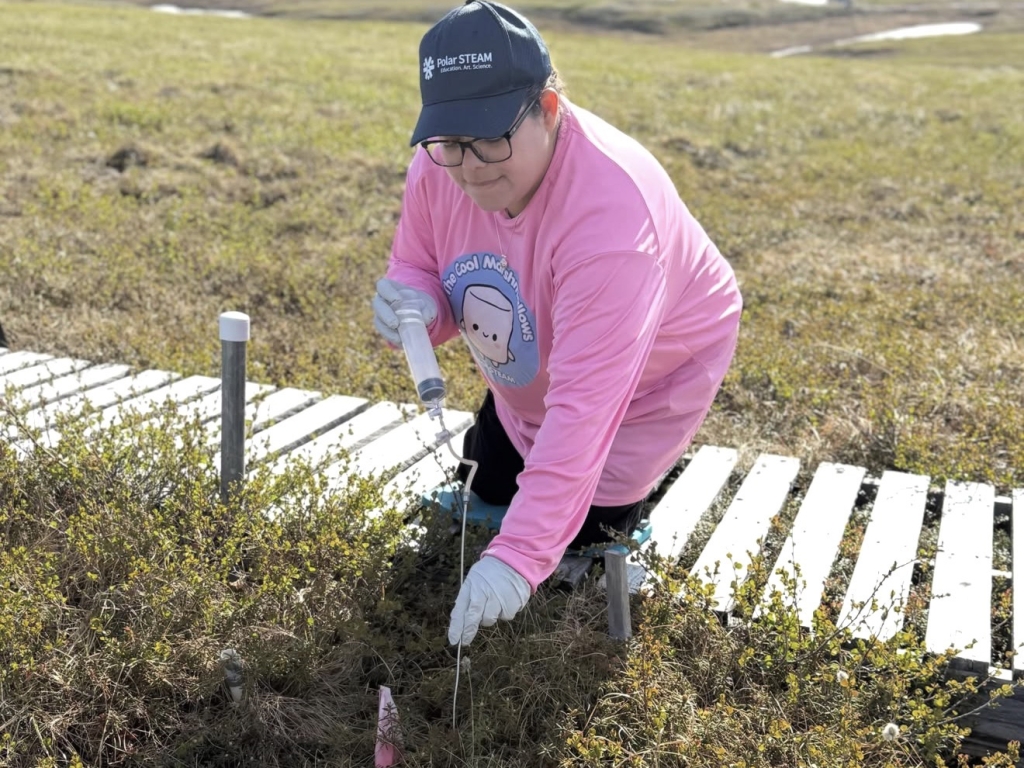
In a world that often celebrates individual achievement, the Arctic reminded me that some of the most meaningful accomplishments are deeply collaborative. Progress happens when people with different expertise, backgrounds, and experiences come together, trust one another, and contribute their strengths toward a shared mission.
So while the Dream Team box will continue to hold its collection of indispensable supplies, I will always smile when I hear its name.
Because the real Dream Team was never the box.
It was the scientists launching boats onto Arctic waters. The artist capturing sounds many people will never have the opportunity to witness. The educators asking questions and imagining ways to bring these experiences back to their students. The technicians, coordinators, and support staff ensuring that every day ran smoothly.
The real Dream Team was all of us.
And unlike the box, this Dream Team did not fit neatly into a container. It stretched across disciplines, experiences, and perspectives, united by curiosity and a shared commitment to understanding and protecting our world.
That is a Dream Team worthy of the name.