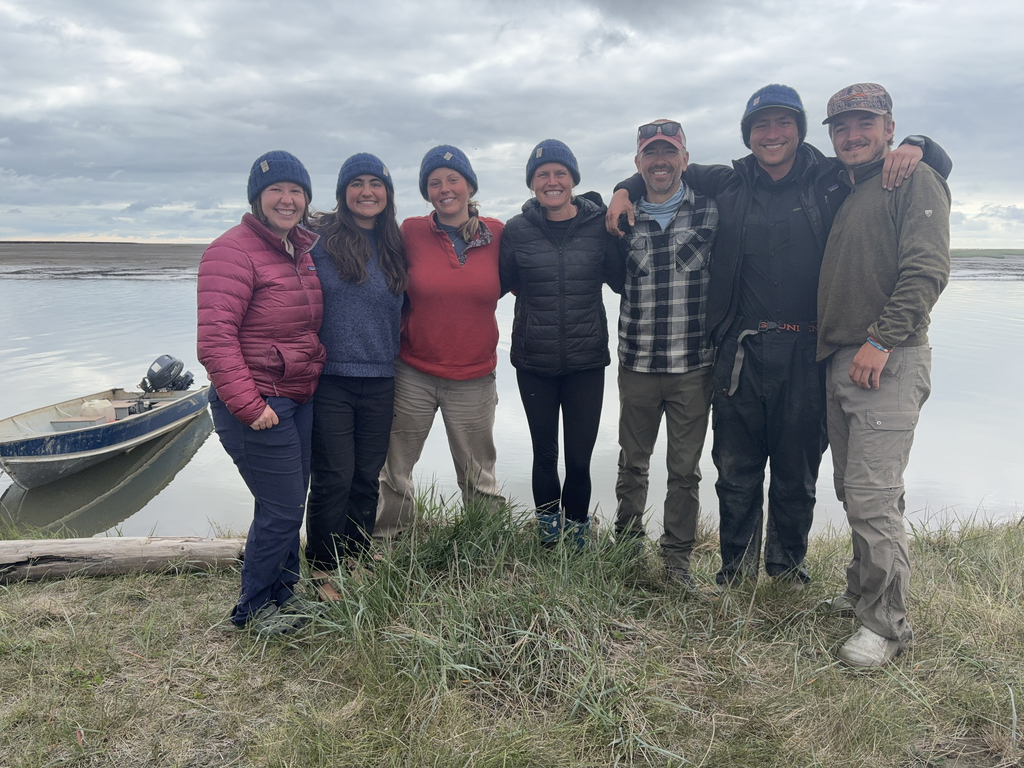

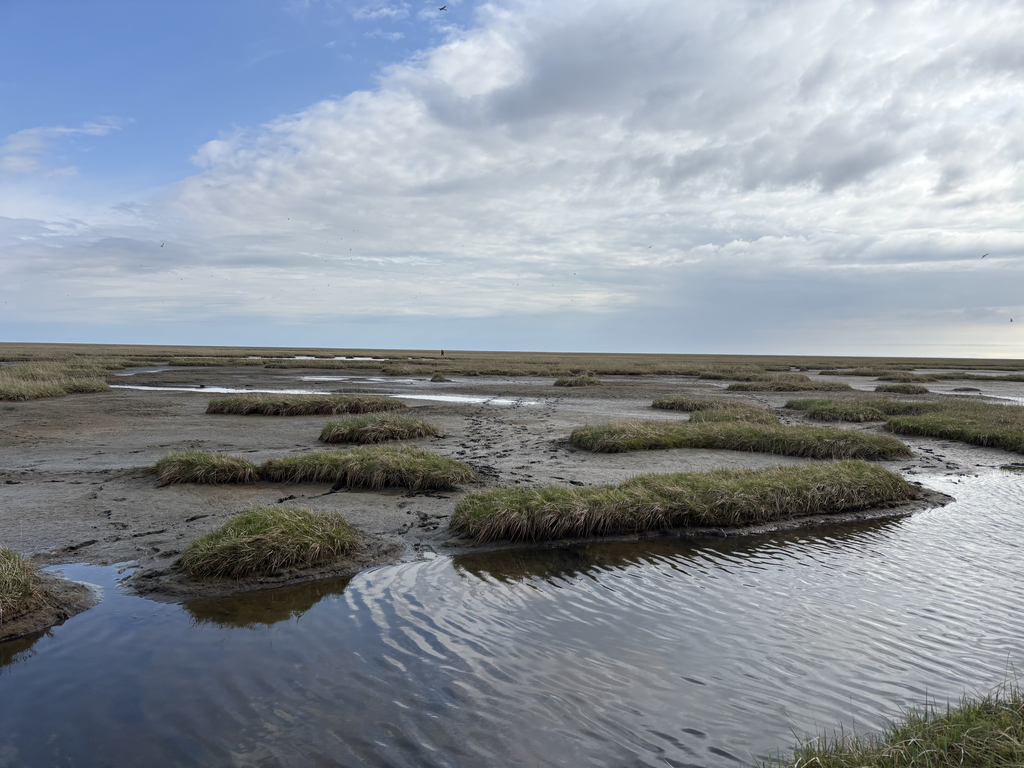
This last blog post is a hope that I can capture the entirety of this amazing arctic ecosystem known as the Yukon Delta. This place truly is special and although I was there to help with some of the bird research, I was also trying to absorb everything, all the biotic and abiotic features. As you walk through the tundra the ground full of grasses and sedges gives way to a spongy, springy footing. If you were to walk in a straight line from a marked nest to another you would also have to forge through small ponds and sloughs. This proved to be difficult, even for a person who has decent fitness.
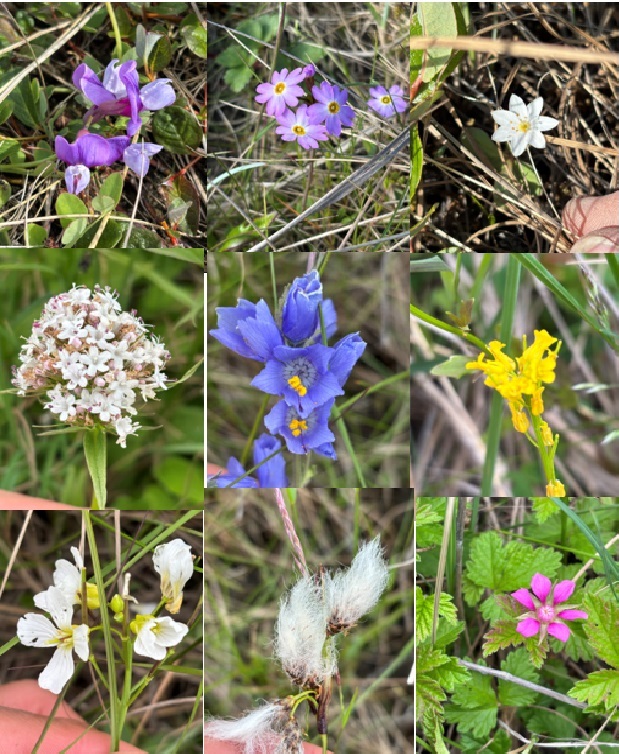
Everywhere you walked you could find beautiful flowers that were in bloom or getting ready to bloom. Many of these flowering plants (angiosperms) have relatives that I am familiar with back home in the Midwest, but they were all new species on my life list. In addition to all the flowers, there were tons of other birds using this landscape to breed. Since there are no bushes and no trees in the tundra, all these birds nest on the ground. So, as you are walking this landscape you need to be looking down frequently.
Speaking of birds other than the brant geese and the eiders, many of these other birds have a habit of harassing you if you get too near their nests. They dive bomb your head, pulling off your hat, nipping at your head, and directing a controlled defecation at you as you pass. On my first experience with this behavior I was a little anxious, but then you realize they are just being good parents. Best flip your rain jacket hood up over your hat and keep on sciencing.
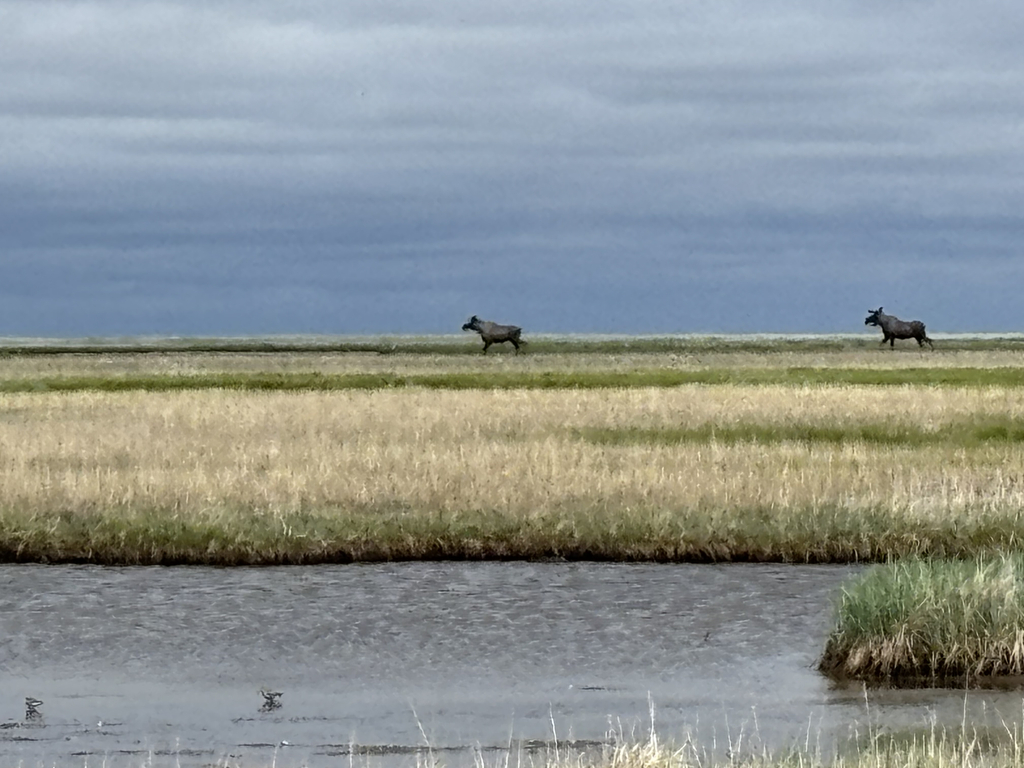
I would be remiss if I didn’t mention the different mammals you have the potential to encounter when walking in this landscape. All my family members and friends were worried about bears, but due to the unevenness of the land, the mucky mud, and the lack of food, bears really don’t visit this Yukon Delta area. It is moose and foxes that you may have the luck of seeing. On the second week of my time in camp, we had one moose come near camp curiously checking out what was going on, but unfortunately, I was out with James and Mairin and we didn’t get to see him very well. I did, however, get to see two moose a lot closer than I felt comfortable on a hike back to camp the following day. Mairin and I were just finishing up processing an eider when we saw two moose in the distance, but they were mere blobs on the horizon. As we were making our way back, we noticed the moose seemed to be getting closer. We were both concerned when the two moose were clearly looking in our direction and trotting towards us. What were we to do with a half-ton herbivore approaching us head on? We can’t run away, we can’t climb something, we have no trees to put between them and us. Logically we just started back tracking from the way we came to see if they would change their direction. It turned out the moose just wanted to head over to the mudflats that were on our left, so they were crossing our path. The problem averted and our heart rates fell.
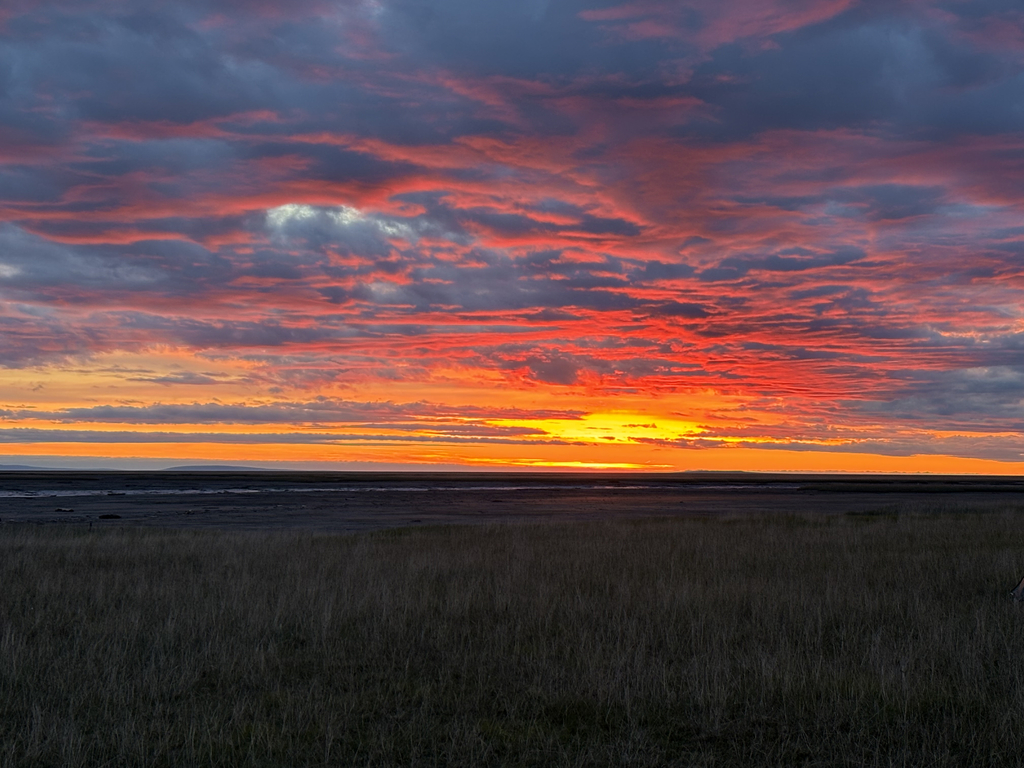
The last thing I wanted to mention about this experience is the way the sun plays with horizons when you are at this latitude. Being present in the Arctic Circle during the summer solstice was on my bucket list for a long time. You can learn about how the sun never goes down when you are near the North Pole in the summer, but to actually see it for yourself is nothing shy of epic. The sun would rise in the east, be overhead by noon, and in the west by 5pm, just like back home in Illinois. The difference came after that. It seemed to slow down as it moved to the western horizon and then began to migrate North. It would be 10:30pm and you still had sunset colors and the glow of the sun. I purposely woke up around 2am on the 21st of June just to take some pictures of the sun on the solstice. This phenomenon also provided some picturesque sunrises as well.
Although the sun never really fully set while I was in Alaska my time was up and I had to head home at the beginning of July. Another twenty-four-hour commute home with a twinge of sadness in my heart because I would be leaving my six new friends, the crew of Tut camp. It is safe to say that this goodbye would not be forever.