
Background on one of the birds in the study: Pacific Brant Geese have a fantastic migration route. During the breeding season of late spring and summer they can be found in the Yukon Delta of Alaska. Once breeding is complete they move to their fall staging grounds of Izembek Lagoon near Cold Bay Alaska. They then migrate down to Baja California for the winter months.
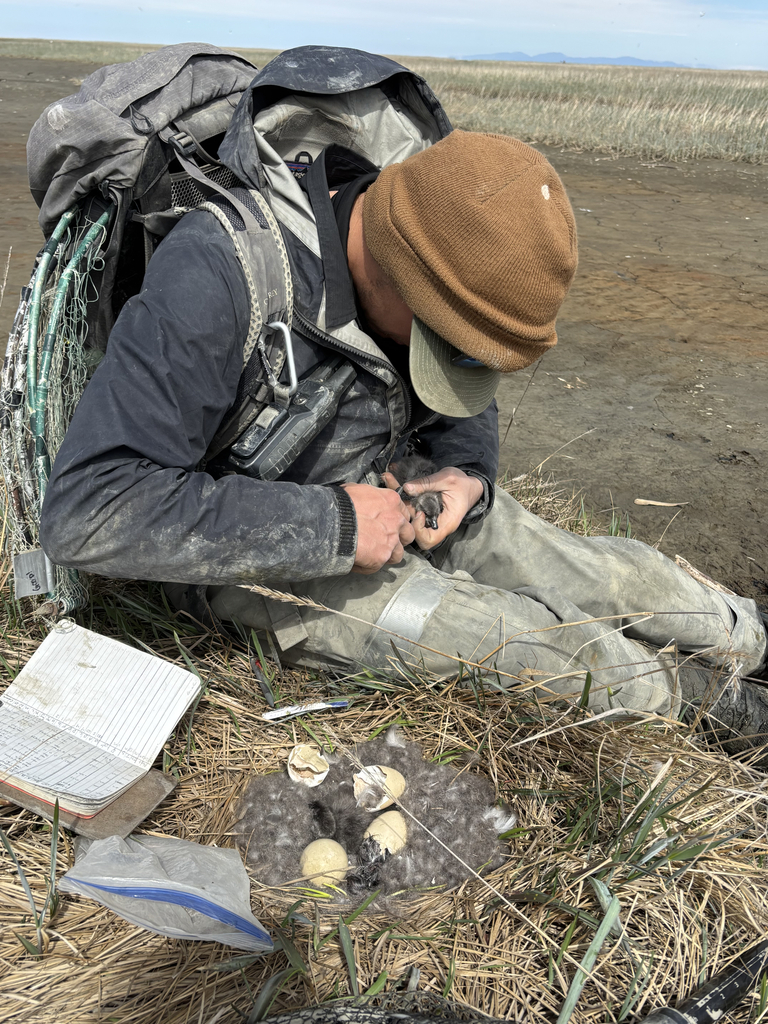
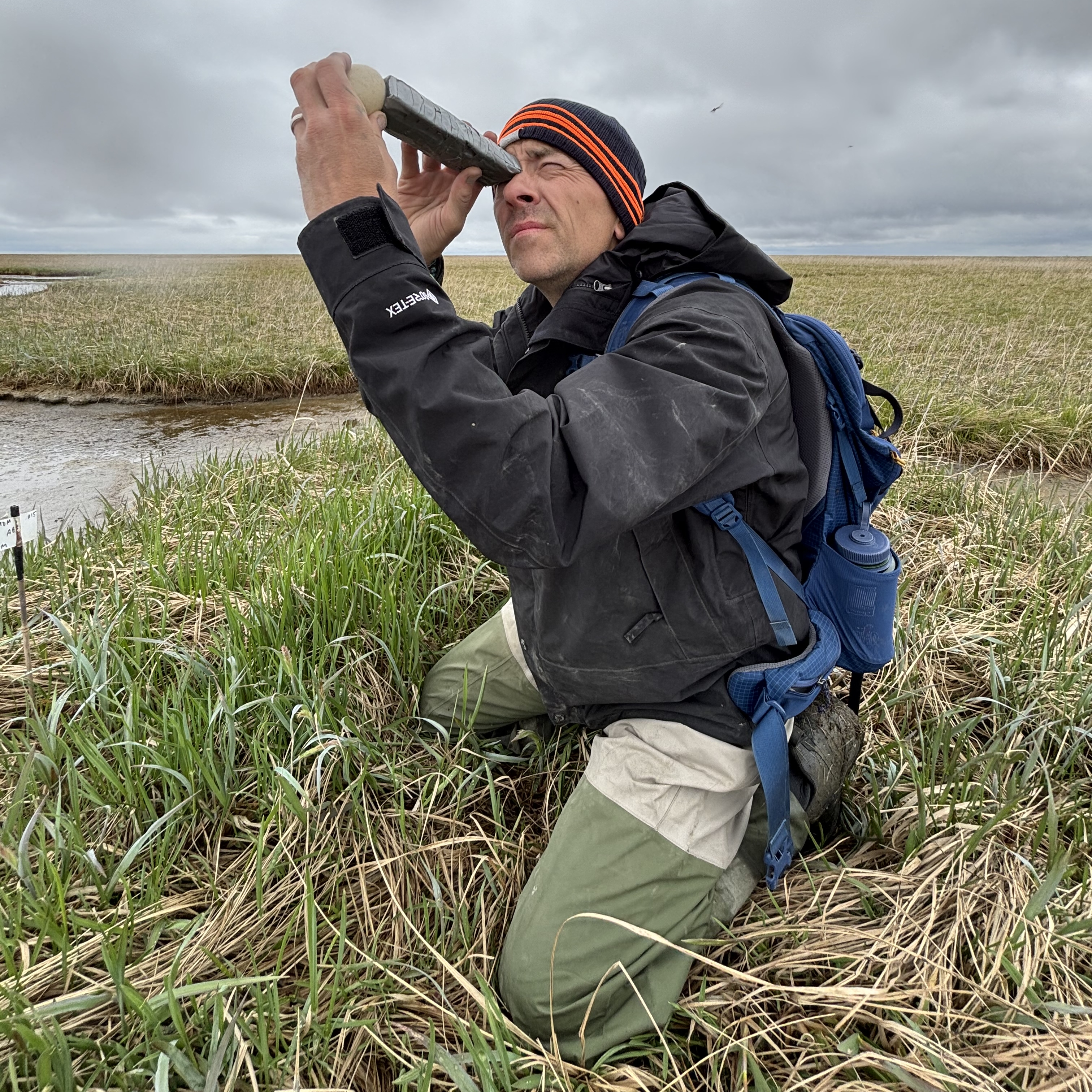
Day 1 of full immersion into the Tutakoke Camp on the Yukon Delta. I woke up at 5am and went to the weather port, one of the bigger tents in camp. I made coffee for everyone and as people started to wake up and enter the tent, Mairin was already making a hearty breakfast for everyone. I was tasked to tag along with Matt Misewicz today as he was checking a large quantity of brant geese nests. There were over 850 nests that 2 scientists and 3 technicians had identified at the end of May/beginning of June. The scientists and technicians are to try to check each of these nests at least three times during nesting. What are they checking for you may ask, quantity of eggs in the nest and their development. There are a couple stages of development scientists can use to approximate the date of hatch for an egg without seeing a full baby outside of the egg. The first stage these scientists use is called flashing. By using a darkening tube and then holding the egg up to the sun, you can see if there is an embryo moving around just above the yolk line.
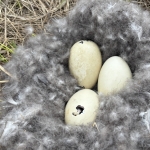
The second benchmark in egg development is called starring. This is where the baby has grown enough to start using its beak to break away at the hard shell. Scientists look for a tiny star shaped crack to mark the development as starring.
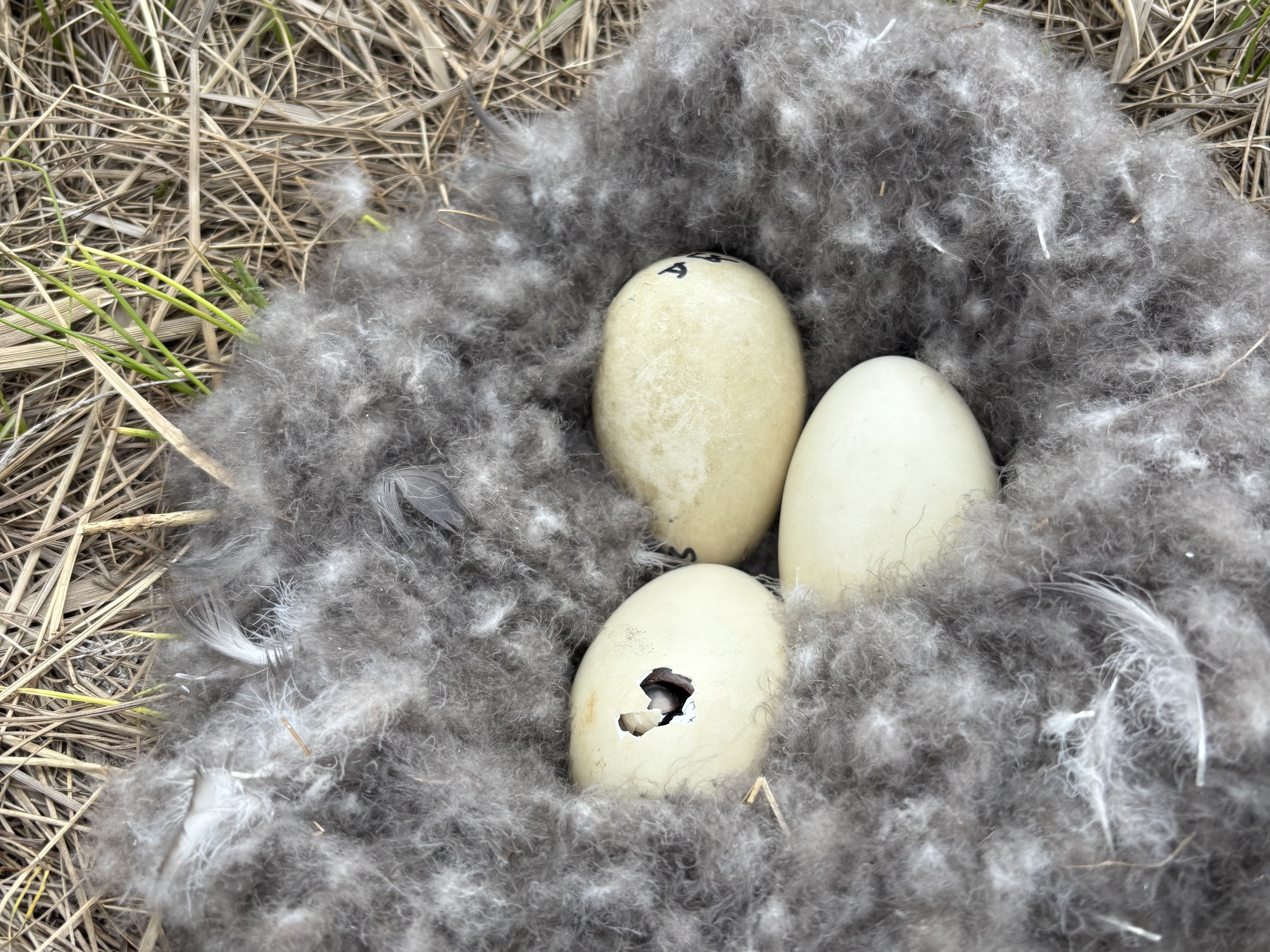
The third and final stage of egg development is called pipping. This is where there is a noticeable hole in the egg and you can see a baby moving around through that hole. If a scientist notices a pipping egg it is common to have that baby fully out of the egg within 24 hours. What is interesting is that mom and dad can “talk” to their babies through the egg and either speed up their development or slow it down. Why would a parent change the rate of development? It all comes down to environmental conditions. If the landscape is too stressful, i.e. not enough food, too cold, too wet, it is safer for the babies to stay inside the egg and under a warm mom’s abdomen.
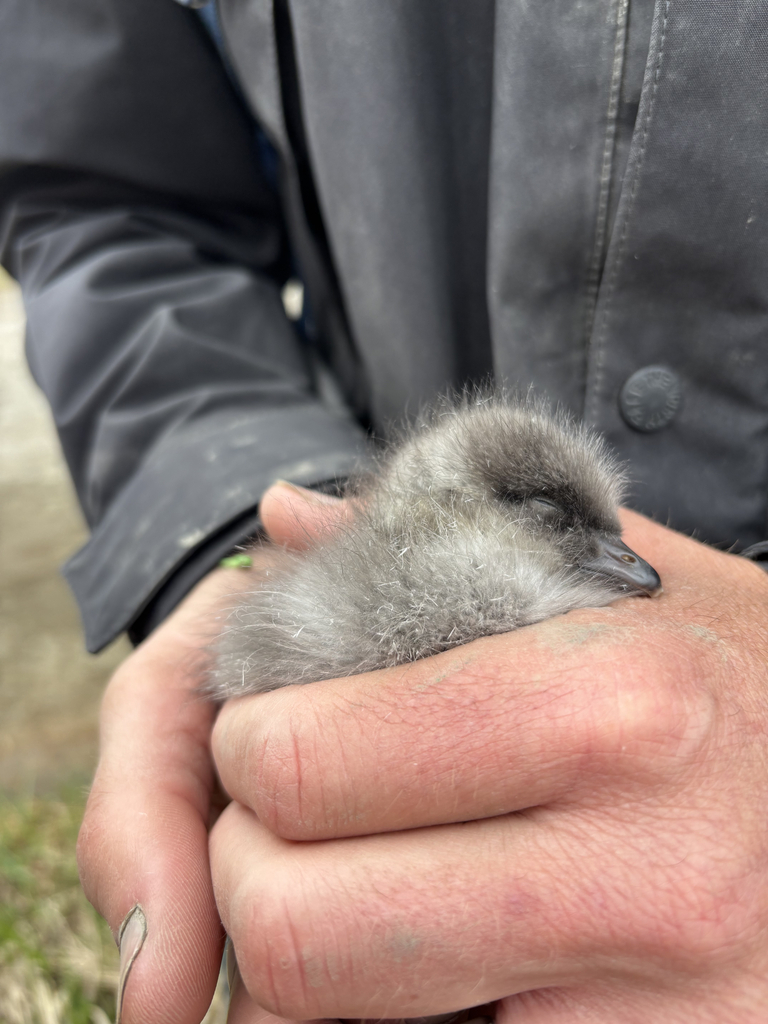
When babies do emerge from their shell, scientists will attempt to web tag the goslings. A web tag is a small piece of metal with a specific number etched into it. Scientists will use a small crimping tool and pinch the web tag through the goslings webbing (between their toes). The web tag data is recorded and correlated to the nest and parents. The goal is to recapture these tagged goslings during large-scale banding drives later in the season and potentially in subsequent seasons. This information can give scientists a better understanding of mortality rates, growth rates, fitness tied to parents, and response to environmental change. If you are asking why they don’t use tarsal tags (mentioned in the next blog post) it is because their legs are too tiny and will grow too much during their first month or so of life. How many web tags can a group of 6 scientists put on goslings over the course of 6 days? 300, 500, 800… Try 1479!