
If you have never heard of experiential whiplash I will give you a breakdown. It is when you get a sudden shift of sensory input that stops your general flow of life. My month of June was one big experiential whiplash. This is not to be confused with the “normal” life of a high school teacher and the change of pace they experience at the end of May. When the school year ends and summer break begins there is a different flow to your day-to-day activities.
Sorry, let me back up. My name is Jeff Grant, and I am a high school science teacher in Downers Grove Illinois. A suburban town about 20 miles due west of Chicago. The Illinois ecosystem can be described as a tall grass prairie and a deciduous forest ecosystem. We have rich topsoil for plants to grow and trees to take root. Illinois’ state soil type is Drummer silty clay loam. I only say this because what I encountered when I got to Alaska was like nothing I have ever experienced. Being a science nerd, I know that abiotic features tend to shape biotic features of an ecosystem and vice versa. So getting the dirt of a new ecosystem would give me clues as to how this ecosystem thrives.
My journey to Alaska started at about 9pm on June 17th, about 10 hours after my family finished up our road trip out west to see Arches, Bryce, Grand Canyon, and the Petrified Forest. My plane was to leave Chicago at about 12:53am on the 18th but storms that blew in the day before delayed my flight by an hour. I made it to Anchorage Alaska in the wee hours of the morning and then boarded another plane for Bethel Alaska. It would be in this small town where I would board my first ever 10 passenger plane for a short flight to Chevak Alaska. The weather that day was keeping me in the clouds and I had little opportunity to see the landscape of the area I would be exploring for the next two weeks.
I was met at the small landing strip in Chevak by James Golden, the head scientist of the Tutakoke River Camp. We hopped on a 4 wheeler and headed down towards the boat we needed to ride in to get to camp. I put on all my gear before we got in the boat. You need to wear waders and wader boots to stay dry. Like I said I had no idea what was coming next. Mairin Murphy was also at the boat landing and as James and her ran around gathering up some supplies to take back to camp I helped load the boat. I have been on plenty of boats in my life and this small Lund boat with an outboard motor was just a short (50 yard) walk across the muddy shore. Within the first fifteen steps I began to learn I wasn’t in “Kansas” anymore. I began sinking. Each step I took towards the boat the deeper I went down. The panic began to set in when the muck was at about mid-thigh. I didn’t know what to do. Luckily a teenager from the town saw my struggle and offered to help. He gave me an oar to push down on and advice on how to lift my feet out. “Whatever you do, don’t wiggle, you will only go deeper”. To say the struggle was real is a complete understatement. When I finally extracted my entire lower half I realized my left boot decided to stay in the mud. I had to dig for it before I got in the boat. With a sufficient coat of mud and a “Welcome to Chevak” I was ready for a cold 3 hour boat ride to camp. To be honest with you I was not in the best mood.
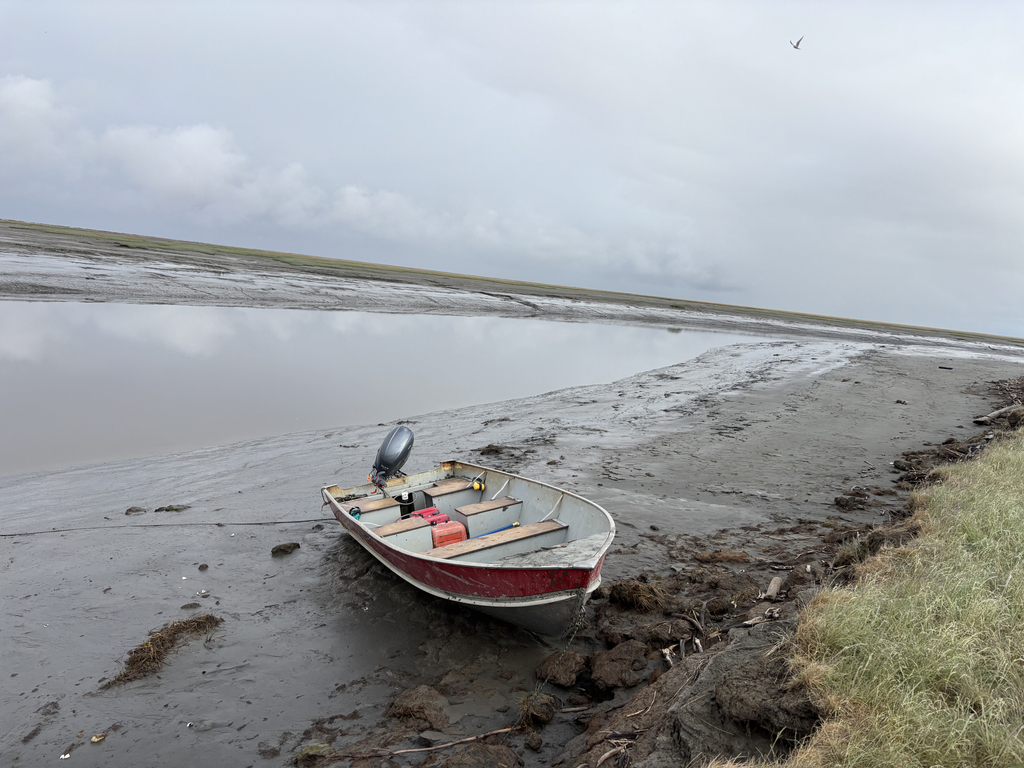
The cut banks flew by as my butt rattled against the plywood seat and although I wanted to take pictures of the boat ride, my phone was deep inside my pants pocket under my waders. Plus, even if I could dig through my pockets I couldn’t feel my fingers because they were so wet and cold. The boat slowed down after what seemed like an eternity. James and Mairin said “Holy Cow there is so much driftwood, everyone be on watch”. As the tide came ripping into the Tutakoke River it had brought down a huge amount of driftwood from the Yukon River to the north. Some of these pieces of wood were entire 15 foot trees. We needed to be on high alert and made sure we didn’t hit any as we navigated the last quarter of a mile back to camp.
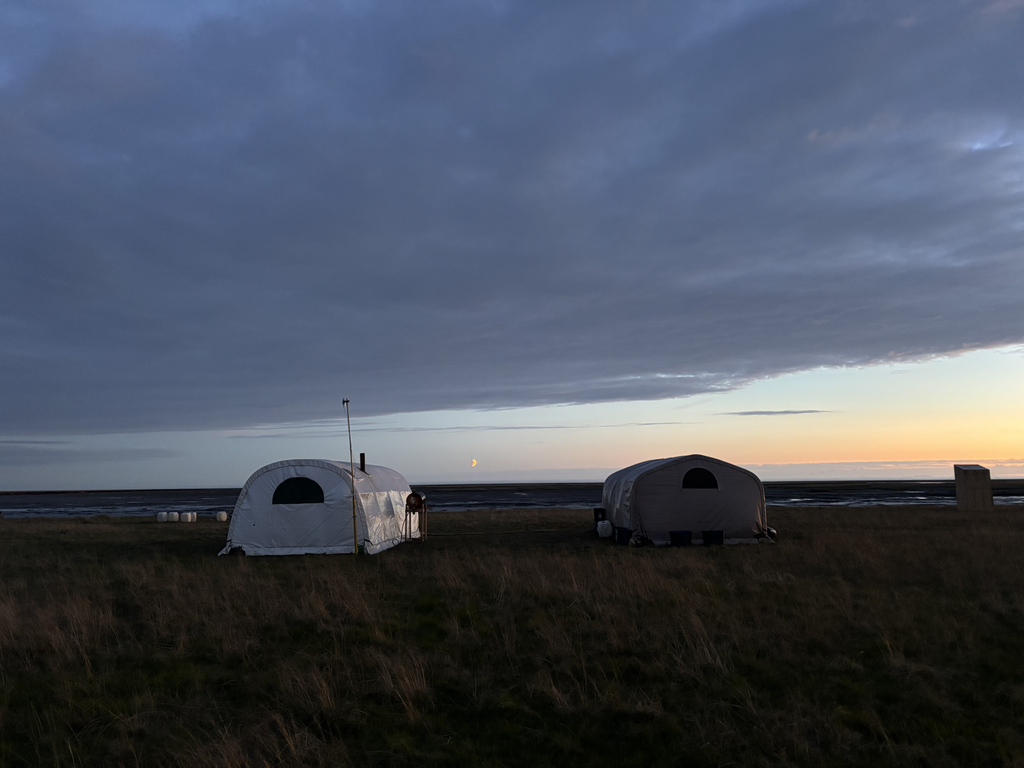
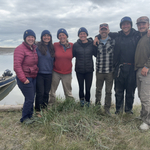
Finally arriving at camp cold and tired, I had been traveling for over 24 hours at this point, I met the other 5 people who were going to be my research camp cohort. They couldn’t have been more friendly and inviting. A warm dinner and lively conversation in the weather port lifted my spirits before I settled into my tent for the night. Still cold from the mud incident and the boat ride I put on all my long underwear, pants, two sweaters, a clean pair of socks and zipped myself into a cocoon of a sleeping bag and fell asleep before I even realized it was still light out.
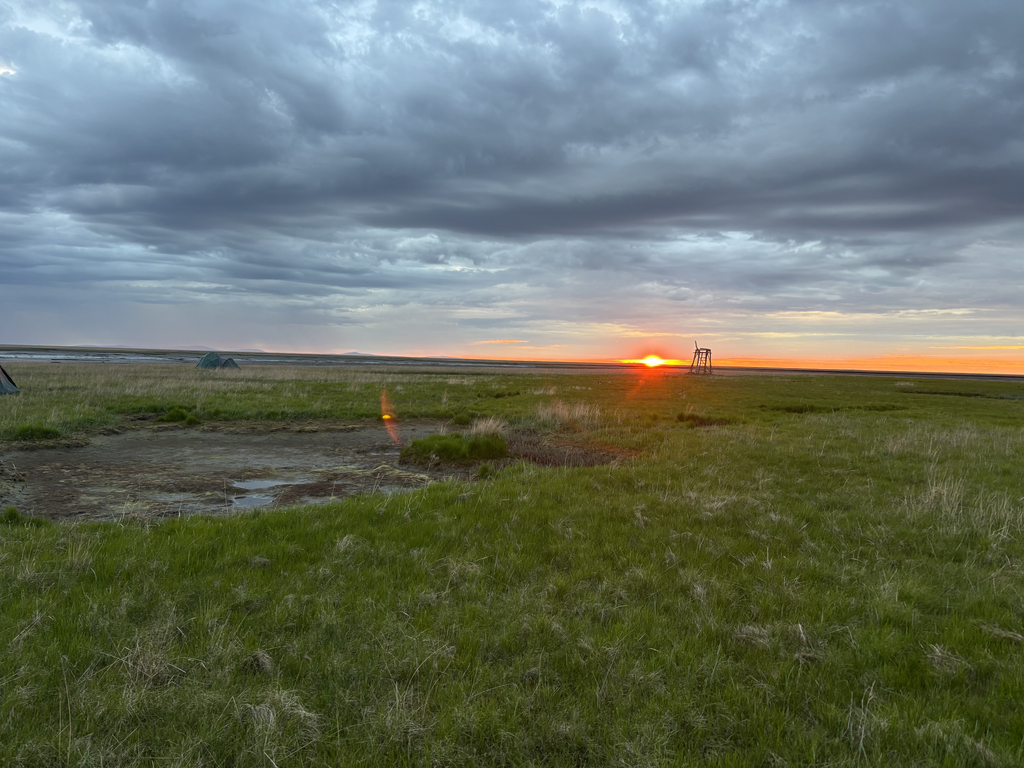
That observation was one I didn’t come to realize until I woke up at 5am the next morning. The amount of light I had when I went to bed was the same amount as when I woke up. The difference being what direction the light was coming from. In fact, the sun really never stopped giving us light the entire time I was there. Much of the rest of my journey is hard to capture in words. The feelings that well up inside of me when I am experiencing phenomena that I talk about in class with my students, that I have read about in books, that I have seen in pictures and documentaries, leaves me truly speechless.