

Summary
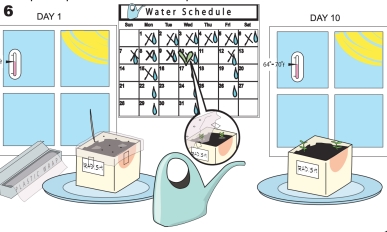
This resource provides three easy, hands-on activities that explore Arctic food systems, Food Life History and food sovereignty and can be done in an indoor, outdoor or classroom environment using recycled or inexpensive materials. The activities introduce concepts including germination, growing your own herbs and vegetables and small scale composting through vermicompost.
Materials and Preparation
Materials are shown visually on Page 1 of each activity.
Prior to the lesson, teachers should familiarize themselves with activity steps and materials. If teachers would like to do some additional background reading on growing in recycled containers or vermicompost, these linked resources give a great overview.
Learning Objectives
Opening Activity
The hands-on nature of this activity series, and accessible, visual format help immediately engage students of all ages.
Most students (grade 2 and above) will likely have a general idea about the process of a seed sprouting and what plants may need to stay alive. Additionally, most students will likely be familiar with worms.
Students will access and expand upon this prior knowledge through hands-on interactions with planting and composting materials and live worms.
Activity Overview
Activity procedure: see handouts (linked below)
- Grow at Home_English
- Grow at Home_Español
- Growing Mini_English
- Growing Mini_Español
- Worm Compost_English
- Worm Compost_Español
Activity questions
“How Do I Grow a Plant at Home”: What do you think a plant needs to stay alive? Why do you think it is important to poke holes in the bottom of your planting container? How are the seeds you planted similar or different?
“Growing Mini: How to Sprout Microgreens”: How did the inside of your container change over time? What environmental factors do you think helped the seeds germinate? Did any of the seeds never germinate? Why might a seed not germinate? In nature, how do you think seeds get into the soil to grow?
“How Do I Make a Worm Compost Container?”: What does the dirt feel, look and smell like? What does the worm feel, look and smell like? What do you notice about the worms’ movement? What is the same and different about each worm? How do you think a worm impacts its ecosystem? How are the worms’ needs similar or different to humans’ needs?
These hands-on activities are an excellent introduction point to deeper discussions on biological sciences, ecosystems, environmental sciences, natural cycles (water, carbon, nitrogen) and climate change themes.
One misconception is that people need a large green space to grow food. These activities are designed to provide an accessible, small-scale experience in growing food that can be adapted to any location.
Students will apply their learning through using the growing and compost materials as the basis for additional experiments and investigations.
Students can revise their model upon assessing its efficacy. After observing how it functions over a several week period, students may get ideas to improve their model from peers, or through outside research.
Reflection
Students can further reflect on what they learned through continued exploration with the growing container and worm compost models they create. Students can design and implement a variety of inquiry-based experiments using these models, including experimenting with growing different seeds, exposing their seeds to different environments and adding different compost components to their worm compost.
Learning standards are met through full participation and creation of the hands-on project (growing space or worm composter). Students can demonstrate further mastery through successful maintenance of their project.
Supporting Documents
Common Core Standards
- Reading: RI.K-5.1, 2, 3, and 7
- Writing: W.3-5.2
- Speaking and Listening: SL.K-5.1
- Language: L.K-5.5
- Mathematics: K.CC.1, K.CC.4, K-5.MD.1, K.G.4, 3.OA.7
Next Generation Science Standards
1-LS1-1, 3-LS1-1, 4-LS1-1, 5-PS3-1, 5-LS1-1, 5-LS2-1, MS-LS2-3, MS-ESS3-1, MS-ESS3-5, HS-ESS2-5
References:
This activity was created through a Polar STEAM partnership between Meghan Nealon, Yoko Kugo, and Michael Koskey (research team), GrowingGreat, and the Anaktuvuk Pass community. Special thanks to the K-12 students in Anaktuvuk Pass who assisted in piloting this activity.
NGSS Science Standards:
Polar Literacy Principles:
Humans are a part of the Polar system. The Arctic has a rich cultural history and diversity of Indigenous Peoples.
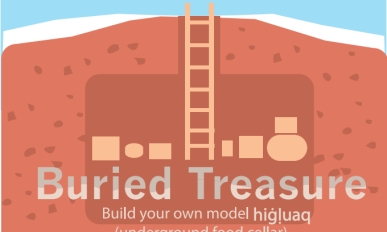
Explore more lessons in this unit!
Resource Developed By
To learn more about this project
View Project
Made possible with funding by the U.S. National Science Foundation Award #2221990. The information contained here is those of the author(s) and does not necessarily reflect the views of the U.S. National Science Foundation.