
“How are you feeling?” “I feel ALIVE!”
“Alive in a good way?”
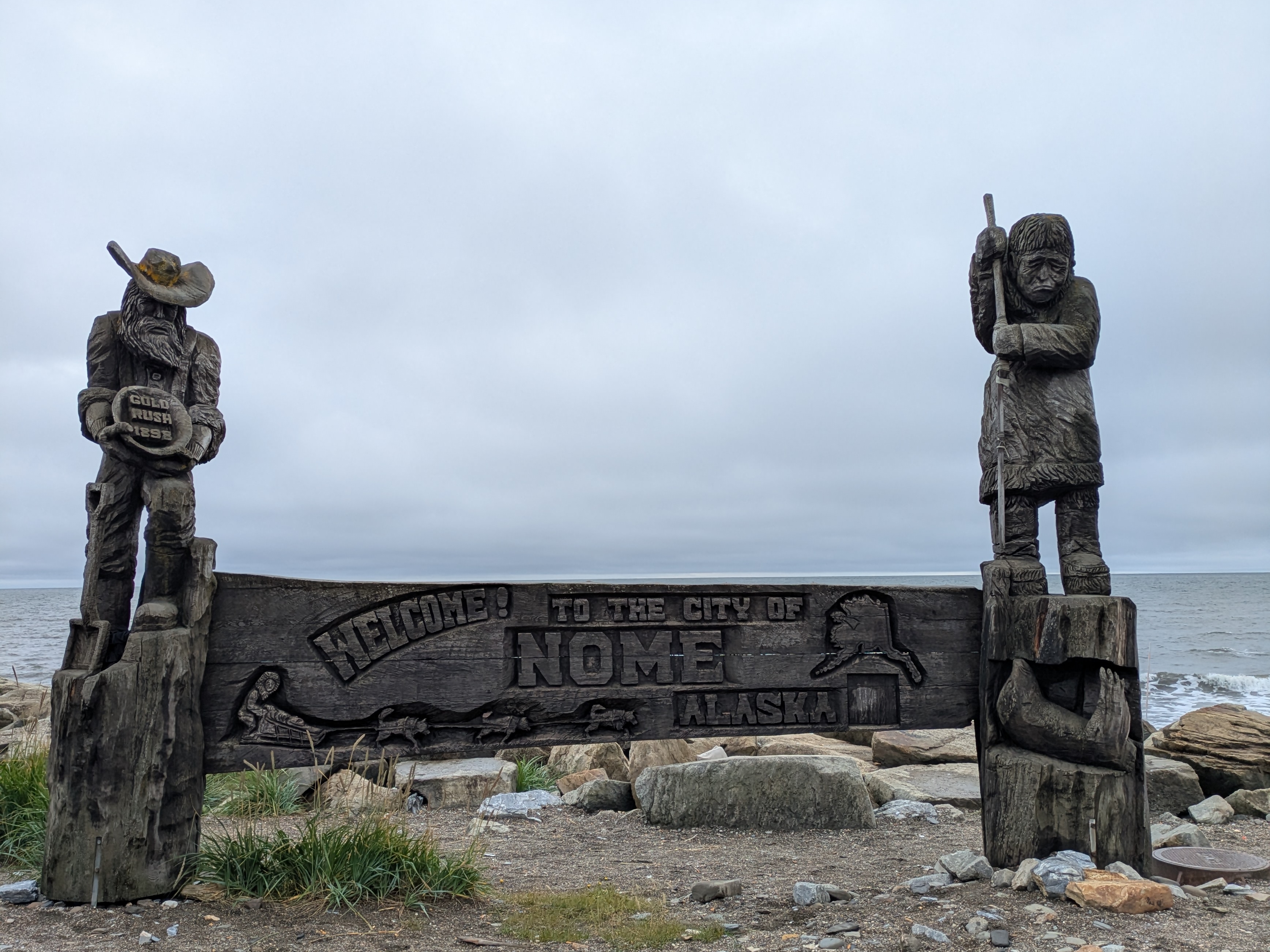
On my first day in the Alaskan tundra outside of Nome, Dr. Tom Glass and I drove up a crushed gravel highway towards new beaver ponds that Tom had identified via satellite imagery. We had both flown from Anchorage to Nome the day before, arriving in the smallest airport I had ever experienced. Nome is on the Alaskan coast, on the southern Seward Peninsula. It is a small town with a population of about 3,500. The area has a long history of habitation by Iñupiat peoples, and was rapidly expanded when gold was found here in 1901. Gold mining has greatly diminished, but the signs of it are visible all over the community, with dredge scoops being used as planters and old gold mine dredges in various stages of disrepair visible from the roads.
There are only three roads that branch out from Nome. Tom and I bumped and jostled slowly up the road toward Council, stopping when we got to the closest point to the beaver pond he was interested in. It had been raining the entire time I was in Nome, so we geared up with our bib waders and rain jackets. As we slogged our way up the road, the rain and wind was driving directly into my face. Tom turned to me and asked me how I was feeling. “I feel ALIVE!” I responded. After ensuring I was doing ok, we turned and began tussock walking across the tundra to get up close to the beaver pond. The tundra surface is very uneven, with thick clumps of grass, lichen, and small shrubs clumping together to form bumpy tussocks. In my experience, the ground has been saturated with water, as the permafrost a few feet below the soil doesn’t allow the rain water to drain quickly. Each step has to be careful to protect against turned ankles, tumbles, or sinking into the muck.
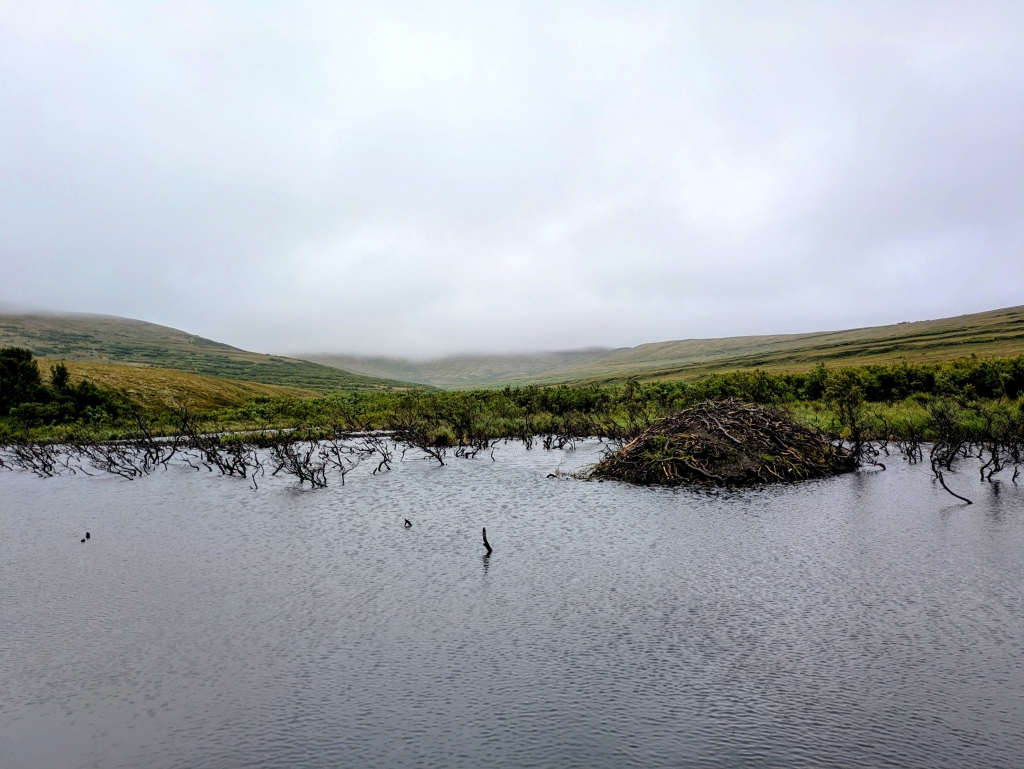
When we arrived at the beaver pond (above), Tom showed me the abundance of beaver chewed wood all around. Beavers eat tree bark, aquatic plants, and grasses. They are incredible landscape engineers, building solid dams to create a habitat that is just right for them. I marveled at the strength of the dam that Tom and I walked along. It was made of compact mud and layers and layers of branches and sticks. Based on satellite imagery, Tom could tell that this whole pond and beaver lodge had only been created within the last ten years. You see the difference in the landscape yourself by moving the slider on this webpage. I felt amazed and impressed at the intelligence and ability of the beavers to build these environments.
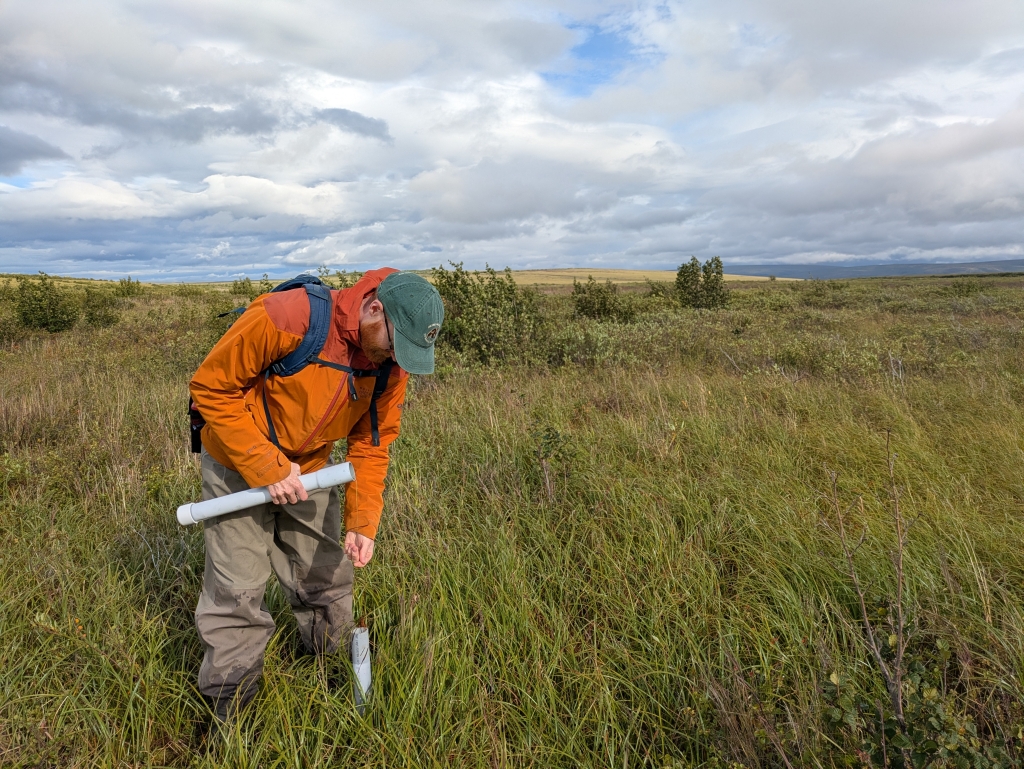
Over the next few days, Tom and I visited a number of beaver ponds, retrieving instruments that have been present at the sites for the past five years. In the above image, Tom is retrieving a Hobo sensor, which measured the temperature of the water table in the area surrounding a beaver environment. The Arctic Beaver Observation Network (A-BON), led by researchers from the University of Alaska Fairbanks, has been studying the way beavers are changing the landscape in the arctic over a five year grant, funded by the National Science Foundation. The incredible beaver work ethic, coupled with the population expansion and migration into more northerly latitudes, means they are creating many ponds in river environments that were once free flowing. The ponds create new ecosystems that are accelerating landscape change in various ways. More shrubs are growing around the ponds, there are effects on fish and bird habitat, and multiple effects on water quality. Perhaps most significantly, the ponds create a thermal heat sink that accelerates the thawing of the permafrost.
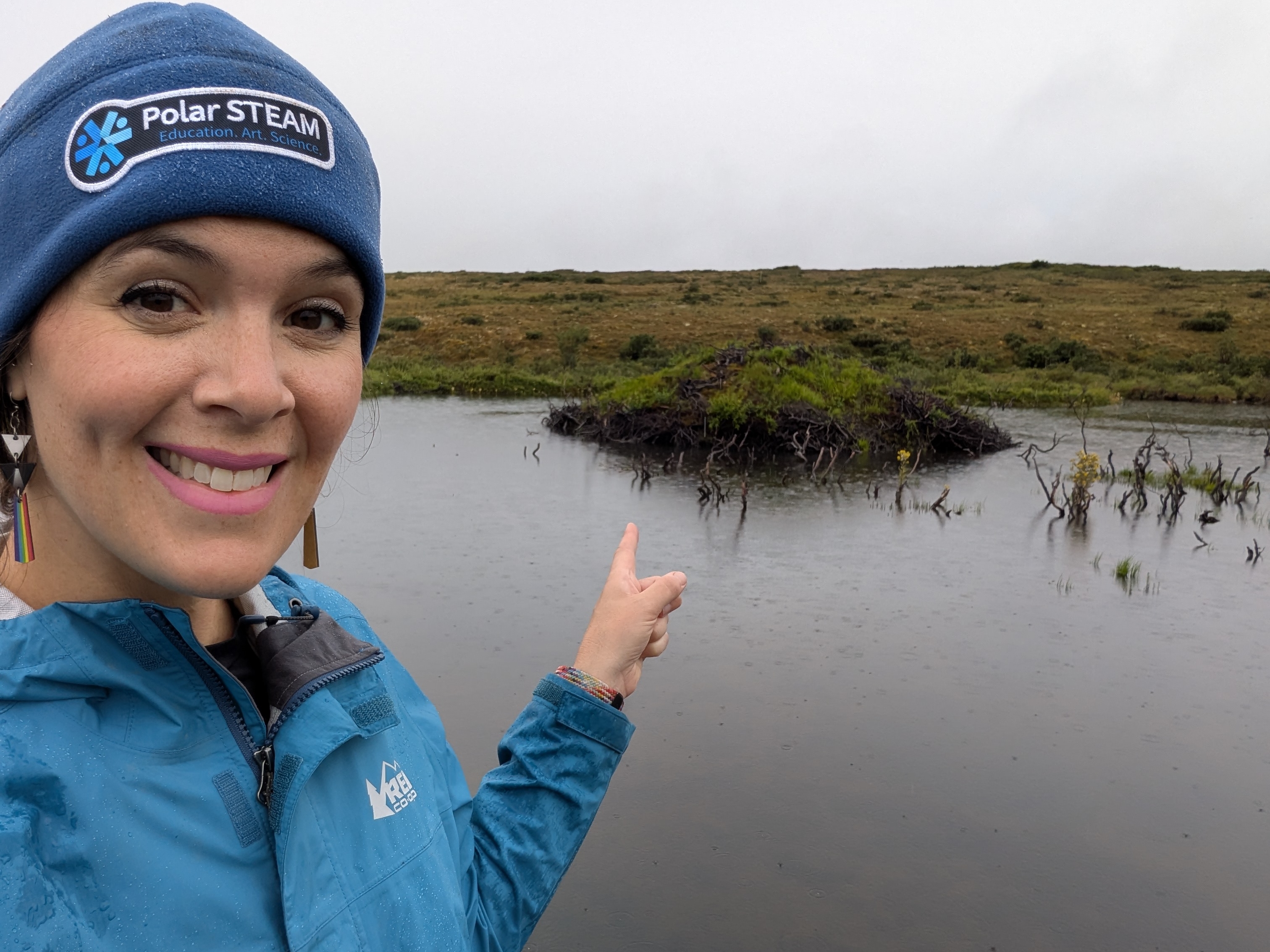
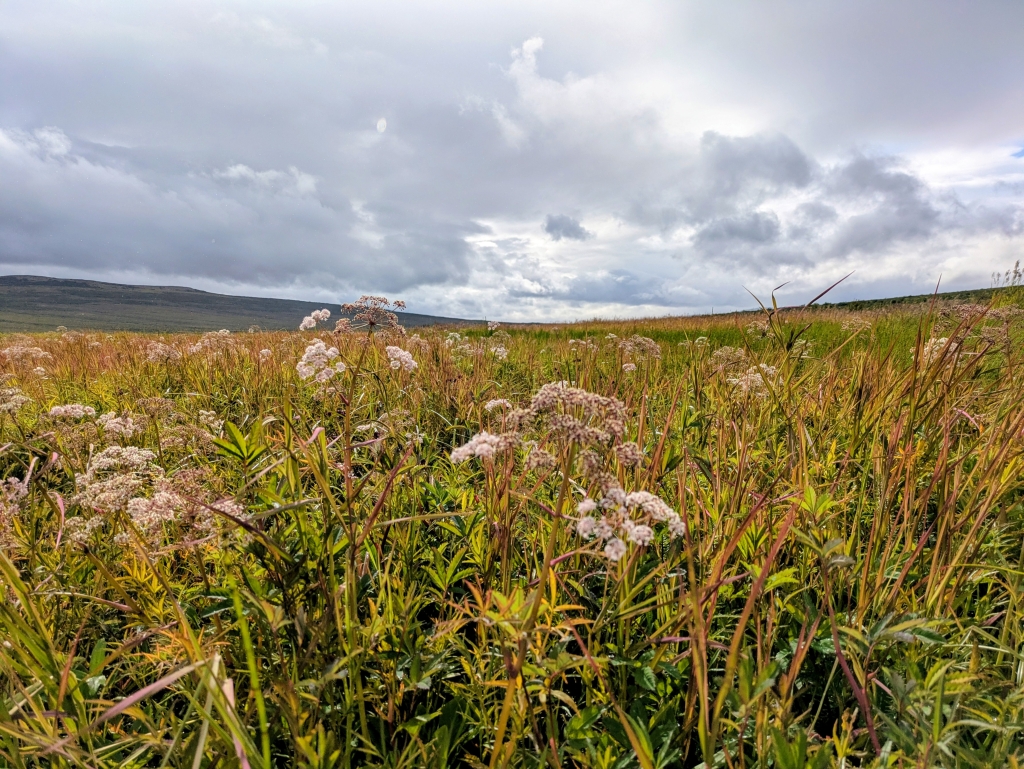
Despite the rain, I felt great each day we were slogging through the tundra. This environment is different from any place I have been before. There are an abundance of colors and textures in the lichen and shrubbery of the tundra, and a quiet beauty. While we were out on the tundra, we were the only humans present, and the sounds I could hear were mostly animal noises, wind and rain. I reflected later on how unusual that type of quiet is in my normal life.
I’m so grateful for my time here in Alaska with Polar Steam and the Beaver Team from the University of Alaska Fairbanks. I am eager to learn more in the remaining days of my field experience and soak in new experiences.