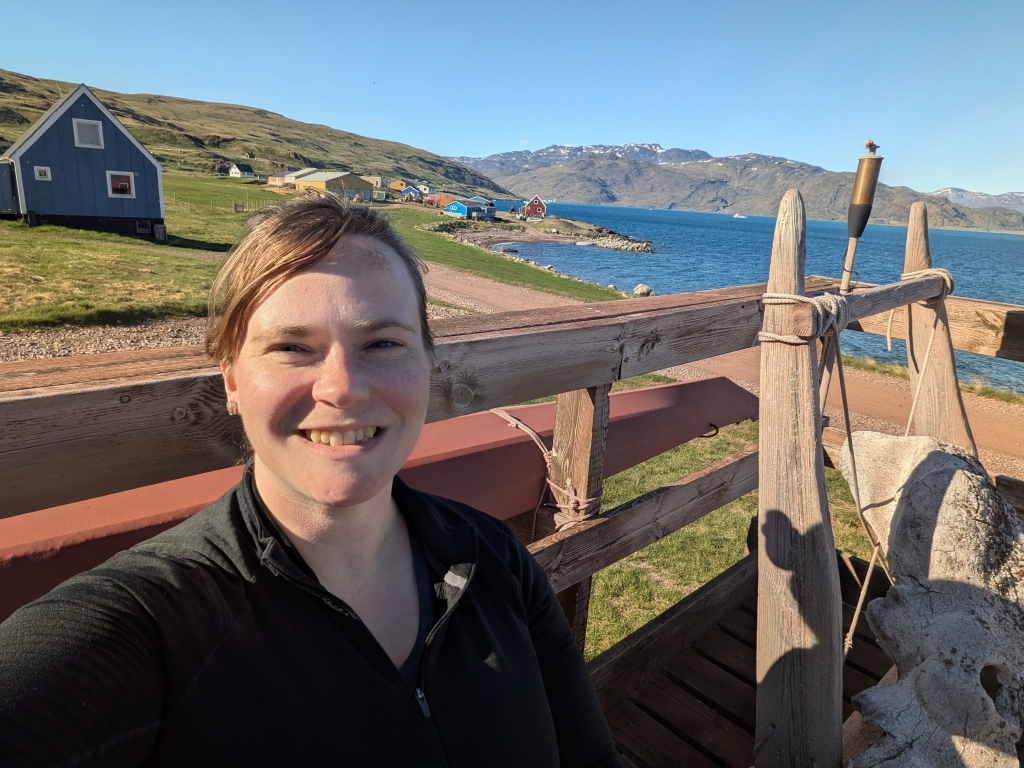

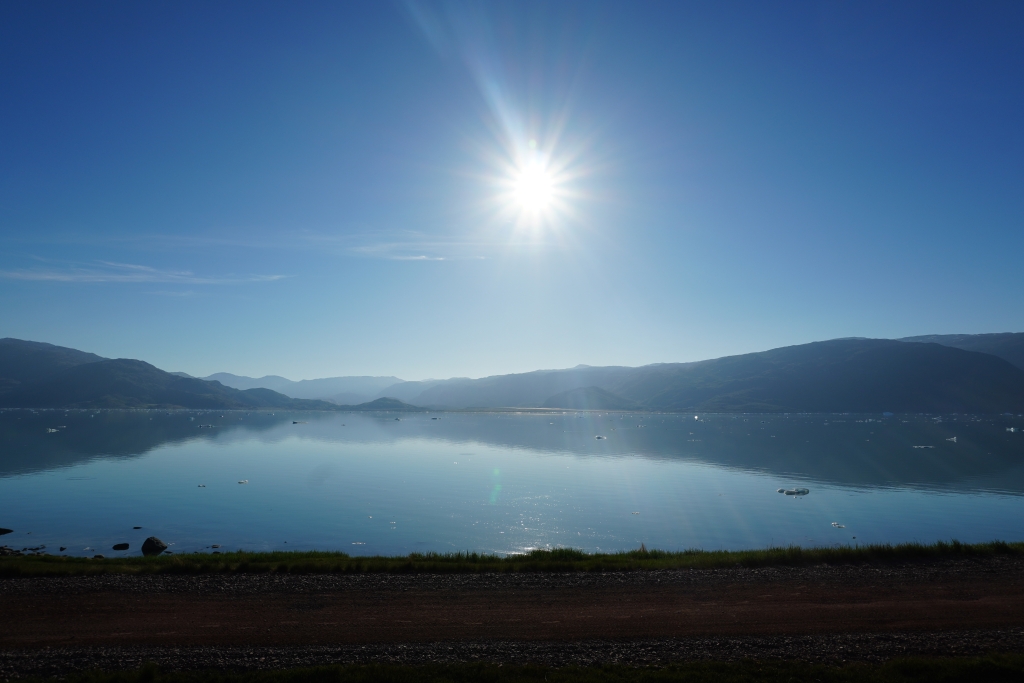
Our research site in Quassiarsuk, Greenland had one of the top three porches I have ever sat on in my life. The Leif Eriksson Hostel, owner of this porch, hosted our research team for the ten days we were in the field. I did not anticipate the joy that would come from this porch, and I don’t think I will find a porch like this ever again. It was plain wood with two picnic tables that overlooked the fjord. It was decorated with old whale bones and a traditional Greenlandic ice sled. From the porch, you could watch the icebergs in the fjord float in and shatter against the rocky shore. A humpback whale greeted us on three consecutive days, and we spent the rest of the trip awaiting its return. Ravens made ominous warnings as they flew over in the night. The smell of the saltwater was more refreshing than I could have imagined. A giant statue of Leif Eriksson loomed in the setting sun, and the famous ruins of Erik the Red’s original settlement in Greenland dotted the landscape. Stray sheep rested in the porch’s shade after dinner. Every morning and every evening, I sat and journaled and took in the incredible silence of the landscape.
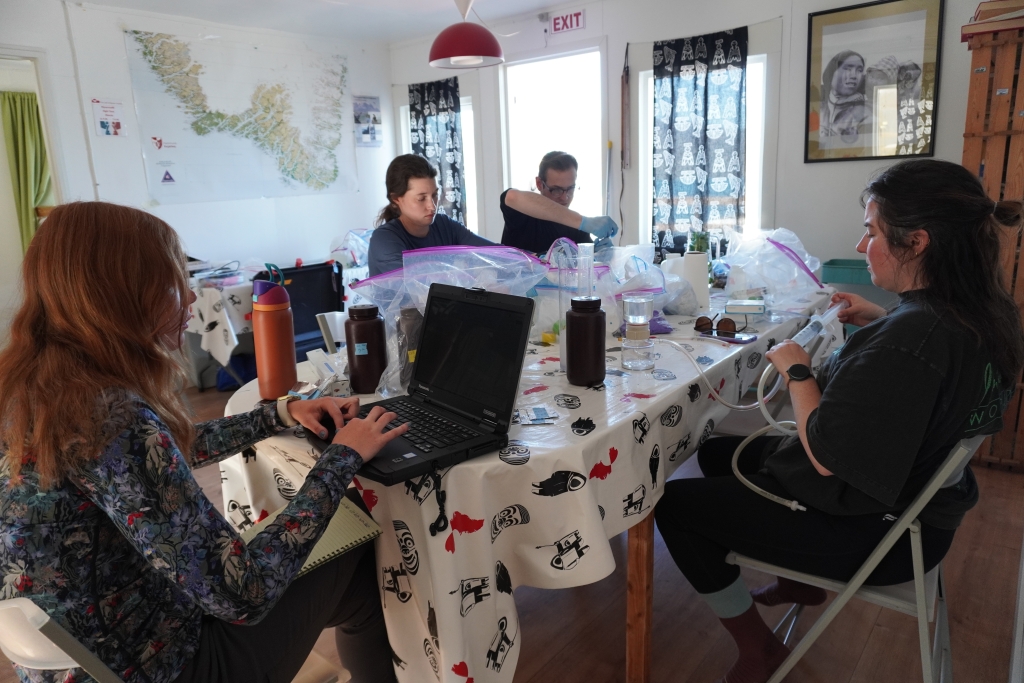
The view inside wasn’t too bad either. From the open door of the porch, you could hear excited murmurs and tinkles of laughter from the scientists inside. The hostel was packed with the people and equipment that made up our research team. We took over most of the available spaces. We strung our wet buoy ropes to dry in the midnight sun and set up impromptu water filtering areas in the dining room. The picnic tables hosted a rotating variety of sensor downloading sessions, zooplankton studies, and water quality testing. The spare bedrooms were neatly stacked with equipment, and the actual bedrooms were explosions of hiking gear and sunscreen.
Each morning, the porch was filled with neat lines of the day’s equipment. I did not expect the amount of logistics that went into this sort of research trip. Every detail was meticulously considered: which route would take us the shortest distance between lakes, which days had low wind so the boats wouldn’t drift, what equipment we were capable of carrying to each lake on foot, which lakes to visit when to reduce repeat visits to the same lake, and how many Sharpie markers we were expected to lose in someone’s backpack. Each person had equipment to carry and a job to do.
The porch also hosted many long discussions about how the day’s science would be completed. The most interesting part of joining Amanda in the field has been observing the creativity and problem-solving that goes into gathering her data. She needs to consider what sorts of methods might get her the results she needs, what other scientists have done that she might be able to adapt, and what she is actually able to do within the constraints of time, budget, weather, and the fact that everything needs to be carried out to these lakes on foot.
Leaving this porch for the last time was incredibly hard. While boarding the boat to leave Qassiarsuk, I could not stop the intrusive thoughts that screamed for me to swim back to shore and stay there forever. My field experience with Amanda and Polar STEAM has been incredible, and I selfishly don’t want it to end. I will forever dream about the joy and opportunities and sense of wonder and deep appreciation for science that my time on this porch has brought me.