
We passed an iceberg and pulled into the port at Qassiarsuk, Greenland. We disembarked with a question to answer: How are the lakes in this area changing? Amanda Gavin, PhD candidate at the University of Maine, has been returning to the same lakes for the past five years to find out. This time, I was joining her.
These lakes, tucked high amongst the rocky slopes of Greenland, have a long history, an interesting present, and many potential futures. Climate change and agriculture are impacting them. Through her research, Amanda hopes to provide data that could inform the Greenlandic people or other researchers on these potential futures.
Amanda is studying three things about these Greenlandic lakes: their water level at different time scales (200 years ago to today), how they are affected by climate change and agriculture (this area is home to many sheep farmers), and how the lake’s living and nonliving components contribute to the global carbon cycle.
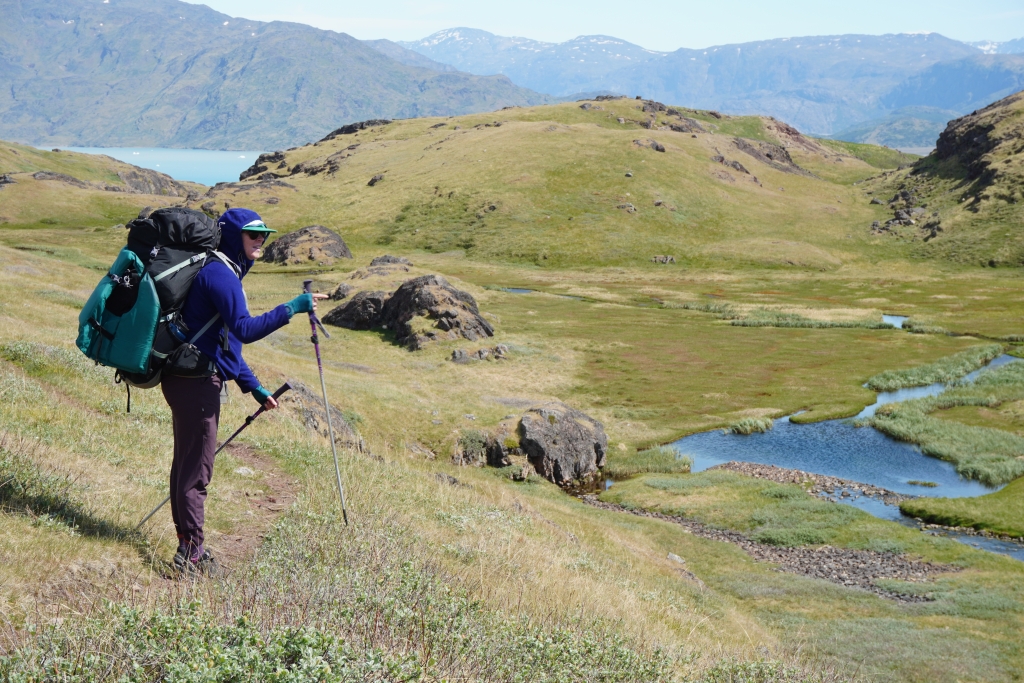
On a typical day, we would wake at 7:00am for a delightful continental breakfast. We wore on our hiking boots and quick-dry clothes, and we packed our down jackets and rain gear just in case. Then, we loaded our backpacks for the day: inflatable boats, water quality testing supplies, buoys and sensors, containers for samples, and safety supplies. At 8:00am, we loaded into a four-wheeler and bounced along the dusty roads until we reached a drop-off point, after which we hiked in to each of the study sites. The paths we took across the rocky landscape were carved out by the sheep who call these hillsides home for the summer.
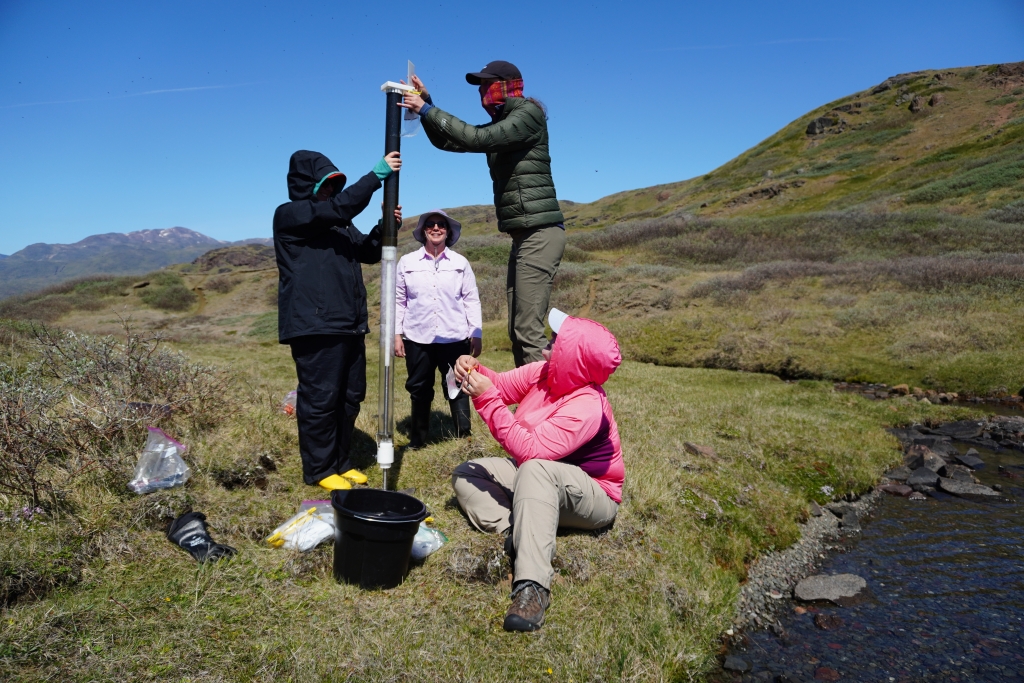
Upon arriving at the lake, Amanda and the research team would inflate a three-person raft, load it with equipment, and row to the center of the lake. Using giant metal poles, they would push into the lakebed to retrieve a 3-4ft tall cylinder filled with sediment. Amanda would row this cylinder back to shore, where I would carefully scrape thin sections of sediment into individual bags for testing. The sediment contains traces of diatoms – a type of algae with a glasslike shell that preserves them. The ratio of open-water diatoms to shoreline diatoms reveals the lake depth in the past. We collected enough sediment to be able to estimate lake levels for the past 2,000 years. Lunch was eaten in between bagging the sediment – a process which took at least three hours.
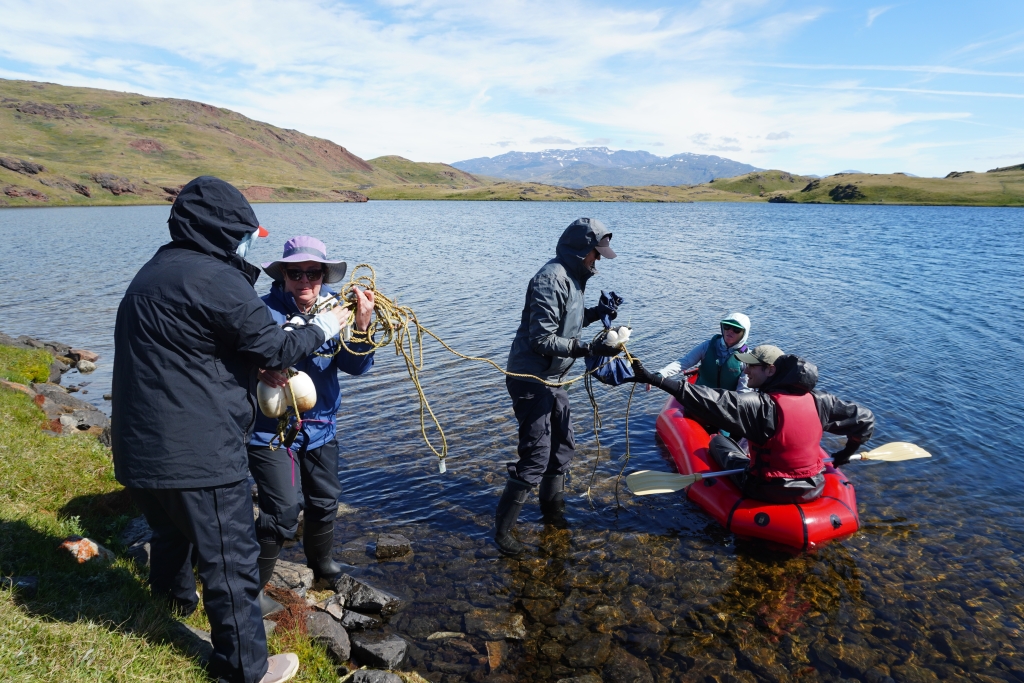
While I was working on bagging the lakebed sediment, Amanda would change out the equipment in the boat and return to the center of the lake. To learn about the lakes as they are today, Amanda has placed buoys strung with all kinds of sensors – dissolved oxygen, temperature, water depth, and more – and retrieves the data off them once a year. Each lake had a buoy that had to be retrieved from the lakebed using a grappling hook and carried home to retrieve its data. Later, we would return to the same lake to return the buoy for another year of data collection.
After lunch, we would travel to a different lake and repeat the process over again.
At about 4:00pm, we would hike back to the road and use a satellite phone to catch a ride back to the Leif Eriksson Hostel. We regrouped, downloaded data from the buoys, processed our samples, and planned the next day. At 7:00pm, the hostel’s staff cooked us a delicious Spanish dinner. I would spend a few hours at the microscope identifying the microscopic plants and animals that lived in the water. At 10:00pm, we took hot showers, closed our blinds as much as possible (sunset begins at midnight this far north), and slept with our socks on (it was about 35-40 degrees at night).
To close out each night, I would journal and consider the things I’ve learned from Amanda and this Polar STEAM experience:
- How scientists actually do the Scientific Method vs what you learn about in school
- How research questions actually come about and how creative you have to be to figure out how to answer them
- The flexibility and creative thinking required to come up with plans A-E for your field work on any given day
- A LOT of facts about limnology, Greenland, diatoms, and water quality testing
- The beauty of being welcomed and included by people you have just met, and the camaraderie and support you can feel in achieving hard things together
- How amazing it is to be a part of this Polar STEAM fellowship and have this experience.