
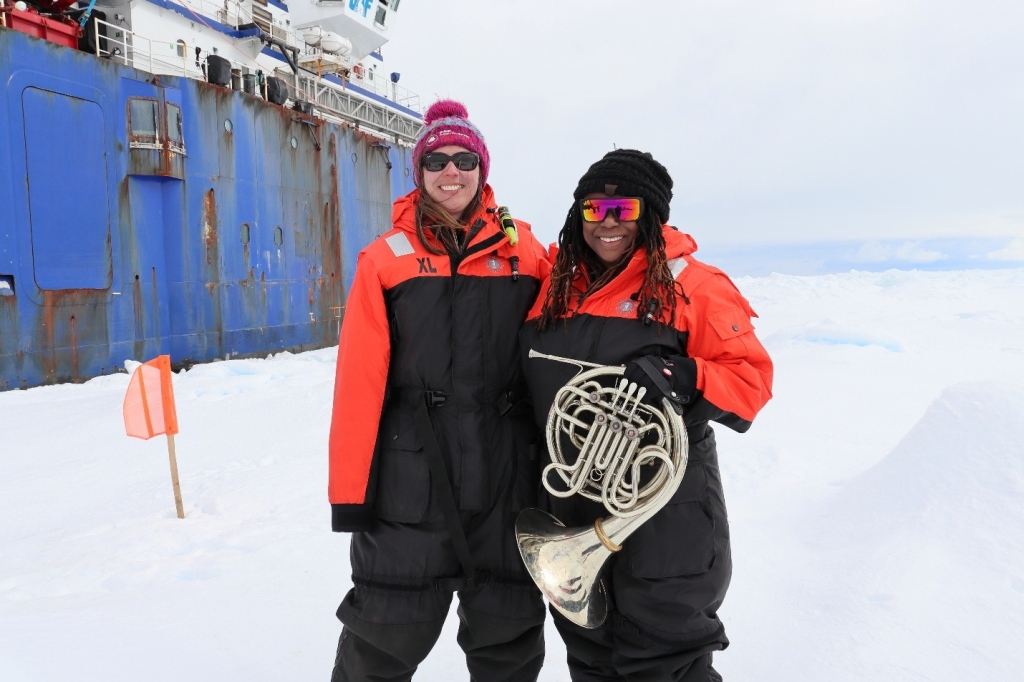
Through Polar STEAM, I had the opportunity to collaborate with Kyra Sims, a professional French Hornist embarking on a journey to play her horn on all seven continents. As part of her experience with me in Antarctica, Kyra also aimed to record sounds from different operations throughout our research cruise and then combine them into a soundscape that she will produce and perform in New York later this year or next.
I had opportunities to collaborate with artists on research projects I conducted in the United States, but never on an international expedition to Antarctica. As a polar plankton ecologist, I participated in six research expeditions to Antarctica and know how intense they can be. They are certainly not for everyone given the long working hours, sometimes cramped conditions, and tumultuous seas. In speaking with Kyra prior to the cruise, I could already tell she would be amenable to working in Antarctica. As an interdisciplinary performance artist working both on Broadway and Off, Kyra was no stranger to long working days going late into the night. It also helped that she claimed herself as a ‘night owl’. Further, her French Horn was named “Otto”, and my pug is also named “Otto”, so I knew we’d get along great 😊
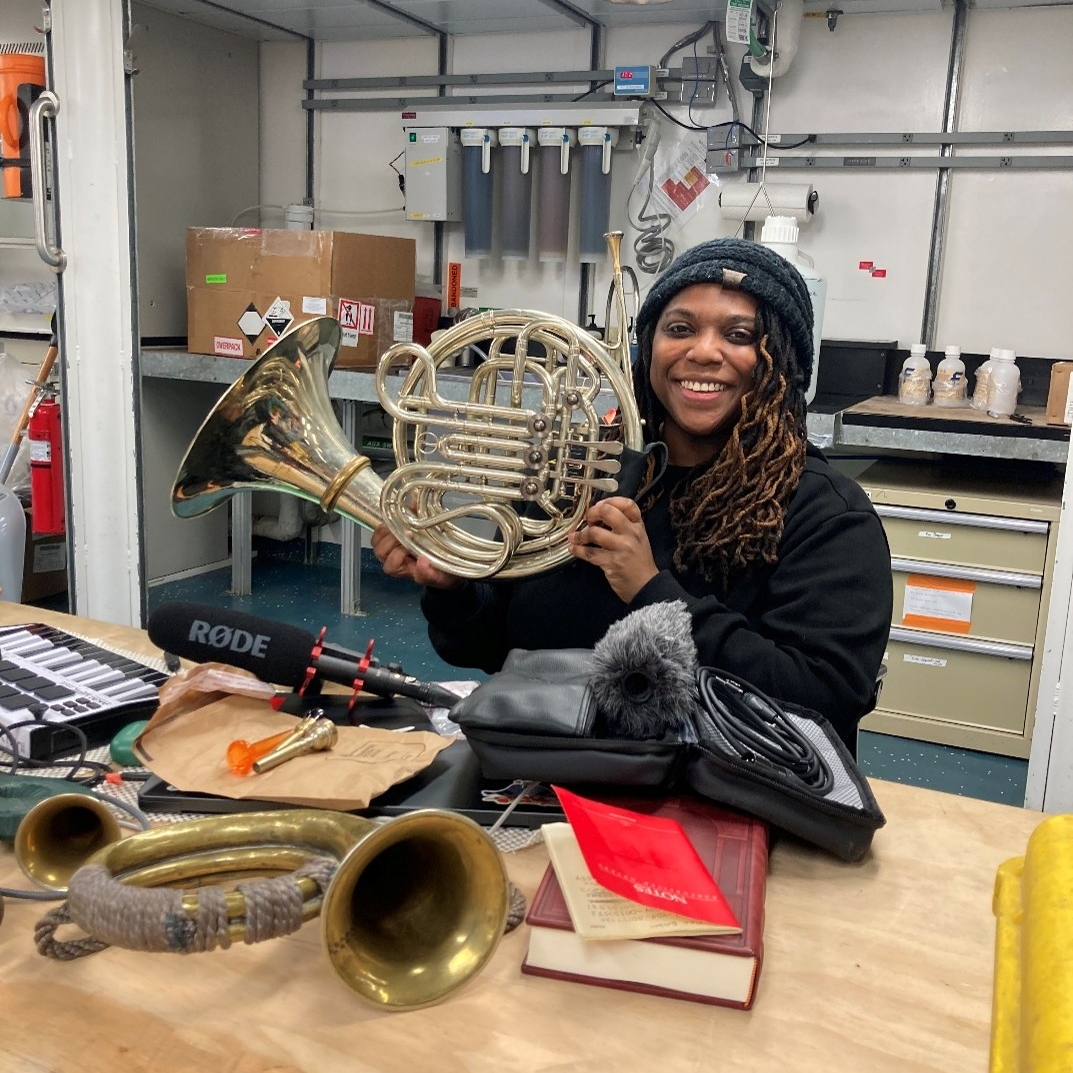
When we arrived in Punta Arenas, Chile in January 2026 for mobilization on the R/V Sikuliaq, one of the first things that struck me in working with Kyra was our different use of ‘instruments’. As I started organizing my lab area with sampling buckets, forceps, and beakers, Kyra was setting up her ‘lab’ area including her French Horn, MIDI keyboard, and hydrophone. It struck me that while we were measuring very different things, the way we approached our work to take our measurements was actually quite similar. This sentiment was further confirmed during our Polar STEAM livestream towards the end of the cruise in which Kyra spoke to the fact that we were both collecting ‘data’ throughout the cruise, just different kinds. Kyra was interested in recording lots of various sounds from the ship moving through sea ice to penguins chirping to bubbles exploding through an ice core. In contrast, I was focused on characterizing the zooplankton community throughout the marginal sea ice zone, which fit into our larger research project of linking sea ice melt to biogeochemistry and plankton in the Weddell Sea, Antarctica.
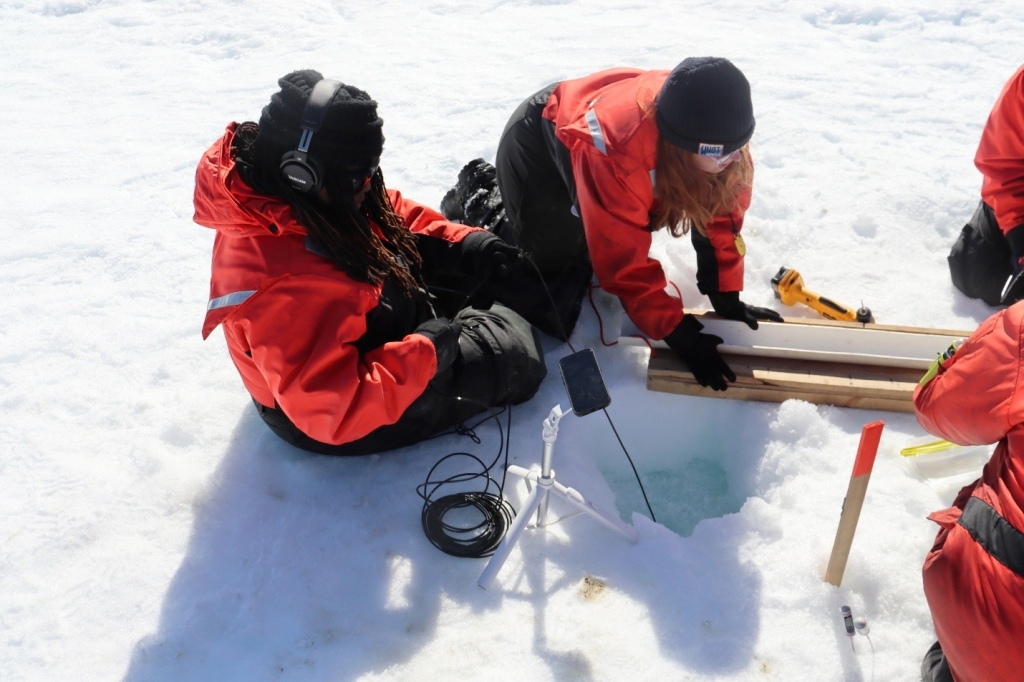
Kyra was also critical to our science team in assisting in many aspects of our research throughout the cruise. My research project was funded through a U.S. National Science Foundation (NSF) Polar RAPID award, which enabled me to get the project funded quickly (within months) but also limited my team’s capacity to complete the ambitious science goals we wanted to accomplish given the RAPID funding cap ($50,000; for context, most polar NSF awards are around one million dollars). Further, while most science teams would typically have at least 10 grantees on a research cruise to accomplish the science we aimed to do, our team only had five due to funding constraints. Therefore, Kyra was a welcome addition as the sixth member of our team. She integrated so easily within our group that most crew members on the R/V Sikuliaq assumed she was another scientist with an avid French Horn hobby! During our stations, Kyra assisted primarily in sorting zooplankton from our 1-meter net tow that was used to collect mesozooplankton. She picked up on identifying the various organisms quickly and was often able to work independently throughout the sorting process. She also assisted in some of the sea ice sampling stations, which gave her an opportunity to record sounds of the sea ice that ultimately inspired some of her soundscapes she plans to produce.
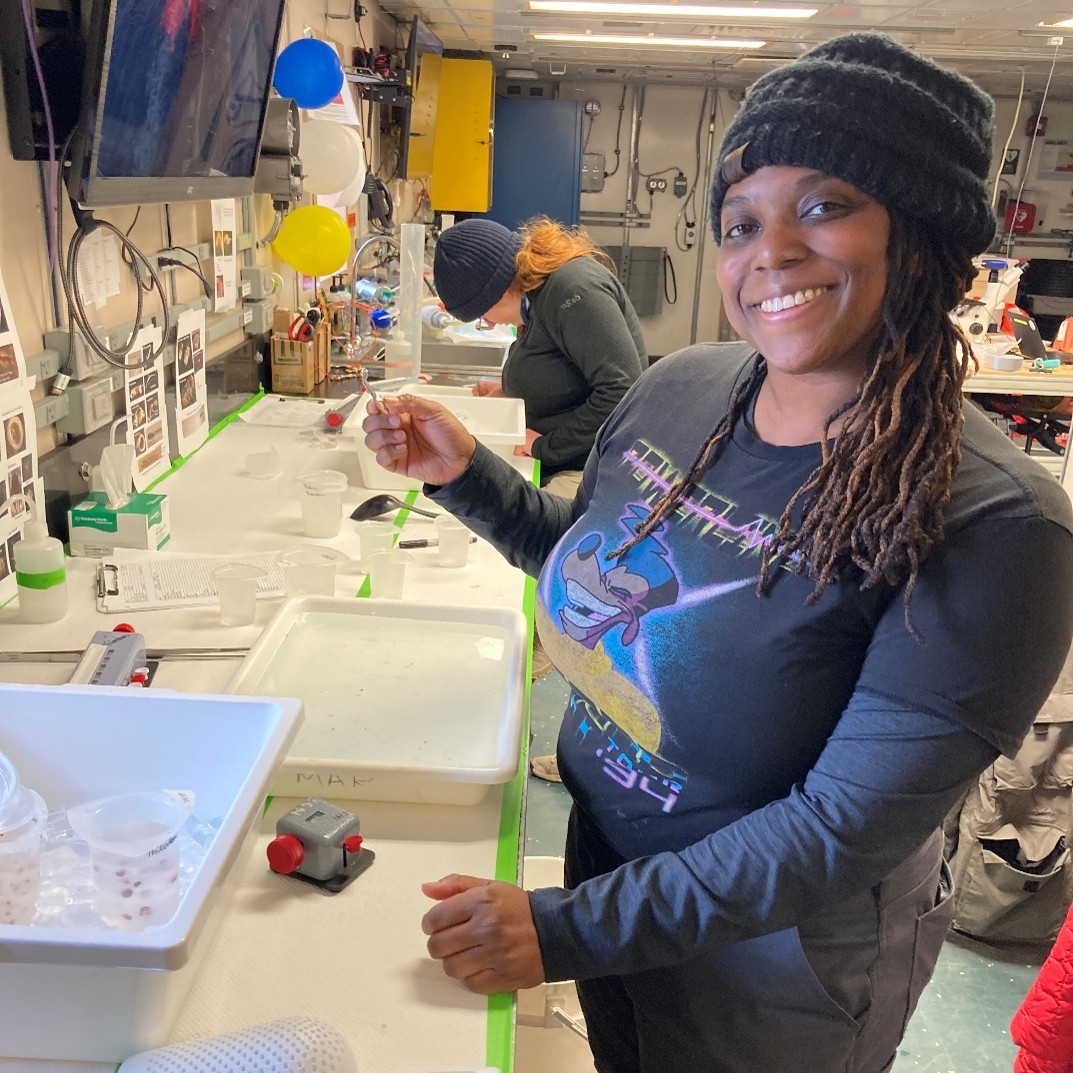
The opportunity to sail with Kyra helped me appreciate the ‘little things’ in my science I often overlook. Rather than trying to grind through my sampling and processing as fast as possible, I learned to take a moment to notice the sounds around me. This practice also helped me to be more mindful in my science and in my life. In addition, I learned to see the many parallels to our art and science work. We both set up instruments, collected samples, and processed data, but the variables we measured were different. As in previous opportunities I had to collaborate with artists, they always help me see a broader perspective on my research, which I know makes me a better scientist in the end.