
All the Plans Coming Together
In late January, I found out I had been selected as a Polar STEAM fellow and would be traveling to Prudhoe Bay, Alaska, with Dr. Julia Guimond and her research team from Woods Hole Oceanographic Institution. I was joining her team to study saltwater intrusion on the North Slope of Alaska. Saltwater intrusion is exactly what it sounds like: Saltwater from the ocean moving into places where it has historically not been. From the beginning, this partnership seemed to be meant to be. You see, Julia’s project was called Saltwater Intrusion and Fluxes in the Tundra, also known as SWIFT. With my first name being Taylor, it seemed like everything was falling into place from the start!
Fast forward to June 10th, and I was putting the final touches on my packing and plans. As a math teacher living in Atlanta, Georgia, I wanted to ensure everything was ready to go. Julia had sent me the field plan, and I knew I was in for a busy 10 days in a place few people had even heard of. Prudhoe Bay, Alaska, is best known for being a large oil field with little else there. Julia explained to me that we would be in the field 10-12 hours a day and wouldn’t have much downtime for anything else, which was perfect because there was not much to do in Prudhoe Bay! I was excited but felt as ready as I could with all the plans we had in place.
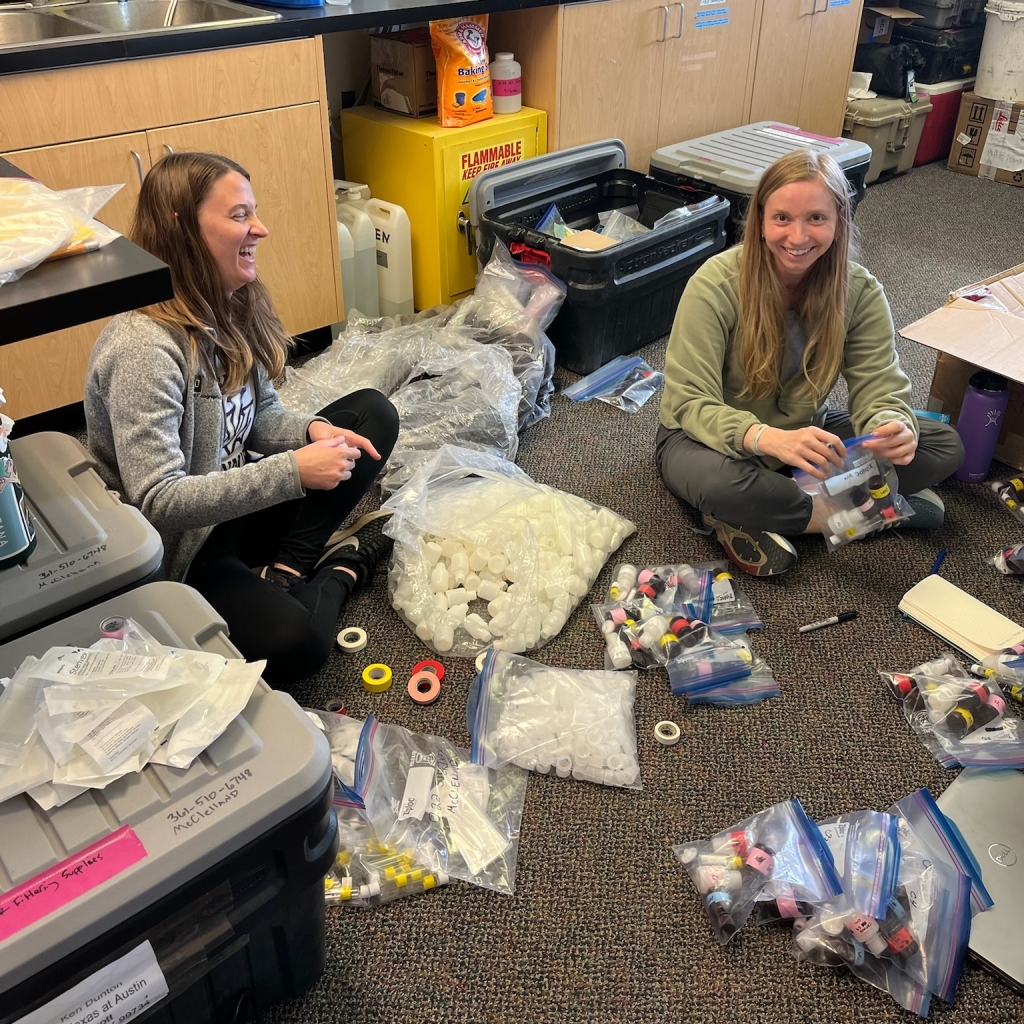
On July 12th, the entire team was finally together, hard at work preparing everything we would need for the field. I spent most of our prep day working with the biochemistry team, packing kits for water sampling. This included labeling and sorting plastic bottles to test the groundwater for nutrients and chemical compounds. Meanwhile, the other team members were testing instruments, packing boxes, and getting excited for our meticulously planned fieldwork days.
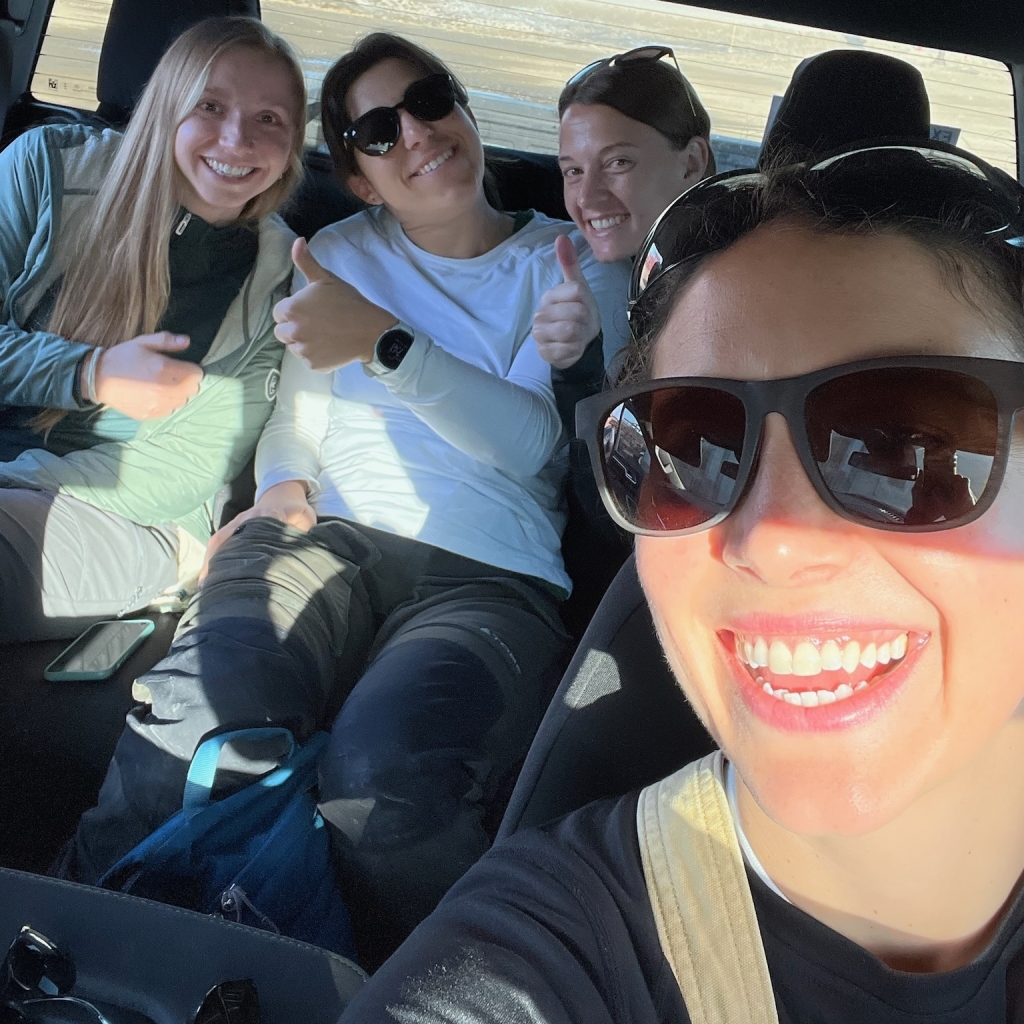
The following two days were unlike anything I had experienced. As we pulled up, it felt like I was on an alien planet, with the brown tundra broken up by ponds, lakes, and the oil infrastructure. Julia told me that in a few weeks the brown landscape would wake up and become green. During our 90-minute drive to the field, we saw all sorts of arctic birds, foxes, and plants. We crossed over the Kuparuk River, which was the single access point to our field site. The team explained that this river would soon become a trickle since all the snow and ice had melted from the mountains.
Upon arriving at Milne Point Camp to check on the oil field, we discovered that our carefully laid plans could quickly unravel. A phenomenon called a freshet had yet to happen, which was unheard of. Julia explained to me that a freshet is when rivers flood due to the ice and snow melting, creating an enormous rush of water. This usually happens in mid or late May and has never happened this late. When the freshet happens in Prudhoe Bay, the one access point across the Kuparuk is closed due to the flooding. In extreme cases, the bridge could be washed out entirely, causing more delays. They did not have an estimate as to when it would happen, but warned us that the road would be uncrossable when it did. While we heard their concerns and warnings, we were more excited to get out into the field that this quickly fell to the back of our minds.
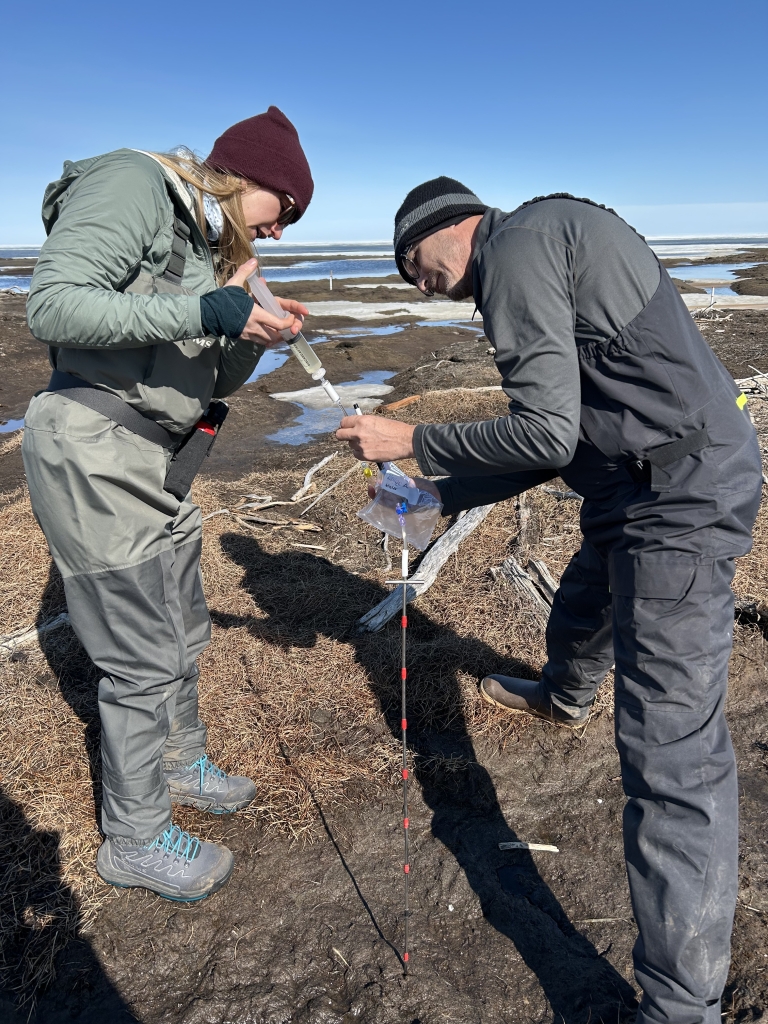
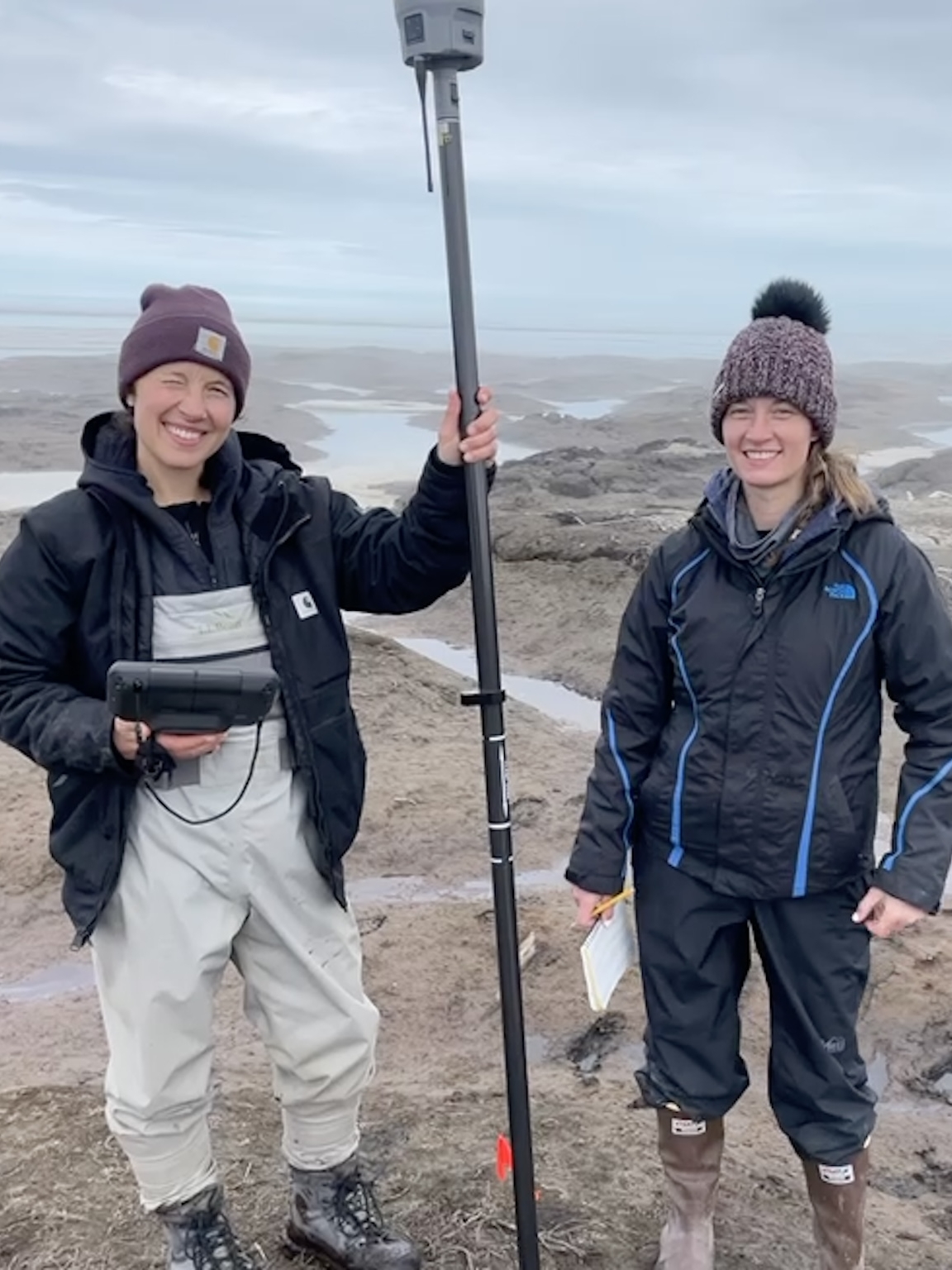
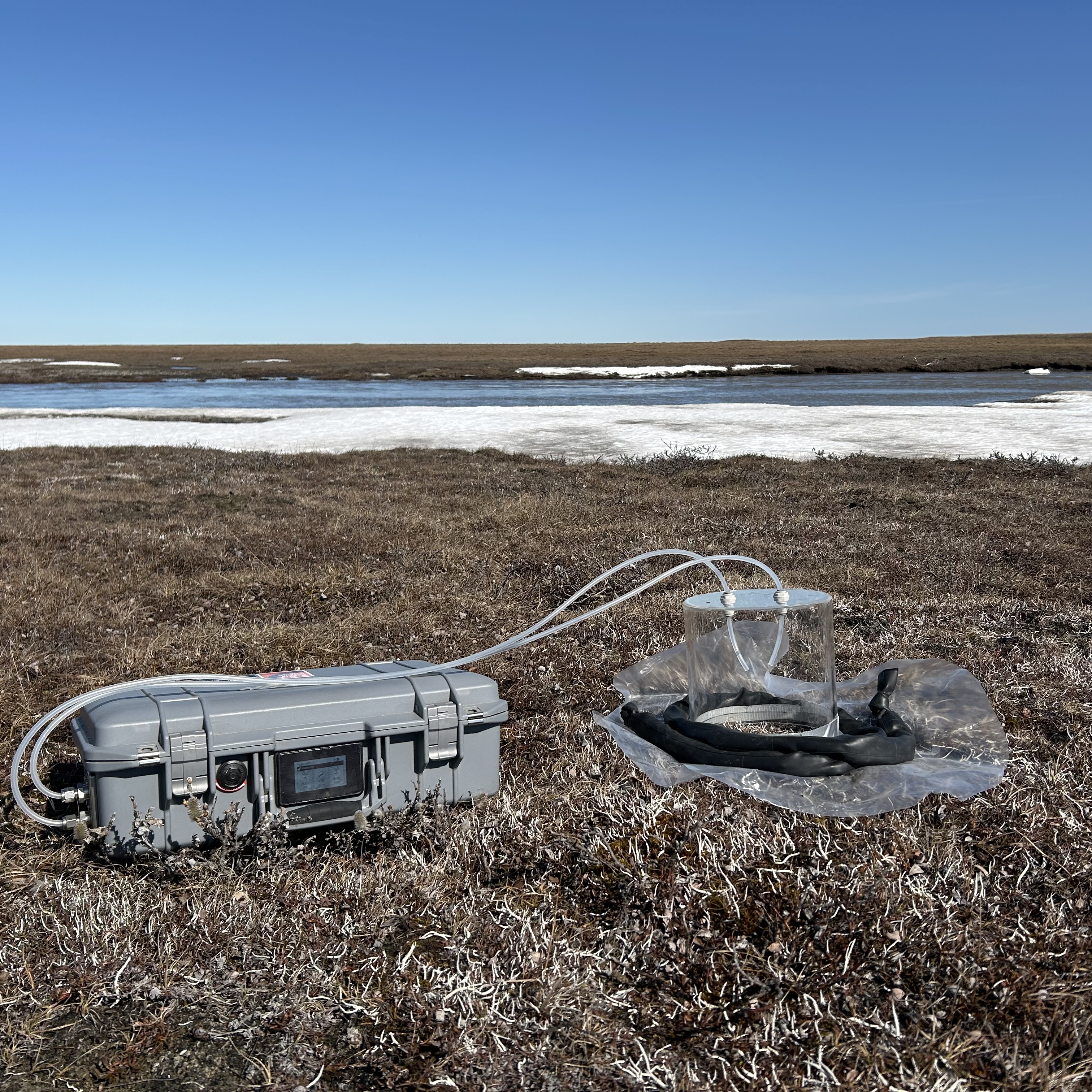
It was super cool to see all the plans in action with three different teams studying the effects of saltwater intrusion. One team worked to see how the groundwater chemistry was changing, another studied how the changing landscape impacted greenhouse gas fluxes, and the final team studied the topology of the land to see how it was affected. All the data they gathered would paint the picture of how saltwater intrusion impacted the delicate tundra. We collected groundwater samples using a sipper, used an RTK (Real-Time Kinematic) instrument to get incredibly accurate measurements of the field, and deployed machines to measure the greenhouse gas fluxes. The weather was beautiful and everything was going according to plan. In fact, we were getting a little ahead of schedule! On the evening of our second field day, we ate dinner, sharing how excited we were to keep working and possibly getting some data we didn’t even expect!
Our Father’s Day Gift, The Freshet
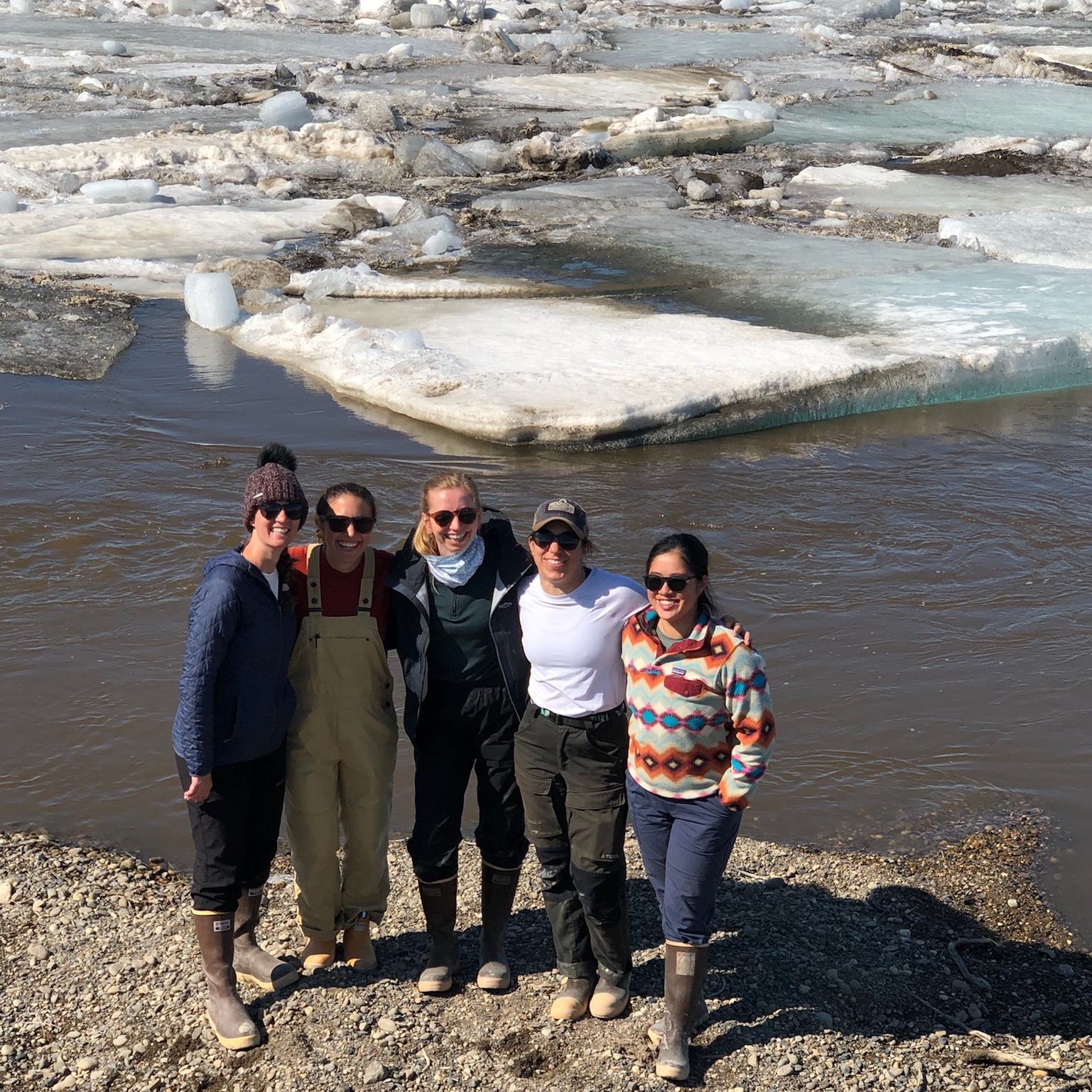
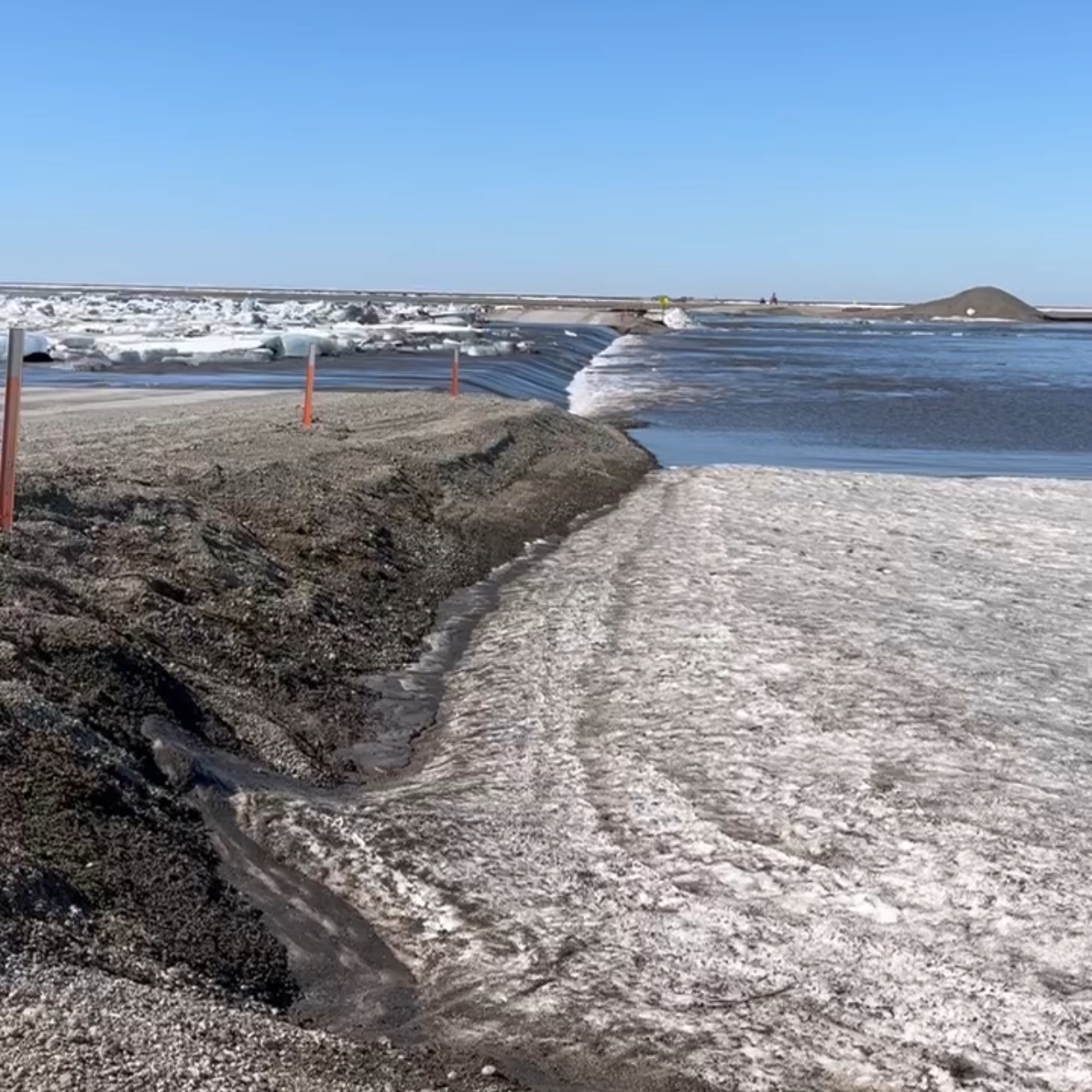
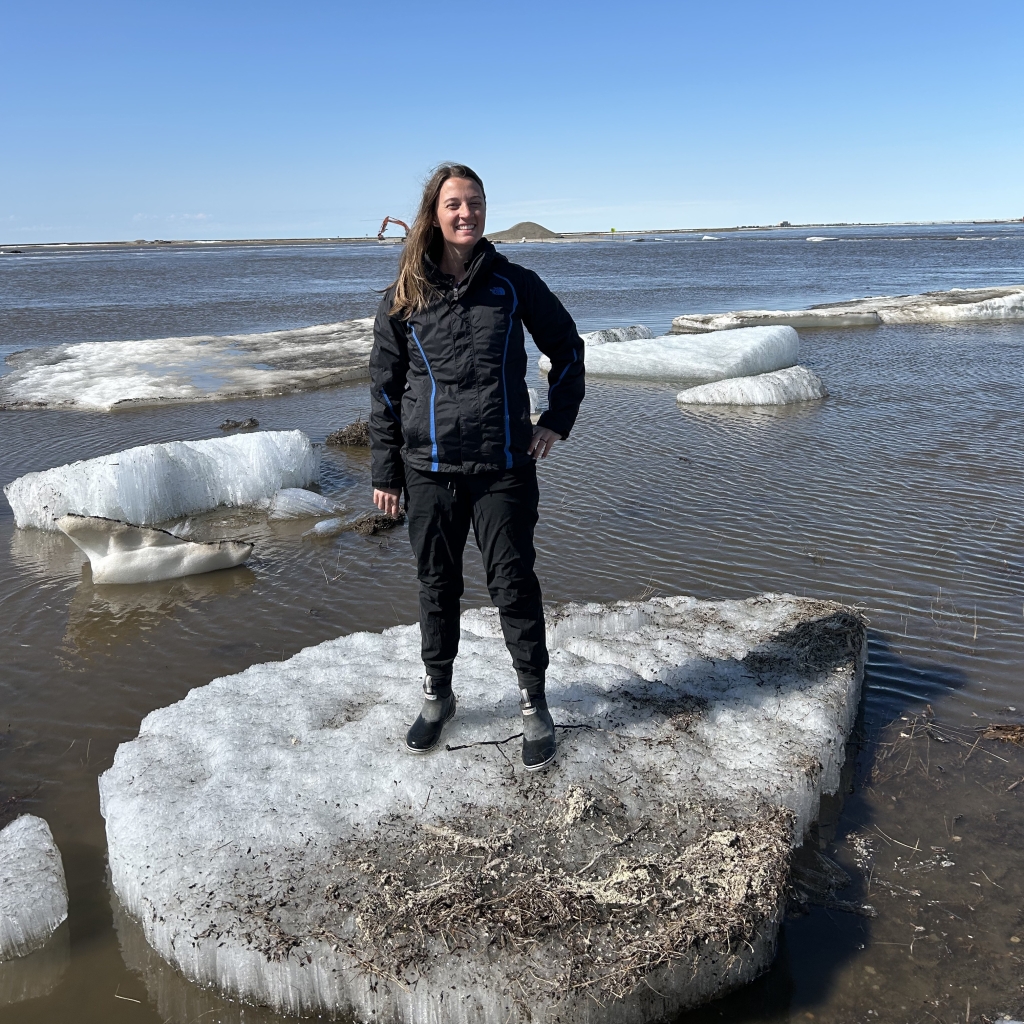
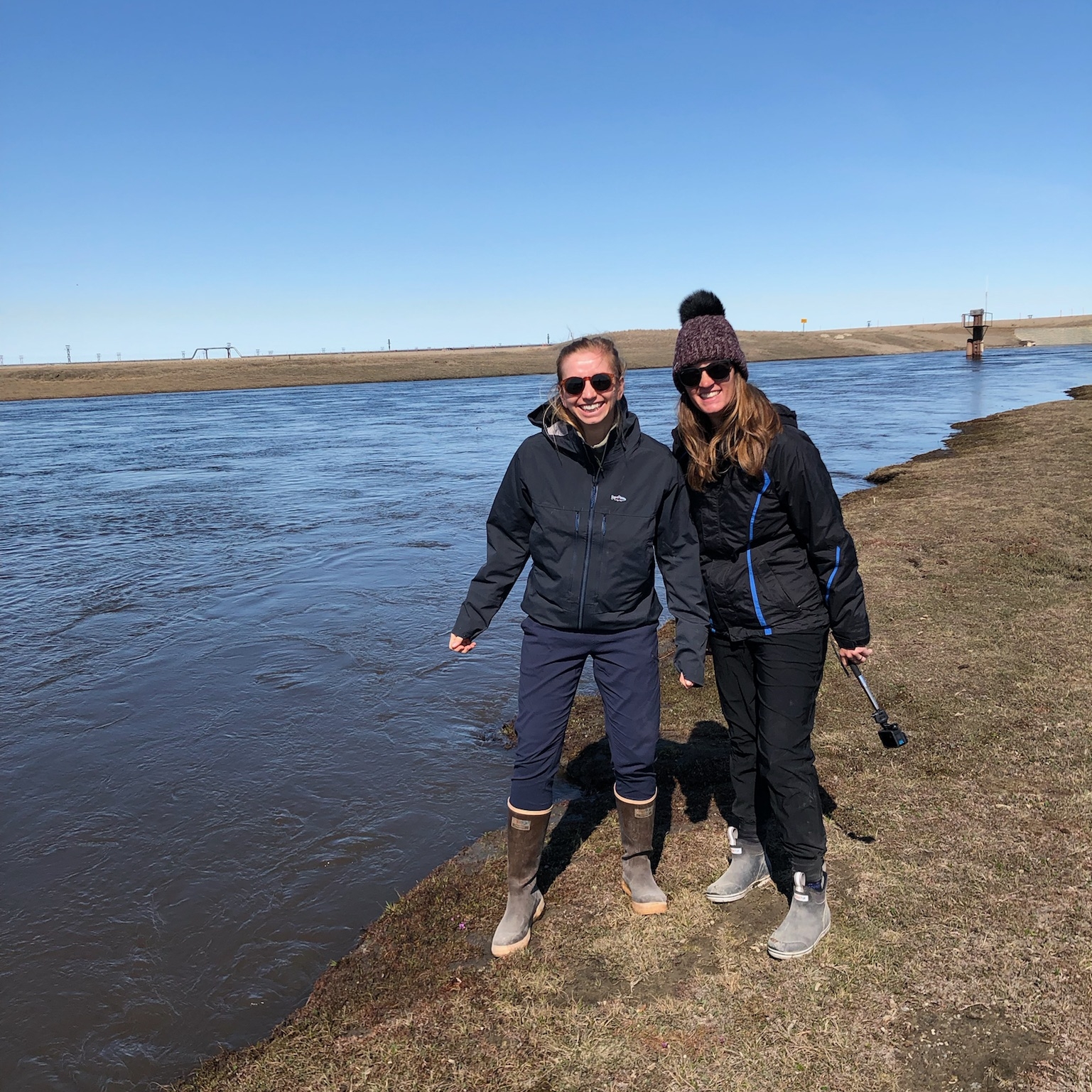
On June 15th, we woke up to news that I had admittedly forgotten about: the freshet had happened, and we could not go into the field. This river that had seemed so tame a few days before was now roaring and had halted all our work. We drove out to where the bridge usually would be to find ice piled up and the bridge completely underwater. We were not crossing at any time that day. It was incredible to see the amount of ice piled up in a space that was completely clear 12 hours before. While this initially seemed like devastating news, our plan had included a day to collect some inland samples as comparison points. We had initially planned to do this on a day with bad weather, but today seemed like the perfect day to get it done! Away we went to various points around Prudhoe Bay to do a lot of the same data collection that we would do in the field. While this seemed like a minor hiccup, our plans were still on track, and spirits were high. This allowed me to learn more from Jackie about her work with greenhouse gas fluxes. She showed me her instruments that provided real-time graphs to show how the ground was breathing. She explained how she would be spending months in Alaska studying these fluxes in various areas. We had a shorter day in the field, but were hopeful that we would be able to get back to our actual field sites the next day.
Freshet = Flexible
Our dreams of getting into the field the next day were quickly ruined. We awoke on June 16th with news that we could still not cross, and, in fact, the water was continuing to rise. To say we were disappointed at breakfast that morning was an understatement. We were starting to lose time that we had not planned for in our schedule. I started to internally panic about what this would mean for the team and their well thought out plans. We would be leaving on June 20th, and still had so much that we needed to get done. How could we possibly accomplish everything we wanted? The freshet was utterly unexpected and was not even a thought in our planning. Thankfully, the team quickly pivoted, and we had new plans. While the freshet meant we couldn’t collect data at our field site, it did provide a unique opportunity to collect water samples during an important hydrological event. Jim, one of the biochemistry team members, explained that they did not have data from the freshet in the past 20 years. By going down and collecting water samples now, his team could gain essential insights into what the freshet is doing and how its chemistry could impact other parts of the project.
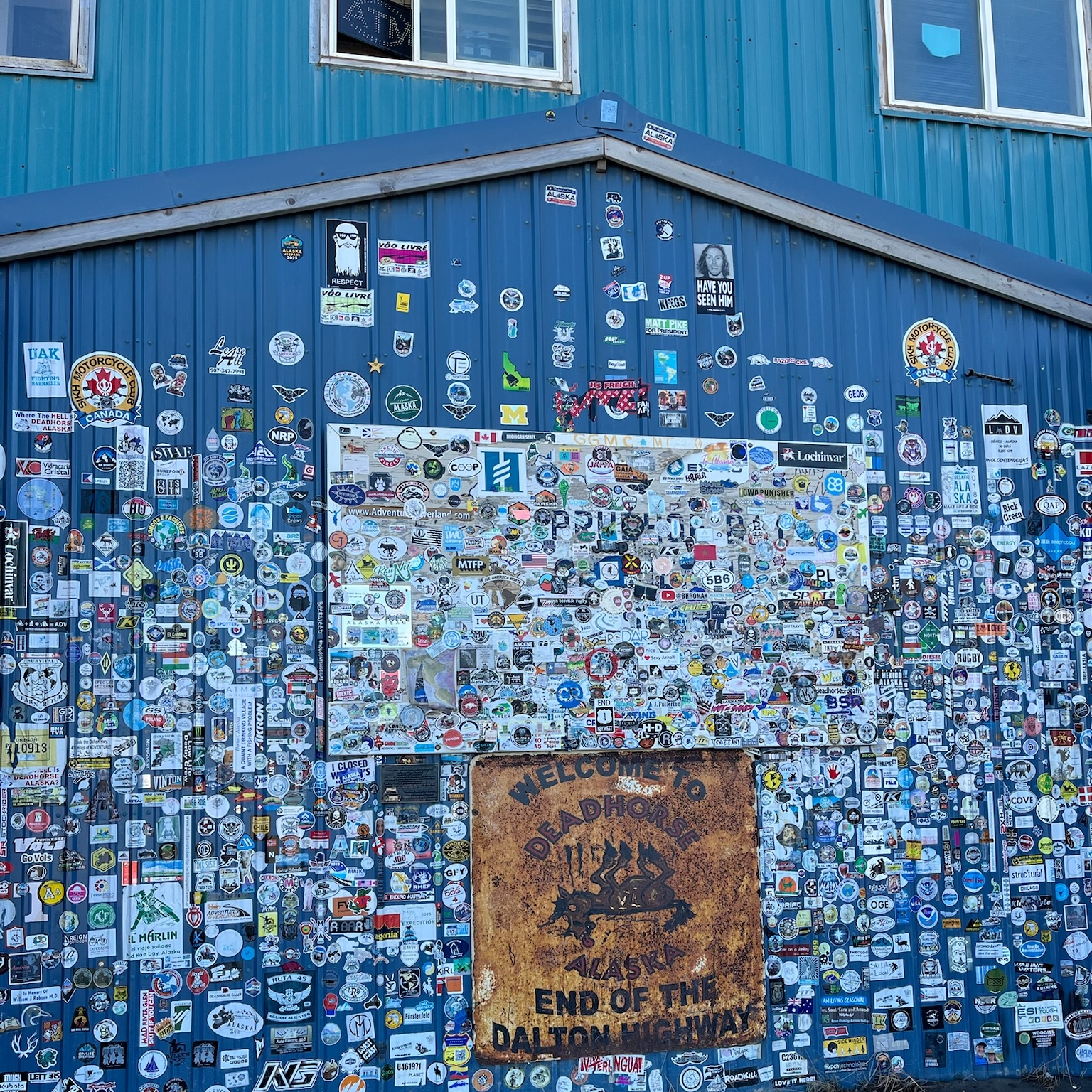
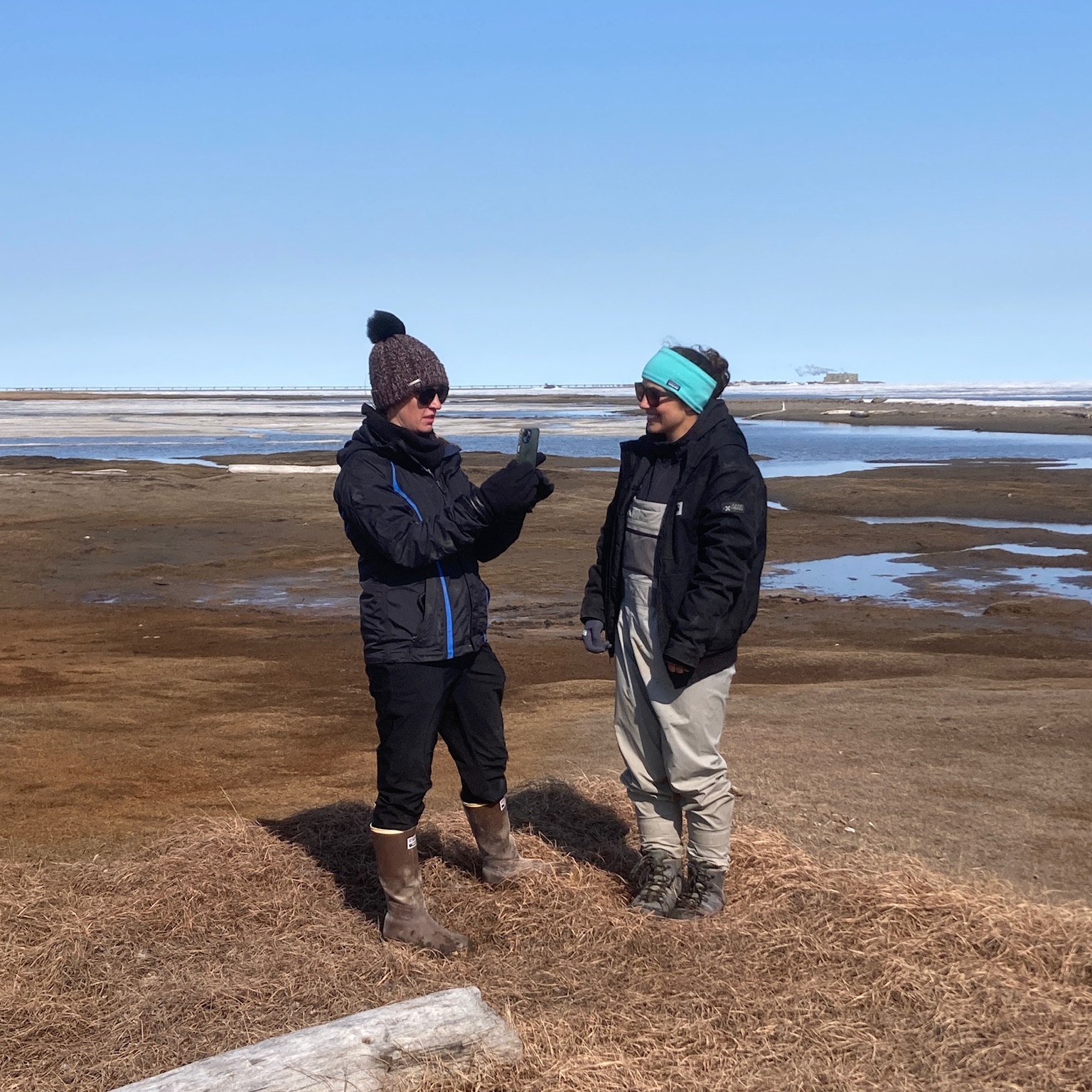
We spent some days driving to the three different rivers in Prudhoe Bay, which would provide data for other projects. I saw many different parts of Prudhoe Bay and learned how the oil field’s infrastructure makes it possible for many scientists to complete their research. Other days, the team spent time catching up on their writing, organizing the lab, and enjoying each other’s company. This provided the opportunity for me to have in-depth conversations with everyone on the team and people who were working on the oil field (everyone was stuck at this point!). I asked everyone how they got into this field and why they pursued science. There was one central theme: Curiosity. Almost everyone started in a different field that didn’t satisfy their need to find answers. They wanted something that would allow them to explore the world and find answers to complex problems. Hearing this made me think of the reason I teach math. My goal is to give students the tools to solve complex problems in all different fields. We spent the rest of our time completing massive jigsaw puzzles, visiting the Brooks Range Supply (the only store in town), and watching whatever we could find on TV. We laughed quite a bit and shared funny stories from our careers. While this was not part of our itinerary, it became one of the highlights of my experience. Their joy made the four days pass in the blink of an eye!
I also had a chance to talk to various people who were working on the oil fields. Due to the freshet, everyone was stuck including the workers. One of my favorite conversations was with the chef. Without the freshet, I would have never had the time to talk with him for a couple of hours about his path in life. He was originally from Seattle and trained as a chef there. He worked in various restaurants but found the time to be too demanding. He had a young family and wanted to spend more time with them. Working on the oil field provided the perfect opportunity for that. He would work for 2-3 weeks at a time and then have that same amount of time off. He was able to plan it so he didn’t miss major life events for his kids, but still was able to make a great living. He shared that it was tough being away for that long, but it was worth it to have so much freedom. He shared with me how he loved meeting so many different types of people and learning about their lives. He hopes another Polar STEAM fellow will end up on the oil fields because he loved talking about the work I was doing! Looking back, I would have never been able to gain a better understanding of life on the oil field if the freshet hadn’t happened.
The Adventure Continues
On June 18th, we heard that the water levels were receding, and we MIGHT be able to get into the field the next day. It felt like we had just won the lottery! Though it was made very clear to us that this was a big maybe, it still felt like our luck was turning. We prepared that night in case we were able to go into the field, and hopefully waited for good news. We knew we could stay in the field as long as physically possible because the sun never set this time of year. The next day, we received news that the bridge was open and we could get across! We quickly loaded up our trucks and made our way back out to the field. As we crossed over the Kuparuk, it looked like nothing had ever happened! That day in the field was jam-packed, as we knew we had about 15 hours to get everything set and packed before we left Prudhoe Bay. We efficiently worked and accomplished all basic tasks to ensure everyone got the data they needed. I worked on collecting water samples, the greenhouse gas team set up another set of solar panels, and the geophysics team mapped out the site. Even though our original field plan had gone out the window, we were somehow able to accomplish everything we needed. We left the field very tired, but thankful we got everything done.
That night, we went back to the lab to pack up the instruments and organize the samples. As we reflected on the week, I was surprised by how positive everyone was, considering we lost half our field days. The team talked about how excited they were to get this year’s data and see the changes when they returned in August. The biochemistry team kept talking about their freshet water data and how it would provide a new comparison point to their data from 20 years ago. No one viewed our non-field days as wasted time, but rather as an opportunity to accomplish other tasks and answer new questions.
Reflections from the Chattahoochee
I’ve now been back in Atlanta for a couple of weeks and have time to reflect on my unexpected time in Prudhoe Bay. It is only fitting that I wrote this while sitting on the bank of our river (the Chattahoochee), which causes flooding problems of its own. Going into my field experience, I thought I had a very clear plan of what my days would look like: Long days in the field learning the intricacies of Julia’s fieldwork. The Kuparuk had other plans for us. While initially the freshet seemed like one of the worst possible things that could happen, it turned out to be one of my biggest learning experiences. I saw how the team was able to be flexible and pivot on a moment’s notice. They did not believe in wasted time but used the days in a different way. Data was still collected, and science was still getting done (in the form of writing). Julia’s team and the Kuparuk gave me my focus for the upcoming school year: Flexibility. We can have the best-made plans (whether in the field or the classroom), but inevitably, something can come along and turn them on their heads. In education, there are so many metaphorical freshets (new curricula, schedule changes, different team members), and how a teacher responds can define their and their students’ experiences for that year. Plowing ahead with the original plan could lead to missed learning opportunities (like my conversations with the team and workers) or cause undue stress. Being flexible might lead to new learning experiences and opportunities that we never saw coming. My challenge to you (and myself) is to find ways to be flexible this upcoming school year and choose to look at your freshets in a new light. Instead of seeing them as things that waste time, maybe you could find a way to use that time differently. Maybe it will present a new learning opportunity that you never could have dreamed of. Maybe it will lead you down a path where you will be able to ask and answer new questions. After all, freshets reshape the land they touch – perhaps these unexpected moments can reshape us too, making us stronger, more creative, and more prepared for the journey ahead.