
What started as a fun fact about myself, “I went from the Amazon Rainforest to the Arctic Circle in less than a week!”, became much more than an entertaining anecdote. It has become a powerful experience in place-based education, global connection, and learning across two of the world’s most remote regions.
From March through April 2025, I participated in what first seemed like two separate professional development opportunities. First, I traveled to the Amazon Rainforest to support the work of Conservación de la Naturaleza Amazónica del Perú, A.C. (CONAPAC), a longtime partner of the Detroit Zoo. Just days later, I boarded a flight to the Arctic Circle, where I joined U.S. National Science Foundation researchers as an education fellow through the Polar STEAM program.
At first, the trips felt disconnected, but they were two unique opportunities to grow as an educator and had little in common. I soon discovered a shared thread: the value of place-based education and the importance of engaging students in understanding the world beyond their immediate surroundings.
Education in the Amazon Rainforest
The Detroit Zoo has collaborated with CONAPAC for over two decades to support schools in remote Peruvian communities. Each year, our team delivers school supplies, supports water sanitation efforts, and helps in tree planting projects that benefit students and their communities.
During my visit, I worked in a small school, teaching environmental science and leading hands-on activities for kindergarten through sixth-grade students. Their curiosity about the world around them and their sense of pride in their local ecosystems reminded me of how powerful early education can be in shaping future generations of leaders.
Science in the Arctic Circle
Meanwhile, I had been preparing for my trip to Utqiaġvik, Alaska, the northernmost community in the United States. Through the Polar STEAM program, I collaborated with researchers to bring interactive science experiences to middle school classrooms. The goal was to inspire curiosity and critical thinking in middle school students by introducing them directly to the tools and methods of scientific research.
In Utqiaġvik, we took students out on the sea ice to collect data, deploy instruments, and observe the science behind Arctic fieldwork. Watching students transition from viewing learning as something that only happens in a classroom to hands-on explorers was an incredibly fulfilling experience. These young people were not just learning about the Arctic but becoming part of the scientific process.
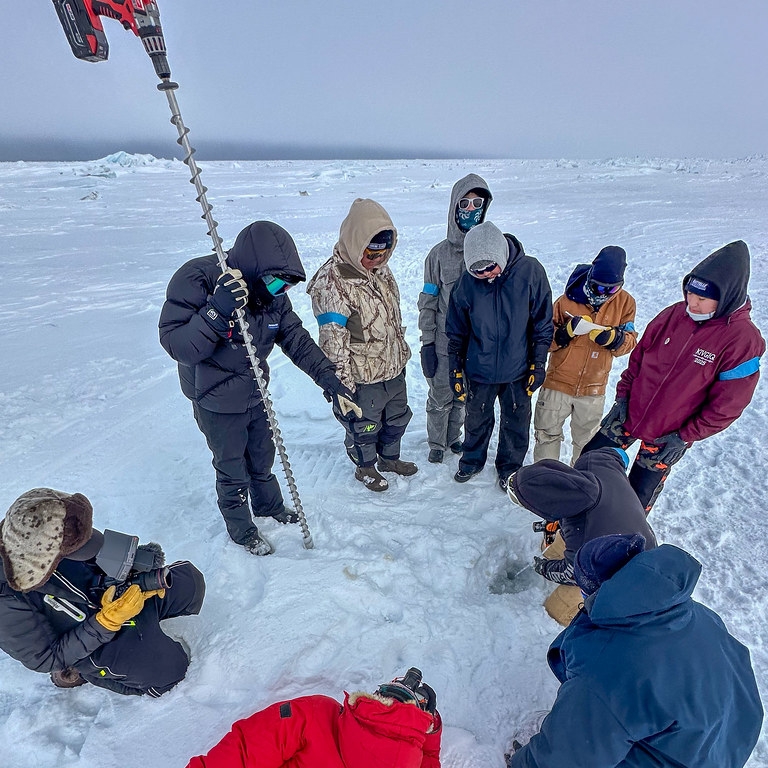
8th grade students using augers to drill holes in the sea ice to assess sea ice depth. Photo by Ignatius Rigor
A Bridge Between Two Worlds
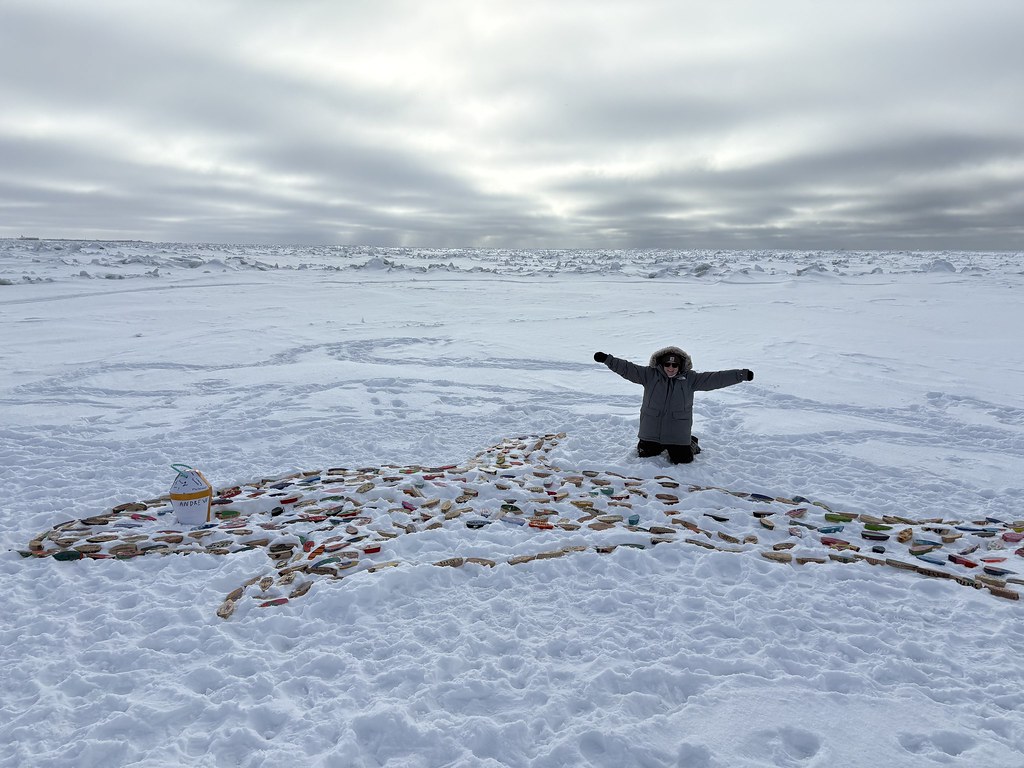
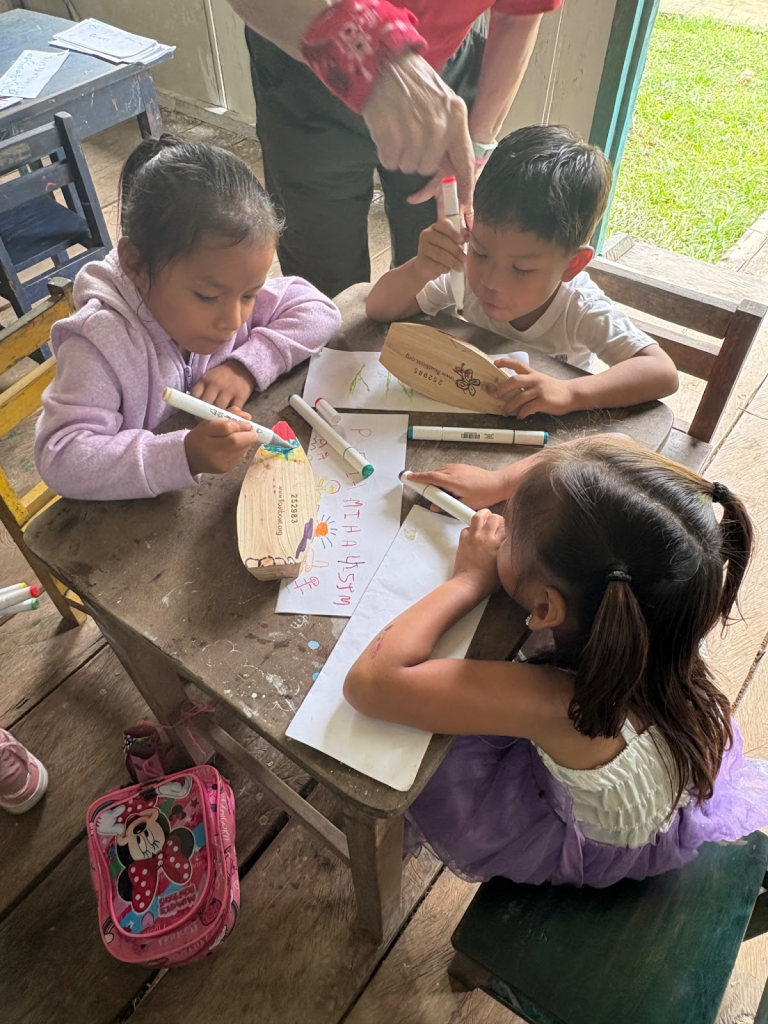
One of the most unexpected elements of the Polar STEAM program was participation in the Float Your Boat Program. Designed by students and deployed alongside Arctic weather buoys, these miniature vessels, brightly colored and decorated by students, allow young people to connect with distant environments and imagine their place in a broader scientific community.
Each year, schools across the U.S. decorate wooden boats that travel with buoys across Arctic waters. That gave me an idea: what if we also included boats decorated by children living in the Amazon Rainforest?
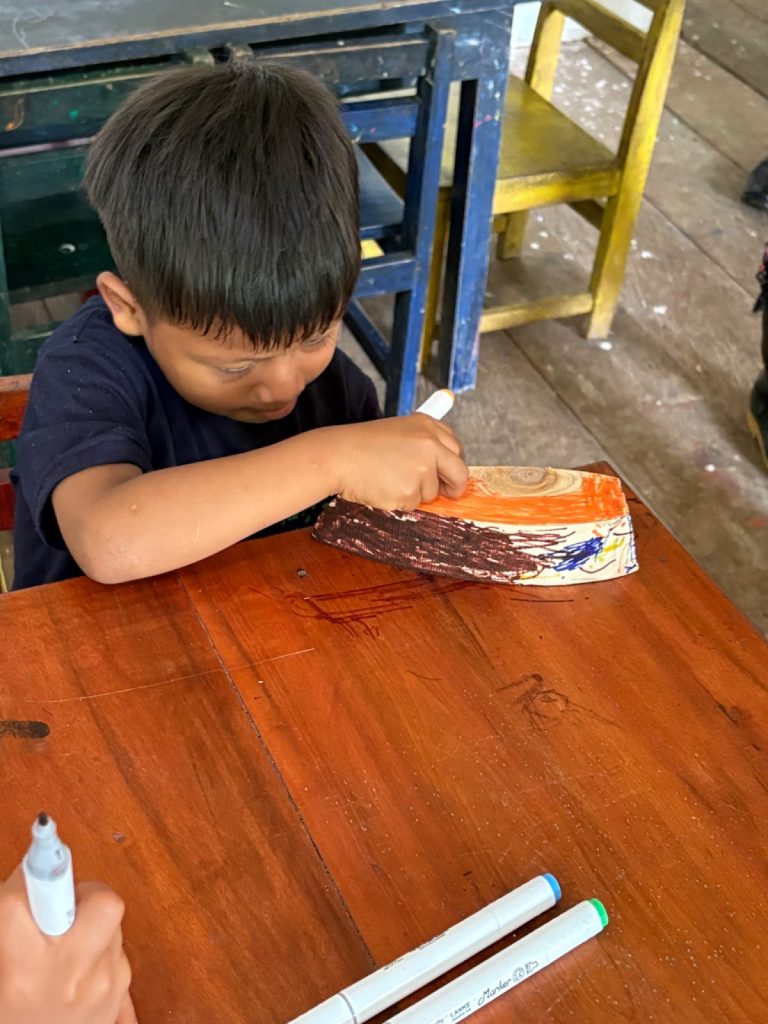
While in the Peruvian village of General Merino, I handed a set of blank wooden boats to a kindergarten class. Despite a language barrier, the excitement was universal. The children quickly understood the mission and decorated the boats, which would soon be journeying to a place colder than they could imagine. Their eyes lit up at the idea that their artwork would float in the Arctic Ocean, carried by currents far from the Amazon’s shores.
A Shared Story of Exploration and Learning
Though the Amazon and the Arctic are vastly different environments, both offered students something powerful: the opportunity to connect to something bigger than themselves. Whether surrounded by tropical trees or tundra, these students engaged with science, creativity, and exploration in ways that sparked imagination and built confidence.
This experience reminded me of the goal of education: to inspire curiosity, empower young people to try new things, and connect with the world beyond their classroom.
By bringing together research, hands-on learning, and engaging students globally, we’re helping to inspire the next generation of scientists, thinkers, and problem-solvers. From the jungle to the sea ice, curiosity knows no bounds.