

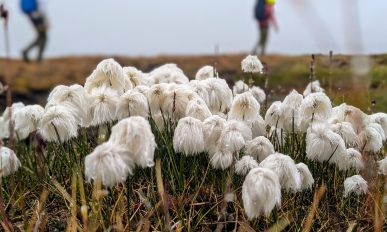
We started Sunday with a team ritual: reading poems aloud. Some were fun, some serious, all genuine. Afterward came “call-outs,” where team members recognized each other’s efforts, followed by a weather update—crucial for planning fieldwork in the Arctic. These routines, carried out without fuss, reflected how much intention goes into maintaining a strong team culture.
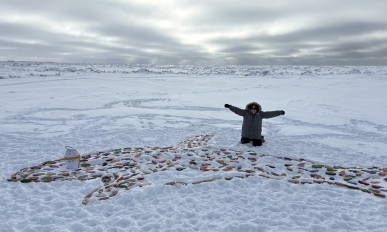
What started as a fun fact about myself, “I went from the Amazon Rainforest to the Arctic Circle in less than a week!”, became much more than an entertaining anecdote. It has become a powerful experience in place-based education, global connection, and learning across two of the world’s most remote regions. From March through April
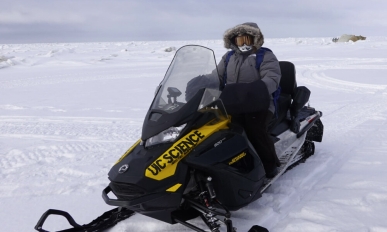
As an educator, I’ve always believed in the power of hands-on learning, the idea that the most profound lessons come when students are actively engaged, not just in a classroom, but in real-world environments. That belief flourished when I was privileged enough to participate as an Educator Fellow with the Polar STEAM program. The Polar
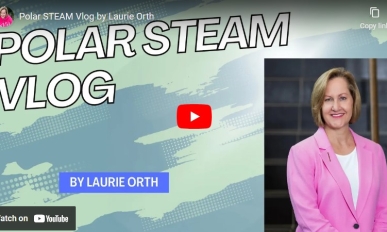
In July 2024 I had the opportunity to visit Amy in person in Arizona. In the vlog of my trip, I share pictures of the work one of Amy’s colleagues is doing on a telescope that is going in a hot air balloon in Antarctica, we visit Kitt Peak Observatory, which is built on the tribal land of the Tohono Odham nation, and then Amy’s lab at the University of Arizona. You will also hear snippets of the songs I wrote for our Polar STEAM resource assignment.
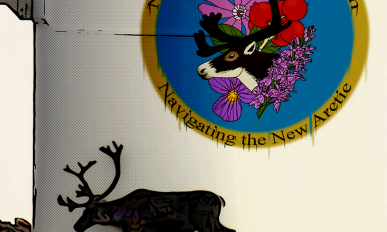
Drs. Peter Ungar, Mary Heskel, and Aleksey Sheshukov explained (patiently) their areas of expertise, Arctic research projects, and provided me with a virtual mountain of photographs from their fieldwork. We talked about what projects would be suitable and appropriate for a variety of audiences. What would be engaging to different ages, interests and levels of scientific knowledge? I knew that I wanted my Photoshop class to be involved with this project, so I suggested creating a comic book.
Made possible with funding by the U.S. National Science Foundation Award #2221990. The information contained here is those of the author(s) and does not necessarily reflect the views of the U.S. National Science Foundation.
Sign Up to Receive Updates
Receive regular updates to your inbox with the latest information about the Polar STEAM program.
Get Email Updates
© Polar STEAM. All Rights Reserved.