
I’ve spent the past six days in Utqiaġvik (Barrow), Alaska, embedded with a group of young scientists working for NEON -the National Ecological Observatory Network. NEON is a large-scale project funded by the NSF that collects long-term, open-access ecological data across the U.S. to track changes in ecosystems over time. And here, at the northernmost point of the country, I’ve had the privilege of joining their fieldwork firsthand.
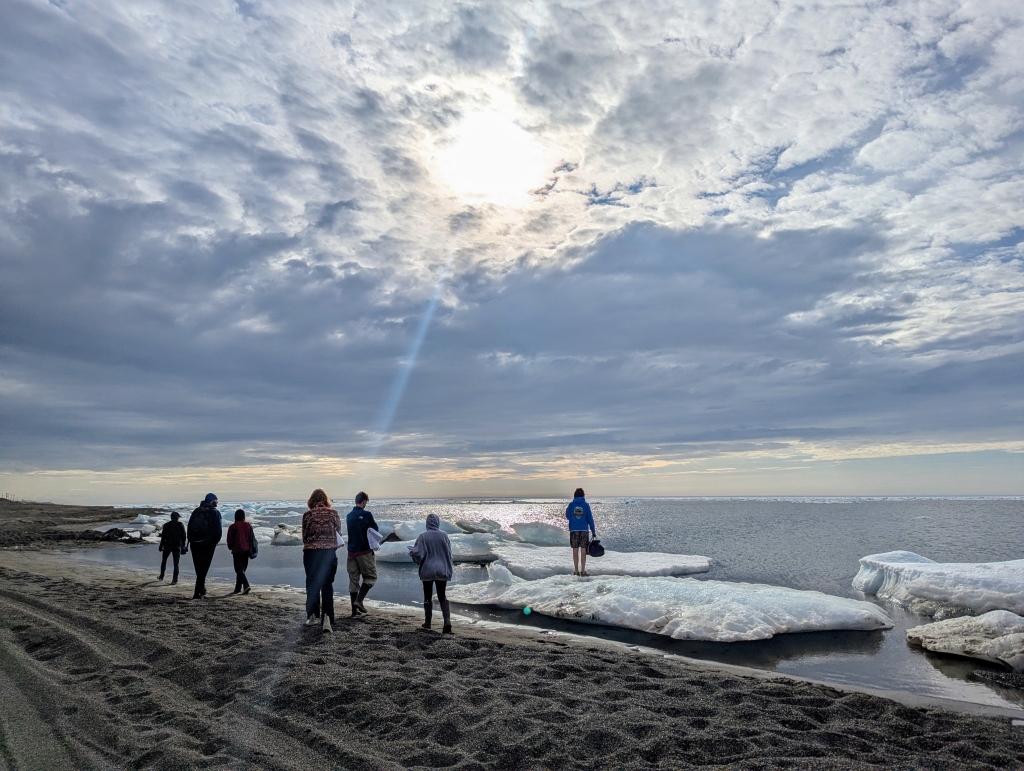
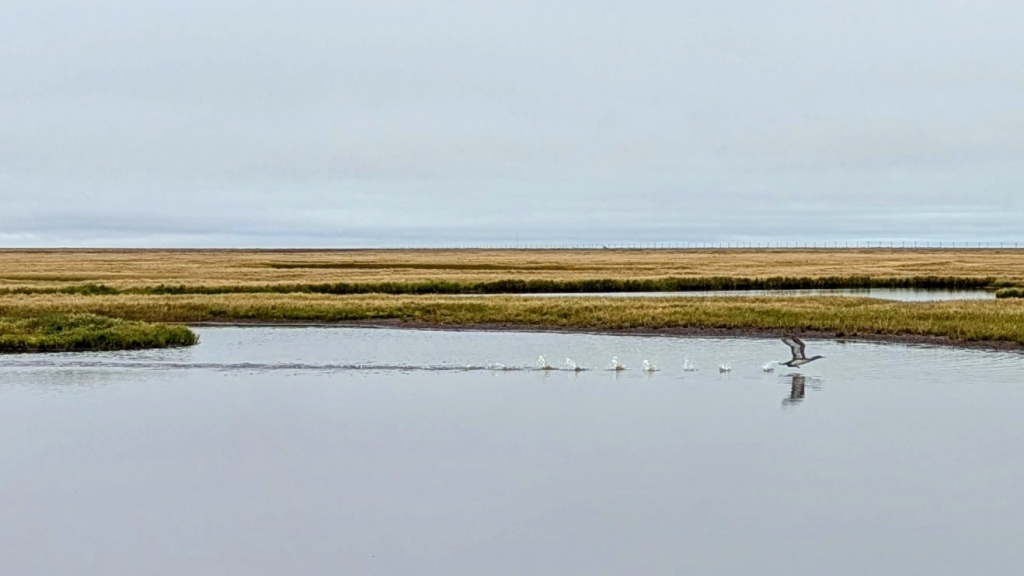
What a whirlwind of an experience it’s been. It’s hard to find a single entry point to describe something so layered, so rich in learning, camaraderie, and wonder. From the tundra’s vast openness to the slushy sea ice, from seals swimming curiously nearby to snowy owls quietly watching us, and whale bones weathered by time, it feels like stepping into another world. And in the middle of it all: a brilliant, joyful, hilarious, and deeply committed team of young scientists who welcomed me as one of their own.
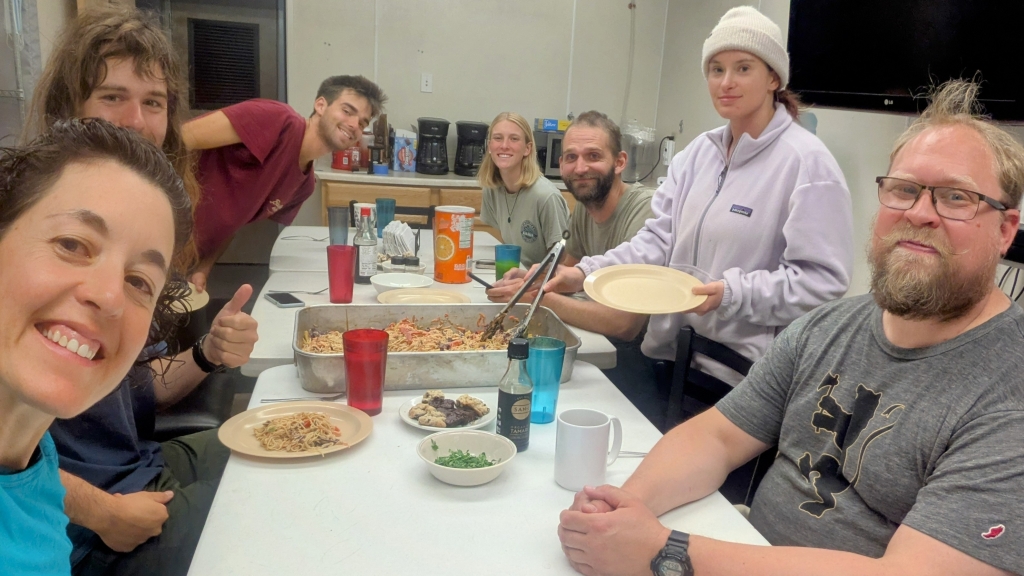
There are nine of them, plus me. Every day we head out into the field, share cooking and cleaning duties back at our housing, play board games, and explore when time allows -we even visited the Barrow Heritage Center on our day off. But perhaps the most meaningful part of this trip has been being part of the routine -the rhythm and rigor of the scientific process, carried out with care, humor, and focus.
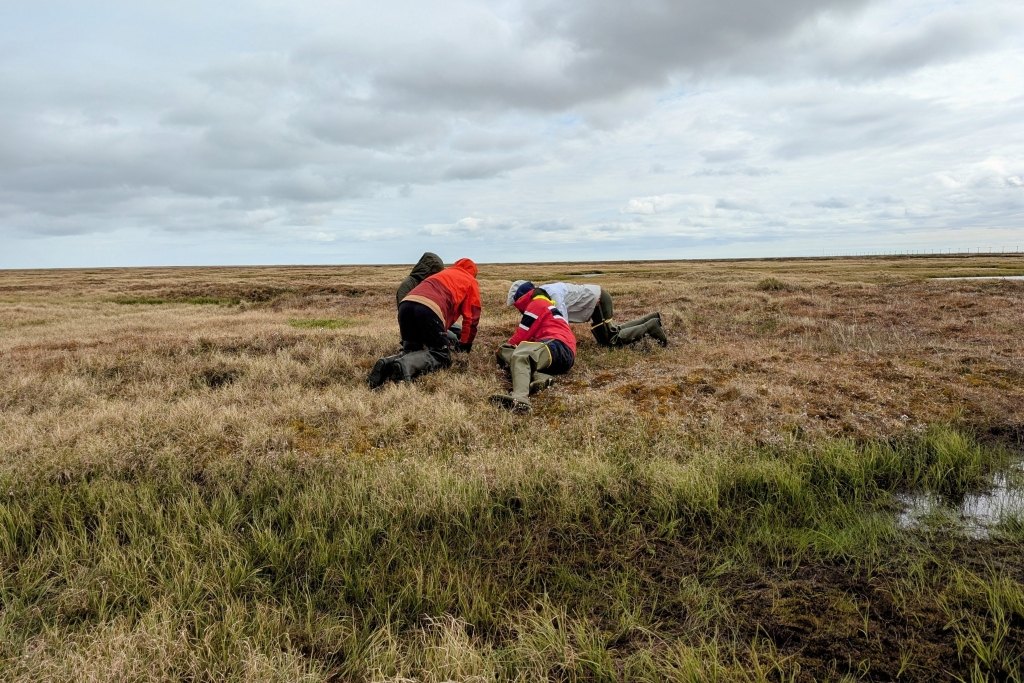
On Thursday, we completed one major part of the seasonal work: plant identification in 33 long-term plots. These are revisited year after year to track species distribution and abundance, following a strict protocol. In each plot, we sample six one-square-meter subplots, documenting both living and non-living ground cover. That means estimating the relative abundance of different traits -like soil, moss, water, and scat -and, most importantly, identifying and quantifying every plant species present.
Here’s where the magic happens. Estimating how much of a given plant occupies a space is part science, part art. We each make individual assessments, then come together to compare and defend our estimates. I’ve been struck by how focused and methodical everyone is -even when the wind picks up, or the chill sets in, or the mosquitoes swarm in clouds (seriously: huge mosquitoes). No one rushes. They get back on their knees. Re-measure. Re-think. Share counterarguments. There’s a shared commitment to precision that is both humbling and inspiring.
And then there’s plant identification -my favorite part. The team’s lead, Will Hendricks, has patiently guided me through the world of Arctic flora, quizzing me kindly and encouraging me when I falter. I’ve found myself doubting my eyes (and my memory!), but never my place in the group. Their openness to teaching and their enthusiasm for the tiniest flower or grass has rekindled something in me: a joyful wonder at the natural world.
This, by the way, has also been a humbling reminder that while I’ve always thought of myself as someone who loves plants, I now realize how much I’ve ignored anything that didn’t have showy flowers or stand taller than a foot or two.
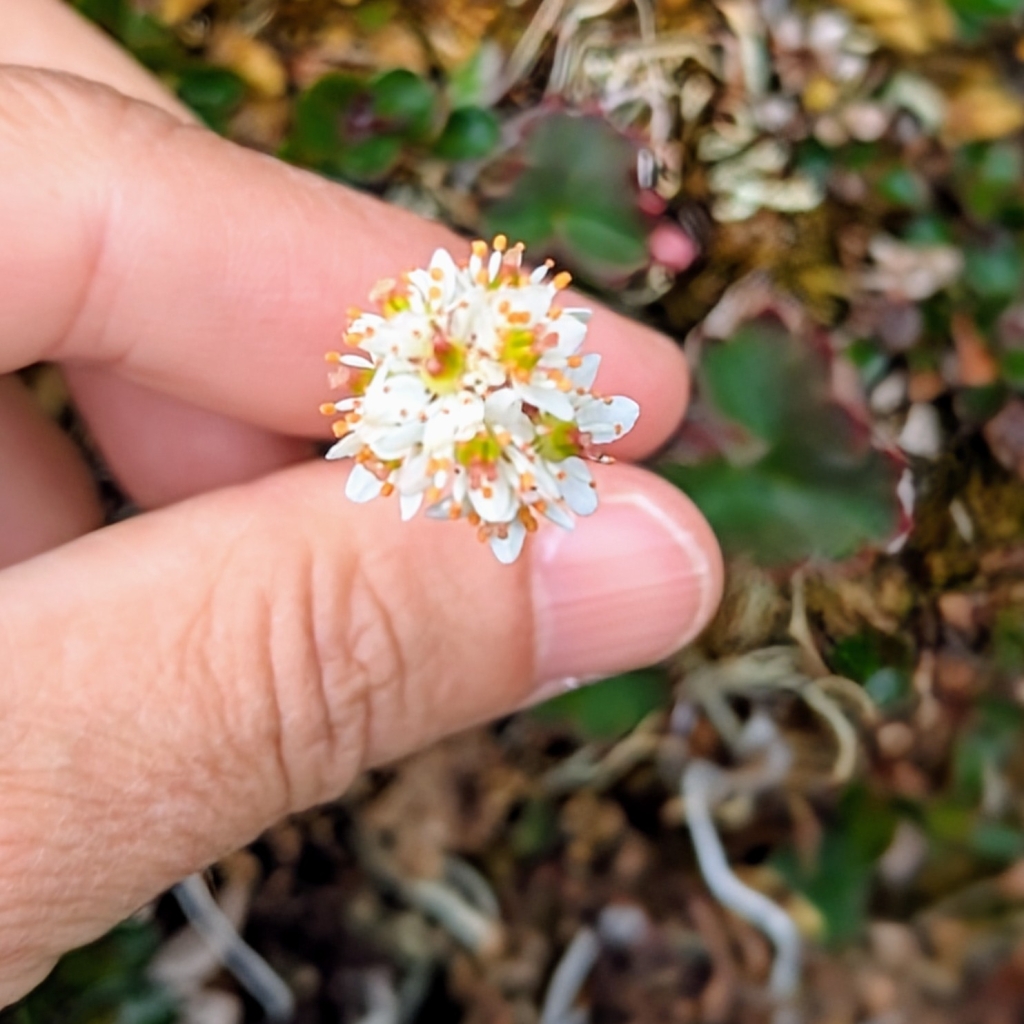
Tomorrow, we’ll begin a different kind of sampling -clipping plants to estimate biomass, likely in 30 mph winds. I can’t wait. Not because of the weather, but because of what this work represents: science done collaboratively, consistently, and with genuine care.
The data collected here in Barrow is part of a massive, open-access NEON database that anyone in the world can explore. Scientists use it to track ecological trends -shifts in species composition, abundance, and distribution over time -with the goal of better understanding our changing planet. While it’s an incredibly powerful resource, it’s also complex. I’m still learning how to navigate it, and I’m not sure how (or if) I’ll be able to bring it directly into my classroom -but just knowing it exists, and seeing the scale and care of the work behind it, has deeply expanded my perspective.
This experience has left me feeling deeply hopeful. Watching a group of passionate, generous, and incredibly sharp young adults erupt with joy at the sight of a rare plant -or spend ages debating the exact percentage of ground cover- was a powerful reminder of the value of slowing down and looking at nature’s perfection.
These are people who haven’t lost the pleasure and wonder of admiring the wild. In a world that so often rushes forward chasing markets and metrics, this feels like a return to something essential. It’s grounding. It’s a way of slowing down, paying attention, and honoring what surrounds us – not just by observing it, but by helping to conserve it.
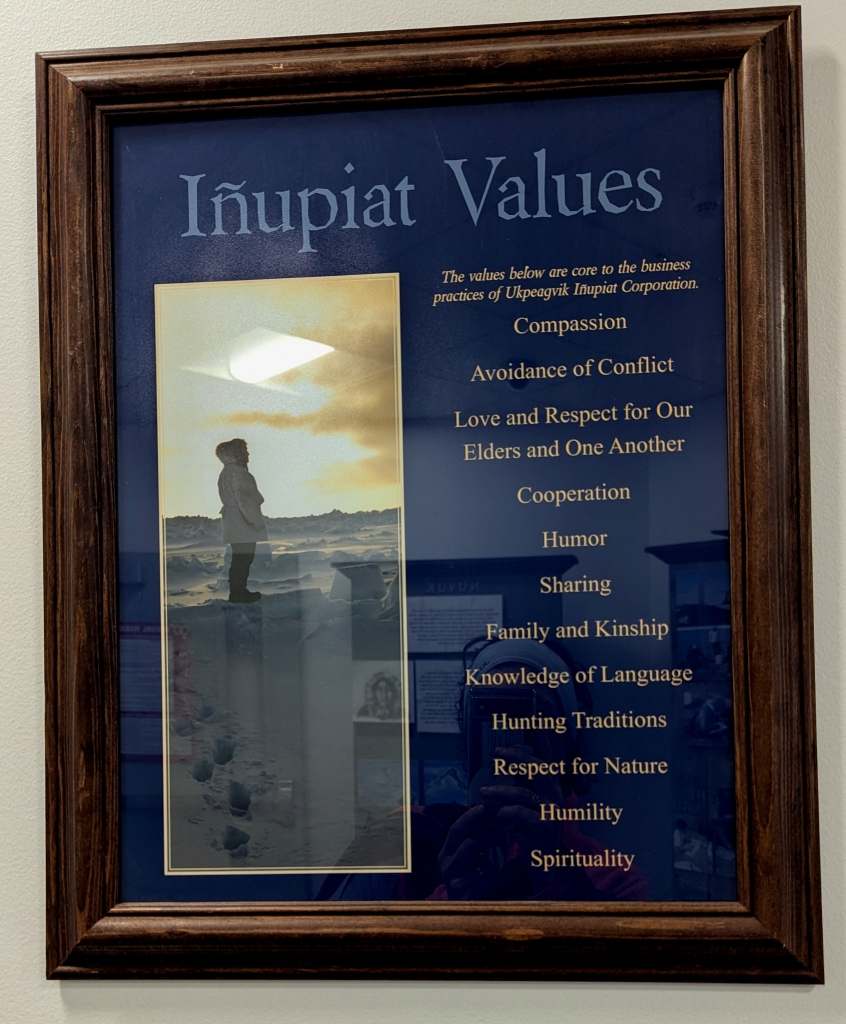
During my time here, I’ve also learned about the Iñupiat people, the Indigenous community of this region, and the values they hold. These values –respect for nature, cooperation, sharing, respect for elders and one another, love for children, knowledge of language and culture, hard work, humility, avoidance of conflict, humor, responsibility to the community, and patience -are displayed proudly in public spaces. And I see them echoed everywhere: in our fieldwork, in our group dynamics, and in the way this community lives in relationship with the land.
In this remote corner at the top of the world, where ancient traditions are deeply rooted in the land, I’ve been fortunate to join a team -and glimpse a wider community- where respect for the earth and quiet appreciation for tradition shape the rhythm of daily life.
I’m grateful. And I’m already looking forward to the days ahead.