
As a Creative Writing Teacher, I spend a lot of my time trying to convince students that they can learn to read, understand, and write poetry. Most of the time, they exchange my encouraging words with a blank stare or a grin that screams, “WWWWWHHHHYYYYY ME!” Nevertheless, I choose to ignore those thoughts and feelings of doubt, because I know that they are “poetry in motion” lying dormant, waiting, and ready for someone or something to spark their mental ignitions of creativity. I am long past the days of just plopping a poem in front of my students and asking them to call off words from a poem, and to answer comprehension questions. I want more! I want to give more; I want more from my class, and I want more from my students. So, if I want more, I have to be willing to go to those places that require them to “dig deep,” to accept that they do have a creative bone in their bodies, to strive to develop critical thinking, to use their imagination, and to be vulnerable enough to develop their emotional intelligence. With this being the case, I teach creative writing, specifically, poetry differently in my classes. I have to “trick” my students with mind shifts. I start from places that they know, not those places that they do not know. Reading, understanding, and writing poetry is a personal experience. So, as a Creative Writing teacher, a teacher of poetry, I must be willing to experience poetry so that I can facilitate opportunities for my students to experience poetry too.
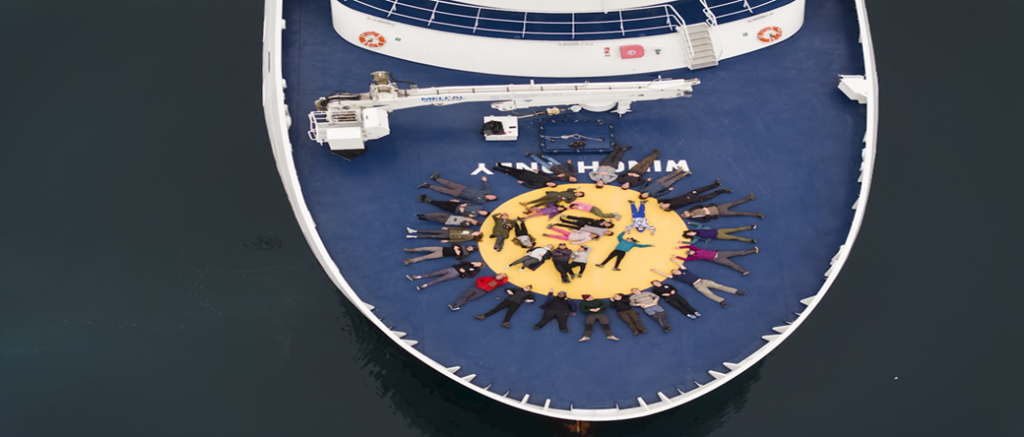
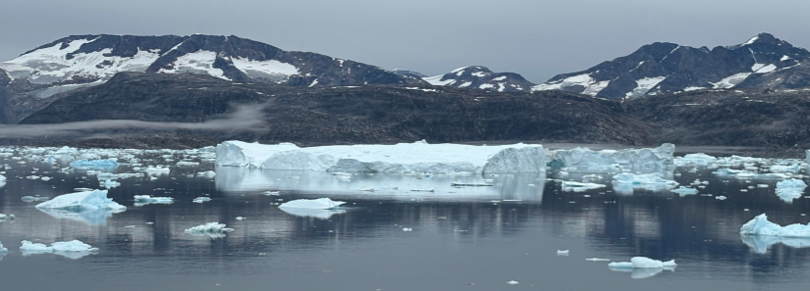
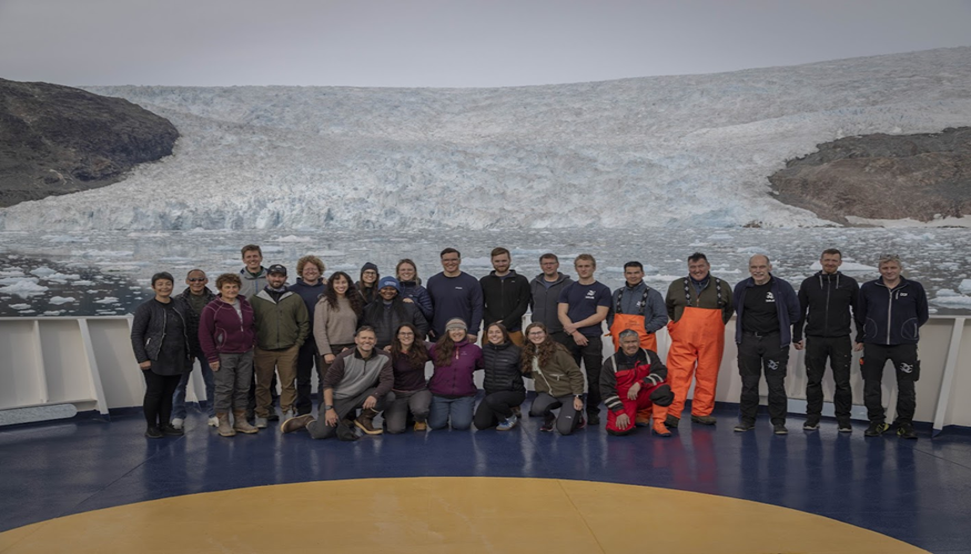
I have had the opportunity to experience poetry in so many ways throughout my life. However, I have never experienced poetry in the way that I had been blessed to experience it aboard a research cruise to participate in science research in the arctic. Through the Polar STEAM Educator Fellowship, supported by the U.S. National Science Foundation (NSF), I had the opportunity of going to Greenland to learn about polar science and to experience science from fourteen scientists and fourteen crew members aboard the Research Vessel (R/V) Tarajoq. I was there to learn about science and to participate in science research. However, I saw POETRY EVERYWHERE! I was clearly experiencing “poetry in motion!” Britannica defines poetry as, “a form of literary art that uses the aesthetic, rhythmic, and melodic qualities of language to evoke deep emotional, imaginative, or sensory responses.” When I saw my first iceberg up close and personal, I experienced this deafening, still of awe and shock. I was now experiencing things that I had only witnessed on T.V. screens and had longed to see in real life. I stared in admiration for hours; studying each iceberg that our ship passed, trying to comprehend the beauty that I was experiencing. I was finally understanding Frost’s meaning of poetry that it is, “the moment emotion finds thought and words;” coupled with Shelley’s explanation of poetry being the act of “uncovering the hidden beauty of the world.” I was truly experiencing an out of body experience. I was literally in the Arctic, Greenland specifically, learning about Polar Science and I was figuratively experiencing the “Science of Poetry.”
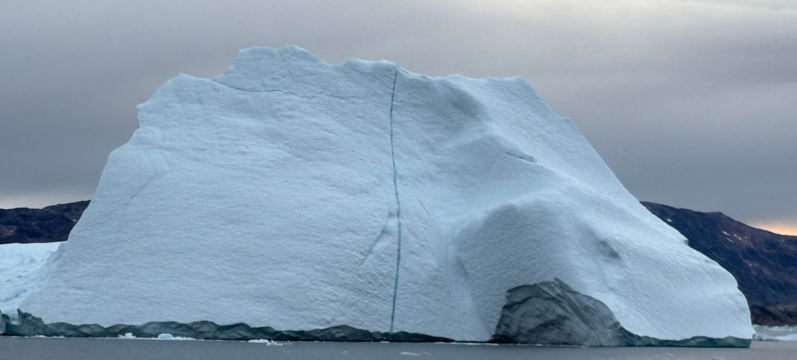
After my mind started to calm down from somersaulting and my heart started to steady and to slowly stream, I immediately started to ask the scientists a million questions. I was so intrigued with the calmness of the water, and learned more about the icebergs, glaciers, and the Greenland Ice Sheet. The scenery was so peaceful and magical. One of my favorite experiences was being able to ask the scientists questions and then witnessing them point out the very thing that we were discussing. I remember speaking about the shapes and beauty of the iceberg; within a couple minutes of this conversation, I witnessed part of a glacier breaking, seeing a large piece of ice float a bit, sink, and then slowly come back up to the surface. The sounds were horrifying, the crackling and breaking sounded as if the world was being demolished; but the scene of this was paralyzing, it was so surreal. It was at this moment, for me, when poetry and science met each other and fell in love and all of us on the research cruise shared this beautiful experience together. After this transformative experience, I decided that I would lead and facilitate the science team with creating an Exquisite Corpse Poem to commemorate our collective experience of witnessing “Polar Science in motion.”
Through this experience, I had the opportunity to work with each science team aboard the R/V Tarajoq. I was so fascinated with the level of brilliance and commitment that each scientist displayed toward their work while conducting research to help to make to world a better place for everyone. Learning and witnessing different groups of scientists collecting data for different purposes was both mind-boggling and exhilarating. Nevertheless, I used this opportunity to conduct mini-interviews with the scientists and to collect lines to compose the Polar Science Exquisite Corpse Poem.
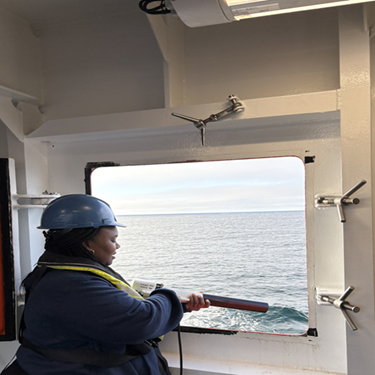
One of my science research experiences was with Dr. Fiamma Straneo, the Principal Investigator, who taught me to launch a XCTD. I learned that this instrument helped the team collect data about the water in the Arctic. After I launched the XCTD, Fiamma took the time to show me how the data recorded on the computer and how this information would be added to the Cruise Report to document the work that we were doing during the research cruise.
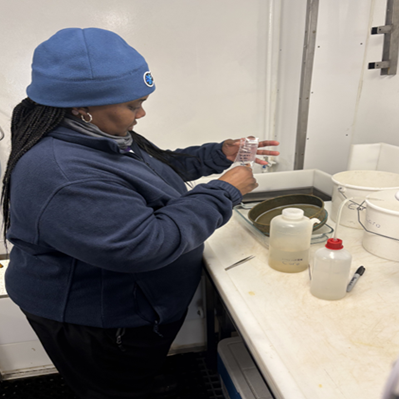
My Polar STEAM researcher collaborator Haley Carlton and her colleague Ella, were part of the Fish Team. They taught me how to deploying bongo nets into the ocean to study larvae fish and zooplankton. This process involved many steps. After deploying and retrieving the bongo nets from the water, we took the samples to the laboratory and separate the them. Next, we placed the samples in bags or bottles and label them. This process had to be done with fidelity to ensure that the samples were salvageable and the information recorded was accurate for further testing and research purposes.
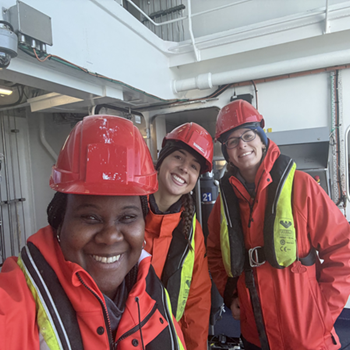
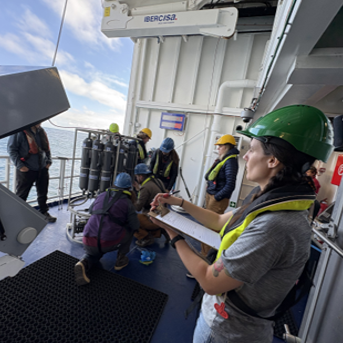
Learning about the conductivity, temperature, and depth Instrument (CTD) was really interesting and many researchers were involved in the CTD process. I enjoyed learning from Margaret, Aurora, Adrienne, Jamie, James, Fiamma, and Lucy. They taught me how to launch a CTD in the water and explained to me the type of data that this device collected. This device is used to collect samples of water at different depths in the water and to measure ocean properties like conductivity (which is used to calculate salinity), temperature, and the depth of seawater.
Learning about polar science, being able to ask questions, and to participate in collecting data was an extraordinary experience. I will never forget witnessing the “Science of Poetry” up close and personal. I was humbled that the scientists made time for me to teach them about the importance of creative writing, about an Exquisite Corpse Poem, and helped to compose the poem. To create this poem, I asked everyone aboard to complete this prompt, “Polar science is like…”. I gave them a few days to think and submit their answers. I particularly enjoyed witnessing them take the time to think about the lines they would contribute.
During this entire experience, I truly felt as if I was a part of the team and that the experience and knowledge that I shared was respected and valued. More importantly, the experiences, interactions, connections, and relationships that were formed during the creation of the poem will forever be etched in my mind, heart, and soul. It helped to remind me that the work that I do in my classroom has value and that it can help students to not only learn more about poetry, but experiential learning opportunities can help students to learn more about polar science.
Polar Science is Like
Polar science is like
Reading the mountains and
icebergs in soft pink light
Letting the landscape tell its story
Interdisciplinary collaborations
It is so inspiring!
Polar science is like the first sip of ice coffee
It is chilly
Refreshing
Exciting!
It is a teacher whose lesson is humility
A beautiful collaboration
Curiosity
A calming neccessity
Polar science is like ice and fire!
A continuation of the very thing that makes us human
Curiosity matters.
It is the act of facing the frontier
the unknown
It is confidently daring
Piercing the darkness with
a candle
made of questions.
Polar science is like a ballet
with people and gear
choreographed to make sense
of an extreme environment
Polar science is like
trying to solve a puzzle
in a freezer
It is discovering answers
That leads to more questions
It is realizing that the more you learn
You realize the more you do not know.
This puzzle,
Connects all the pieces
Helping to create the larger picture
Polar science is
listening for hidden messages
in the song of ocean and ice.
It is metamorphosis!
It is walking with Alice through the looking glass
Criss crossing cold
and icy waters,
dunking instruments and nets
listening to the seas.
Polar science is freezing
your toes and fingers off to
Discover what is going on
on earth
in remote poles.
Polar science is like
Laughing until your cheeks hurt
Living that cold,
cool,
salty scent of fjord life.
Polar science is
Finding a family that you can share the awe and wonder with-
Forever!
Sermilik Fjord Research Cruise 2025
Polar Science is Like
Poem by: 2025 Sermilik Fjord Research Cruise Scientists, Crew, and Teacher