
Written on March 26th, 2026
It makes sense that I’m making sense of things in the middle of the night.
I am writing to you from the hotel lobby of a nice midtown hotel. A fellow musician friend clued me into this clean, quiet space where no one bats an eye at a woman with a MIDI keyboard working in the corner for 6-8 hours at a stretch. I’ve been here since around 10:30pm and at this rate I may be reverse-commuting home against the current of early morning workers on the subway. A few guests are beginning to come down with their bags, chatting casually but with a tinge of anxiety about how they will fare with the current TSA lines. Best of luck to them.
On the R/V Sikuliaq, the quiet of night hours were my domain. In such close quarters, my abnormal chronotype was my only protector for my introverted need for extended alone time to decompress and create. I spent most of this time in the main lab, where my science team was based. It was a large room with tables, sinks, and counters covered in the scientists’ equipment – filtering mechanisms made from PVC pipes hooked to motors, graduated cylinders and forceps, tubs and buckets for counting krill and other zooplankton. In the still of the evening, to the hum of the minus 80 freezers in the corner, I would write, practice (with my practice mute in so as not to disturb anyone), sift through field recordings, and compose.
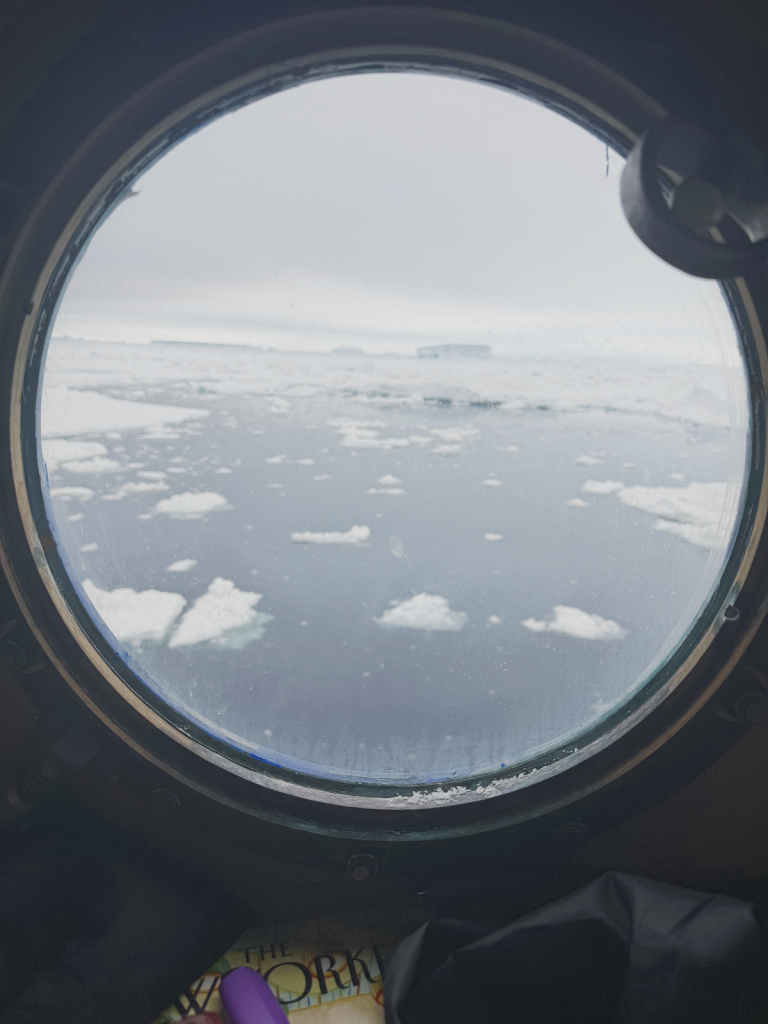
About a week into our journey around the Antarctic Peninsula, the ship became stuck in a vast expanse of sea ice. This is the risk of sailing in Polar regions – sea ice, paired with shifting winds, can be unpredictable. In fact, a cruise ship became stuck around the same time as us and had to be rescued by the U.S. Coast Guard. We received no such assistance; for five days, our valiant crew doggedly rammed at the ice until the winds moved in our favor and we were able to escape.
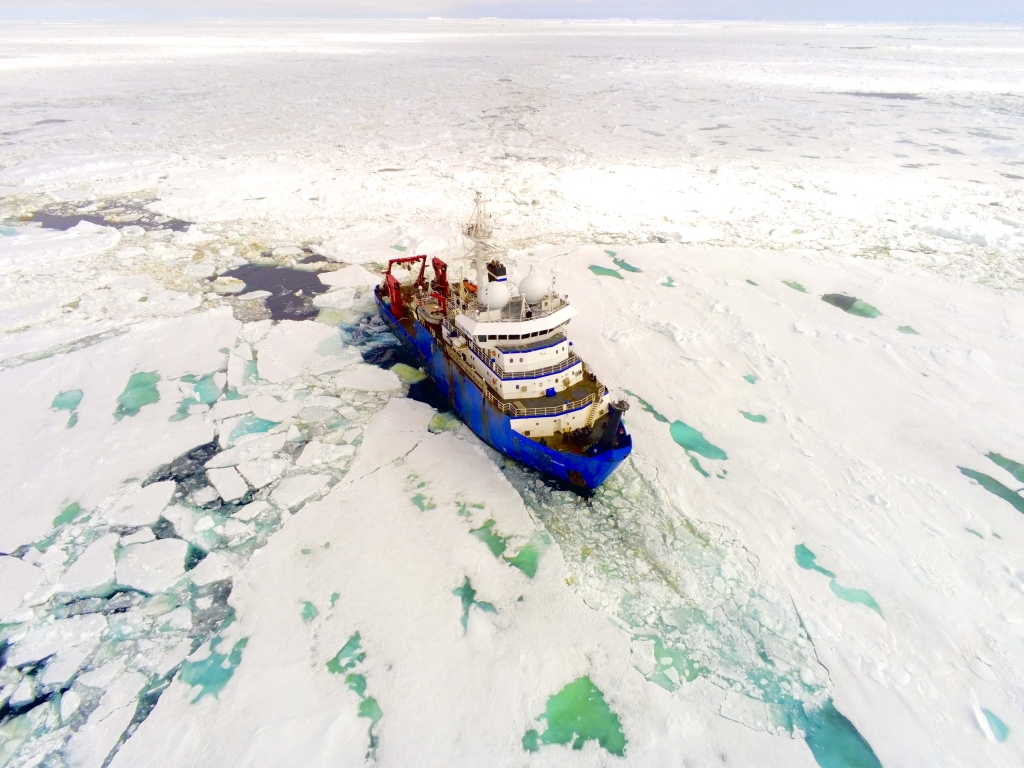
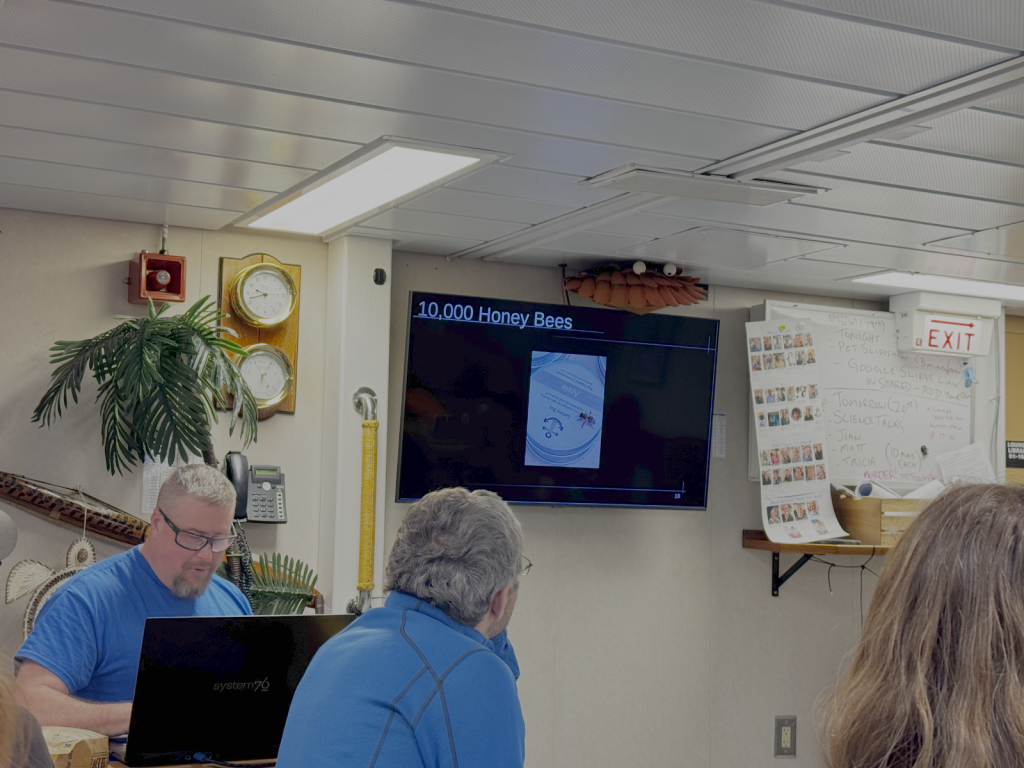
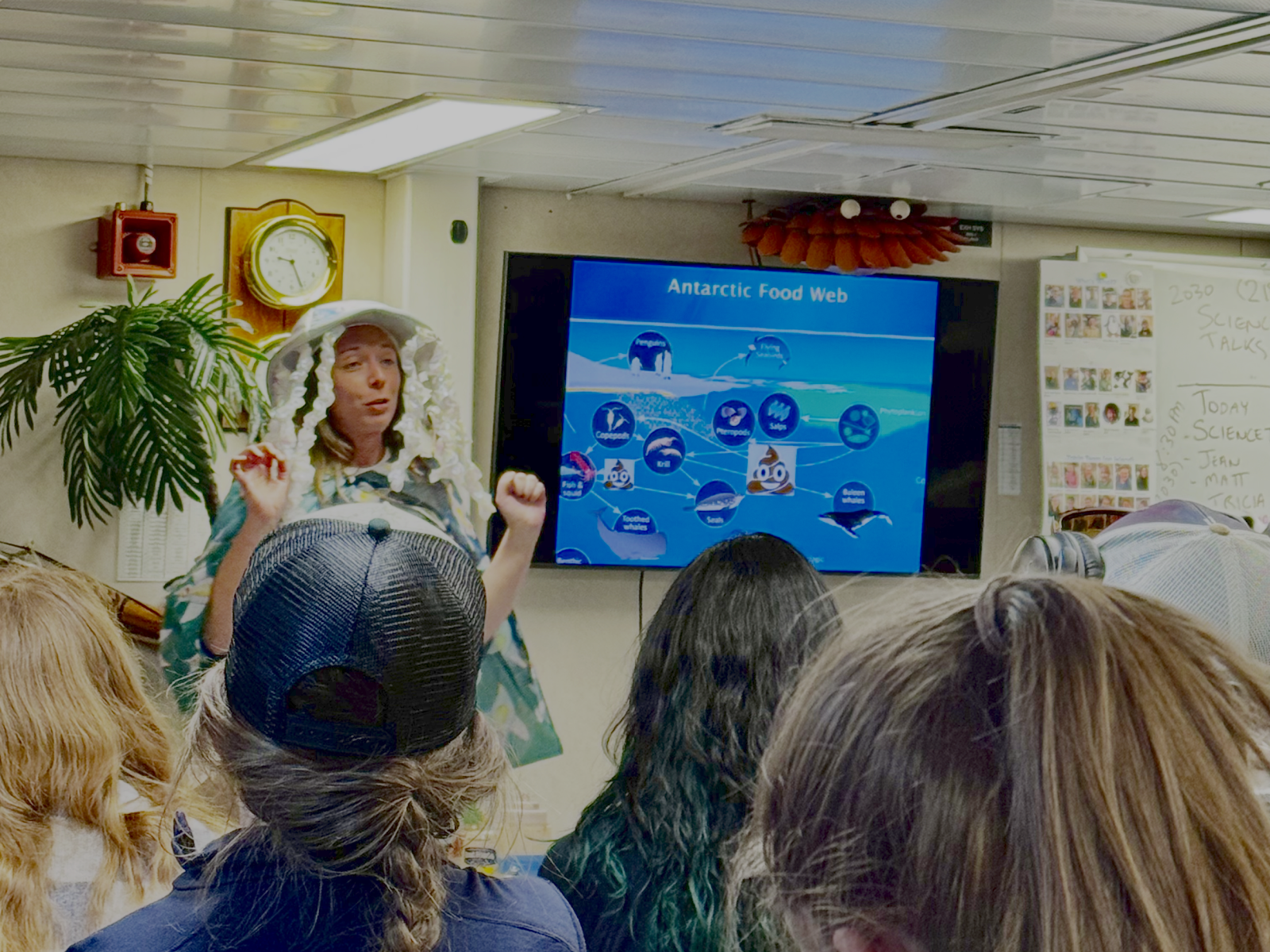
While this situation was not ideal, as it kept both science teams on board from their research operations, I remember this period in the ice as some of my favorite of the quiet times on the ship. I felt equal parts admiration and sympathy for the Sikuliaq’s crew, whose ship movements, at least to my inexperienced eyes, became reduced to an endless cycle of slowly backing the ship up in order to get enough momentum to move vast sheets of ice in a direction, any direction. The Chief Scientists found wonderfully creative ways to boost morale – a shipwide murder mystery game, evening science lectures, and a slideshow event where everyone talked about their pets.
It was during these sea ice days that I officially slipped into my nocturnal lifestyle on the ship. While I did sometimes need to wake up in the mornings to help my science team with plankton tows and accompany the sea ice scientists to ice floes to get field recordings, when left to my own devices I was a creature of the night. This afforded me some wonderful moments, like watching sunrise and sunset only a few hours apart.
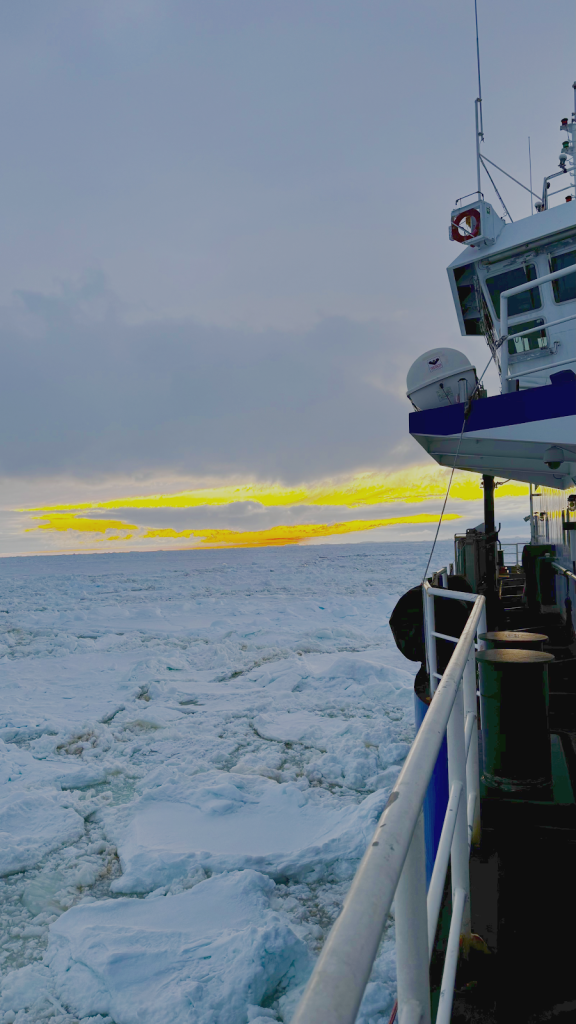
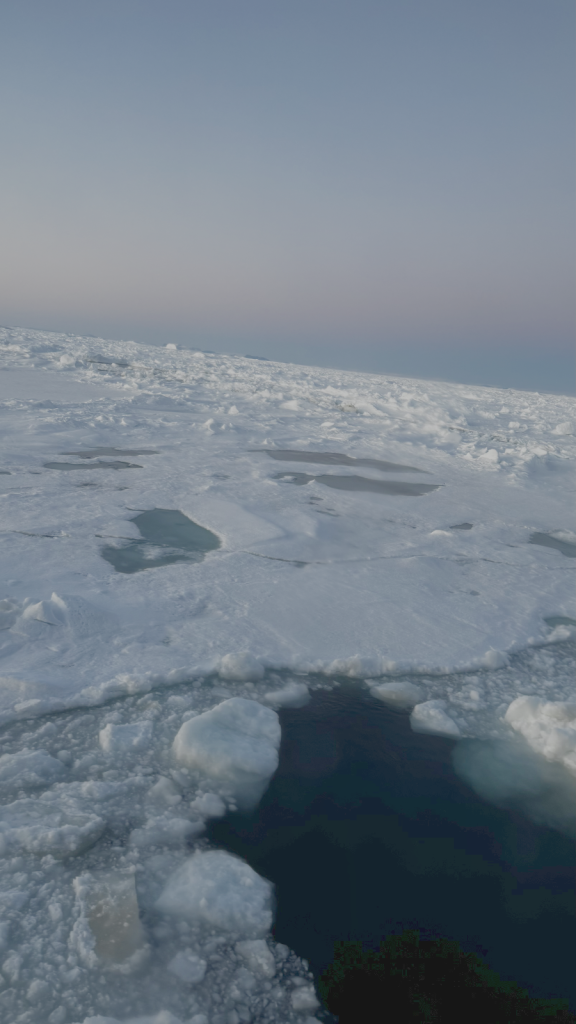
I’ve always envied early birds for their sunrises, their quiet mornings. My partner is a middle school teacher, and sometimes he wakes up as early as 5:30am in order to write and work on his music before he leaves for work. This is amazing to me. It’s like he has superpowers. I cannot wake up early enough to do optional things. My brain cannot conceive of the notion. Being awake means either someone is expecting us to be somewhere soon, or we have slept for 8-10 hours and can sleep no more – whichever comes first. To get to experience the quiet solitude of a sunrise on my schedule for once filled me with a deep joy and gratitude for the earth we live on and the life I get to live.
And five days later, as I was going to bed at 5am, I looked out the window of my bunk and became the first non-crew member on the ship to see that we had escaped.