
Before I left for the Alaskan Arctic this summer, I carried a quote from Octavia Butler with me: “All that you touch you change. All that you change changes you.” I thought I understood it. But standing for the first time on the tundra, under a sun that seemingly refused to set, I realized I had only understood it, perhaps, as an abstraction. Here, in the Arctic, change was no longer just a concept; it was a physical, tangible force I could feel with every squish of thawing permafrost underfoot; a smell in the air—a mix of damp earth and the sweet, resinous scent of Labrador tea.
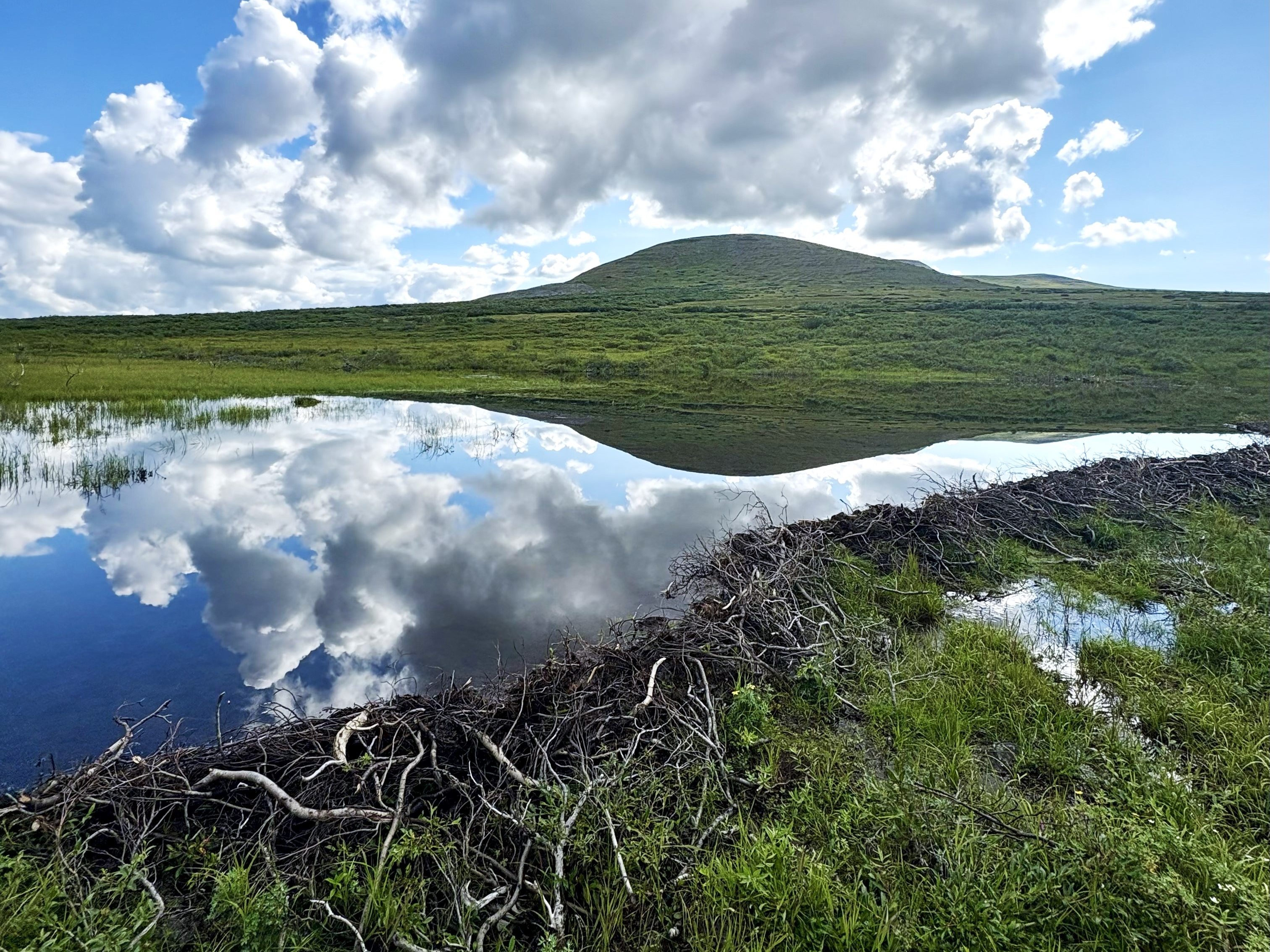
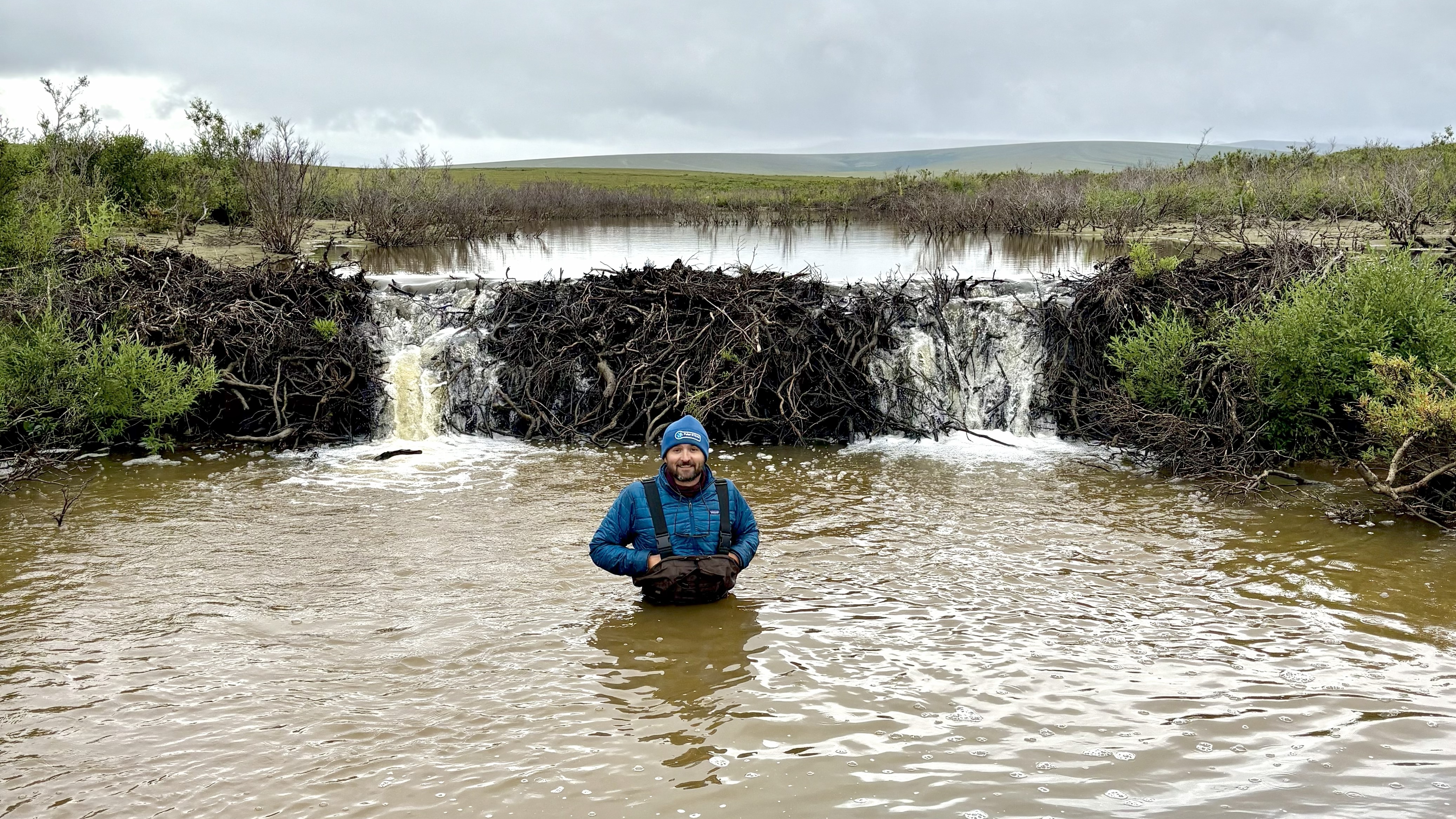
As a Polar STEAM Educator Fellow, supported by the National Science Foundation (NSF), I had the chance to work alongside researchers from the University of Alaska Fairbanks (UAF) in the Arctic who are studying the long-term effects beavers have on Arctic permafrost—research also made possible through NSF support.
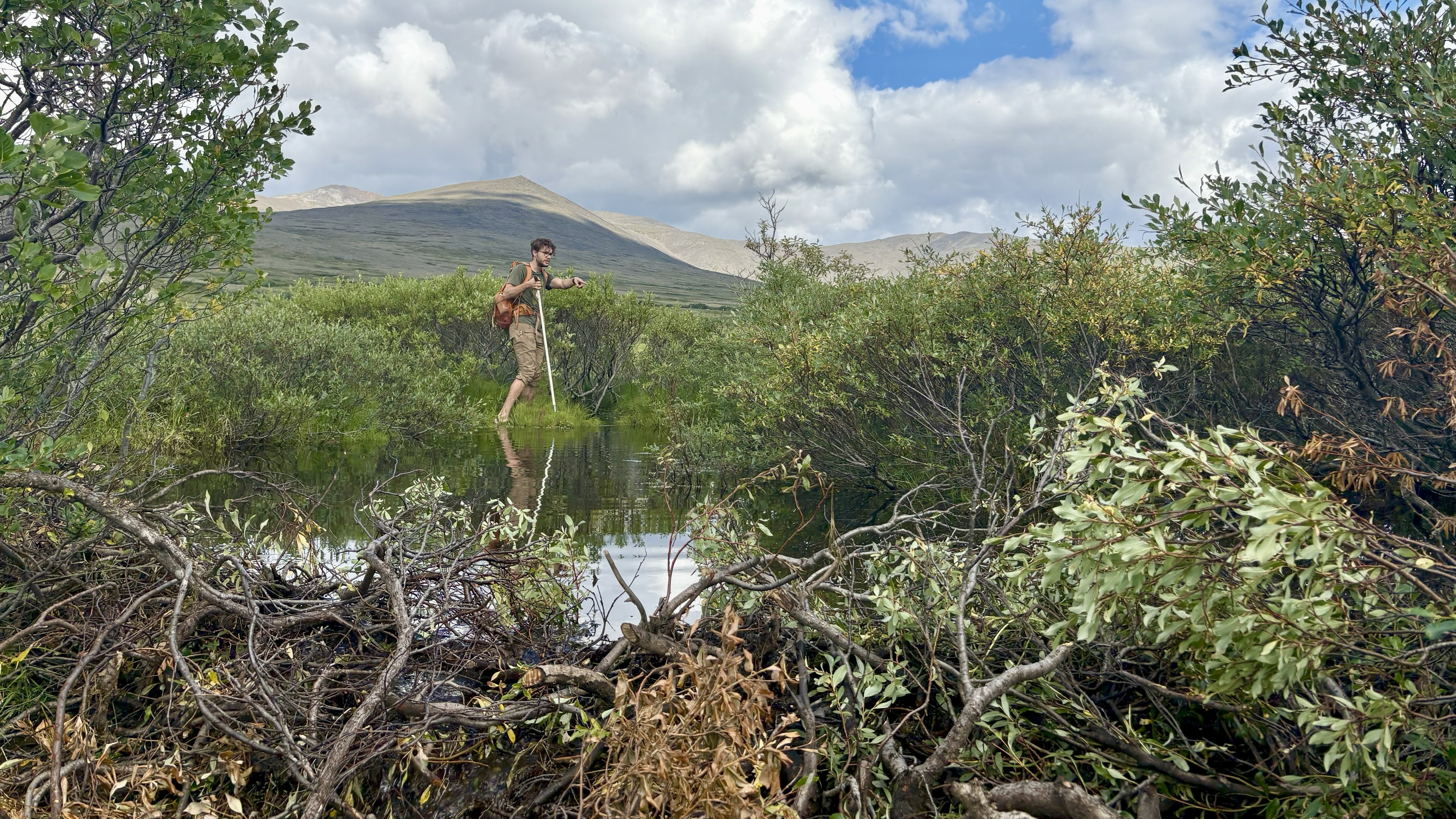
My first lesson was that understanding change requires you getting your hands dirty—literally. One afternoon, I was walking with Tom, a postdoctoral researcher, as we navigated through dense willow shrubs at a remote site to check on pressure transducer loggers, instruments used to measure and track water levels. I took one wrong step, and I was suddenly stuck, hip-deep in thick, cold mud. My initial reaction was frustration mixed with embarrassment. But as I worked to free myself, bracing against the ground while mosquitoes whined in my ears, I realized this was it. This was the friction of change. This struggle—this messy, unglamorous effort—is part of what it takes to document a landscape in transition. The data points Tom collected would tell a story of shifting water levels, but my mud-caked waders told a story of what it feels like to stand right in the middle of it.
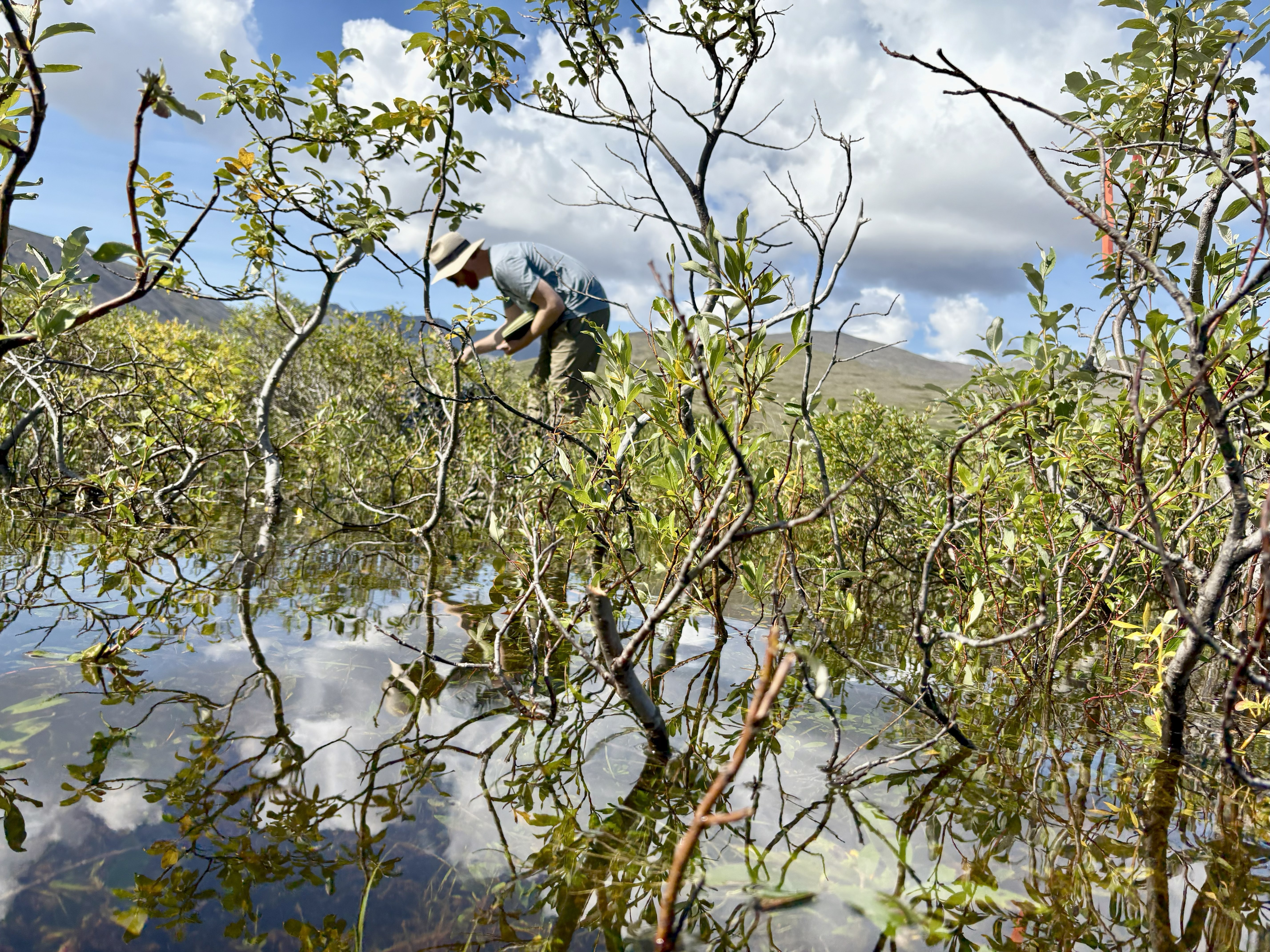
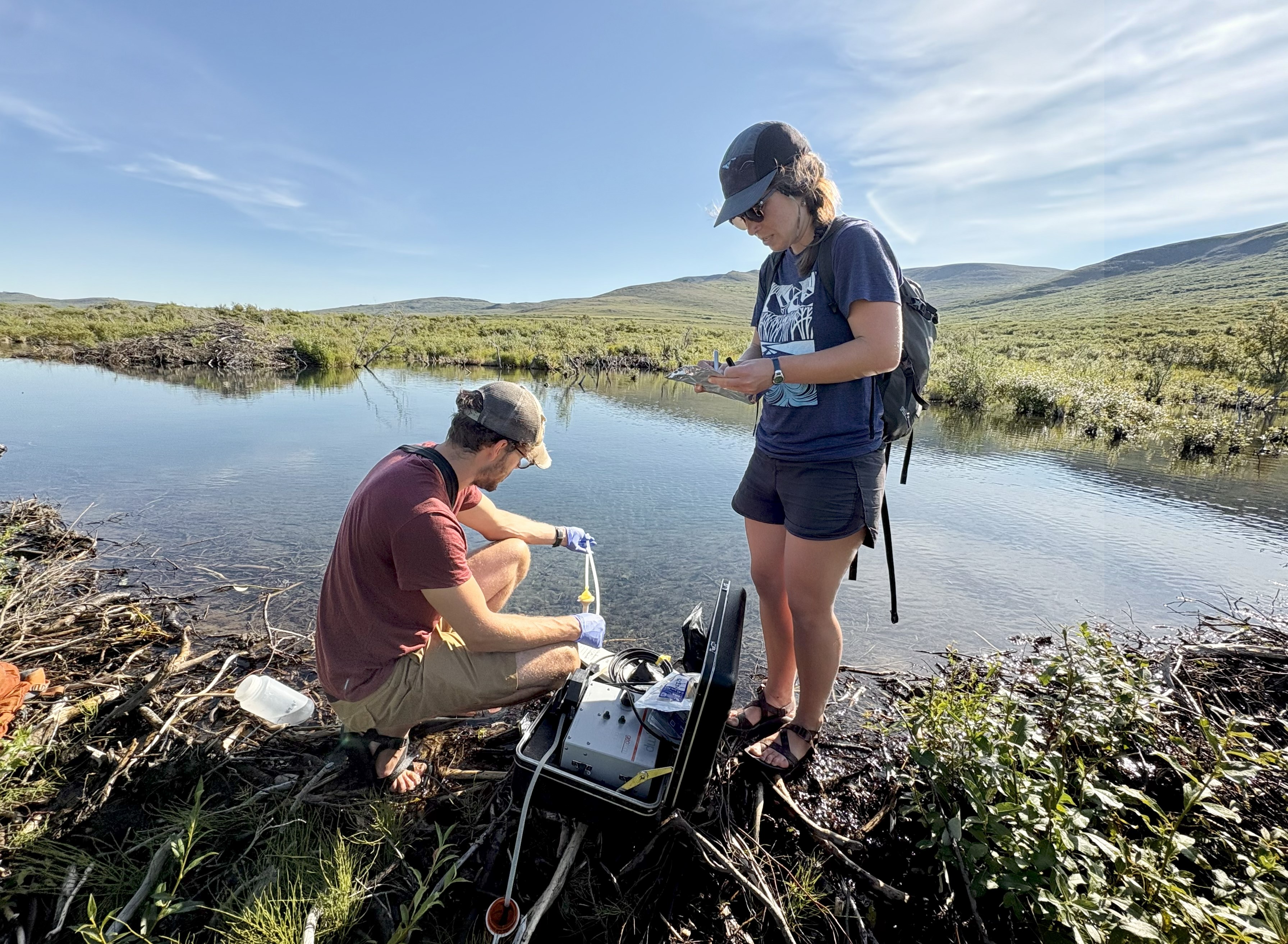
That feeling was reinforced every day, alongside the team of scientists, each of whom held a unique lens for viewing this transformation. With Sebastian, a PhD student, I learned how collecting environmental DNA from pond water could reveal the unseen presence of fish, insects, and mammals, telling a story of the landscape’s recent past. With Ken, one of the project’s principal investigators, I helped push a steel probe into the ground until it hit the layer of permafrost. The feeling could best be described as that of wet wood, which was contrasted by the sensation when the probe struck a rock deposited by a once-active glacier. Measuring the depth of the thawed, “active” soil above it felt almost as if I were taking the planet’s pulse. It was a simple, direct measurement, but it helped reveal the shift happening a few centimeters beneath our very feet. Later, flying a drone with Ben, I saw how countless small changes—a new beaver dam here, a thawing pond edge there—created intricate patterns across the entire valley floor. The drone’s aerial view stitched together the individual stories I was seeing on the ground into a larger narrative of transformation.
This experience of working with this team has also taught me that change is rarely linear or straightforward, but seeing two vastly different forms of it back-to-back from the air brought this lesson into sharper focus. From the vantage point of a helicopter, we flew over a series of new beaver ponds, whose dams intricately sutured the wetlands together. I could see the reality of what the group’s multi-year research had been documenting. In this harsh landscape, beavers bring about significant change. They are creating new, lush habitats where there was once only frozen ground, overcoming seemingly impossible feats of engineering. While heroic, the research complicates this narrative. The data shows that the standing water behind these dams accelerates permafrost thaw—simply put, liquid water spells death for the ice that has defined this land for millennia.
And then, as we weaved our way through Mosquito Pass deep in the Kigluaik Mountains, a different kind of change came into view, one that made the beavers’ gradual engineering feel almost gentle by comparison. We flew over the staked-out boundary of a future graphite mine. This wasn’t an ecological response; call it an industrial incision, if you will. It wasn’t hard to picture the new roads that would soon slice their way through this untouched region with the constant rumbling of trucks, one arriving every hour, 24 hours a day, for the next two decades.
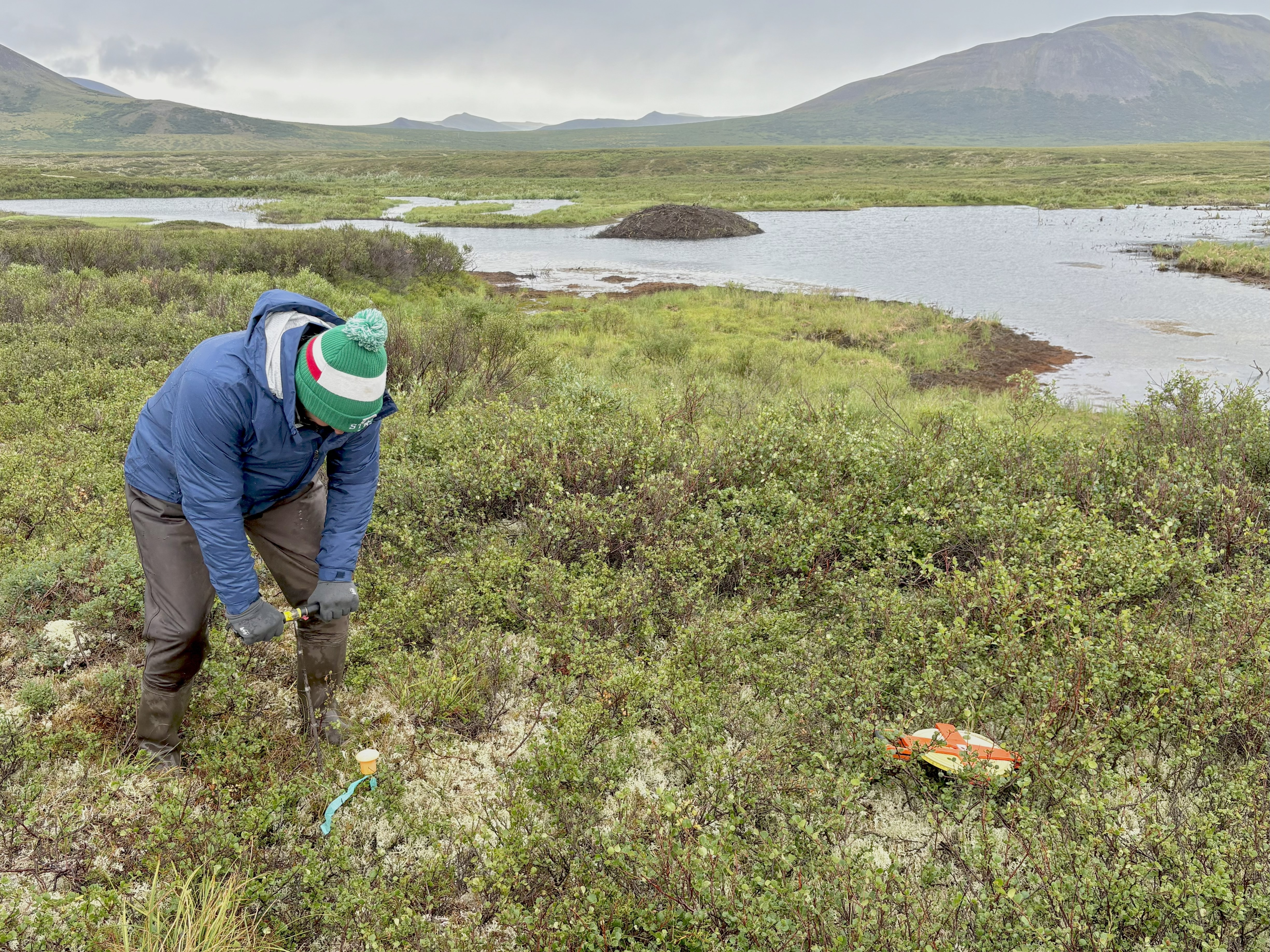
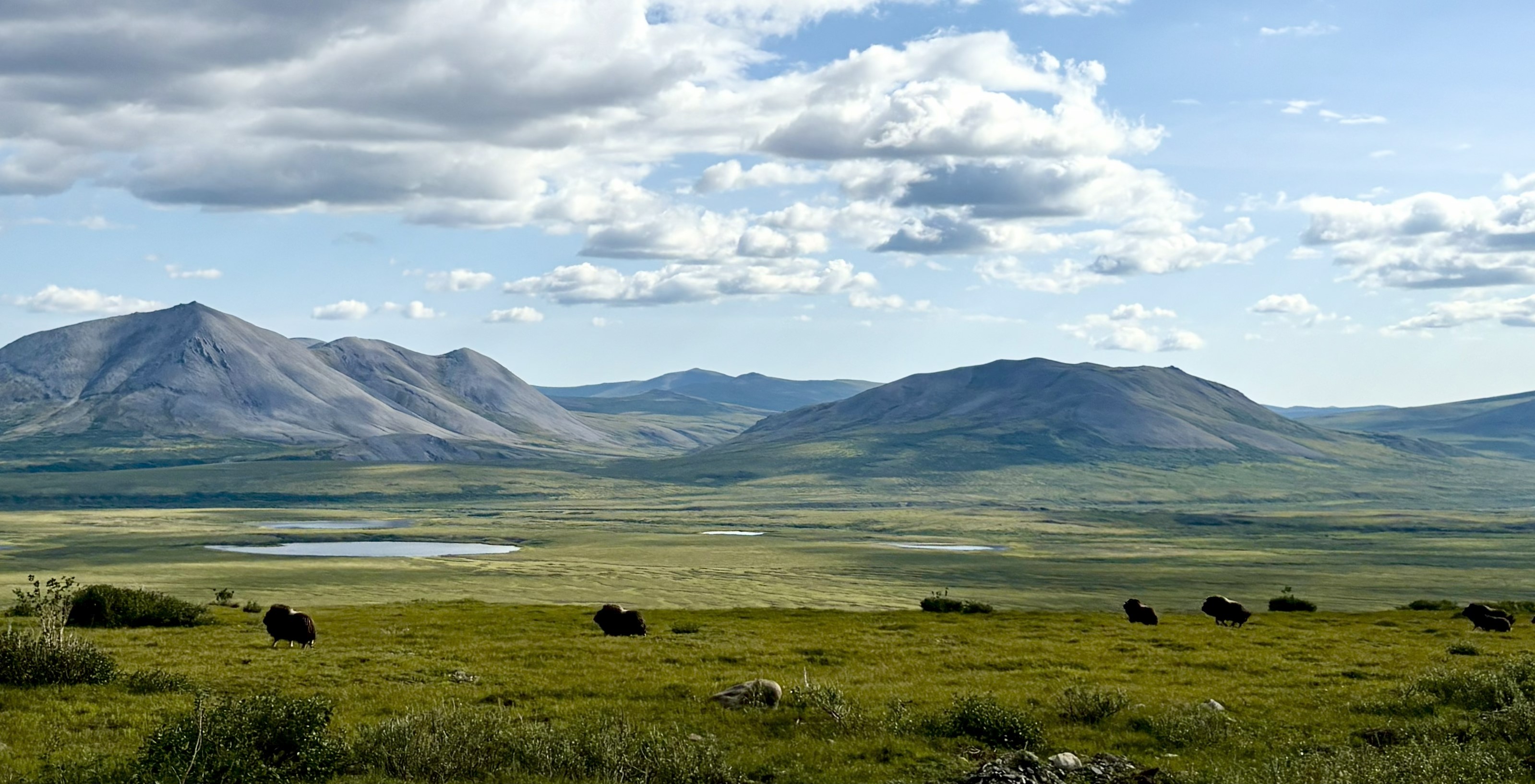
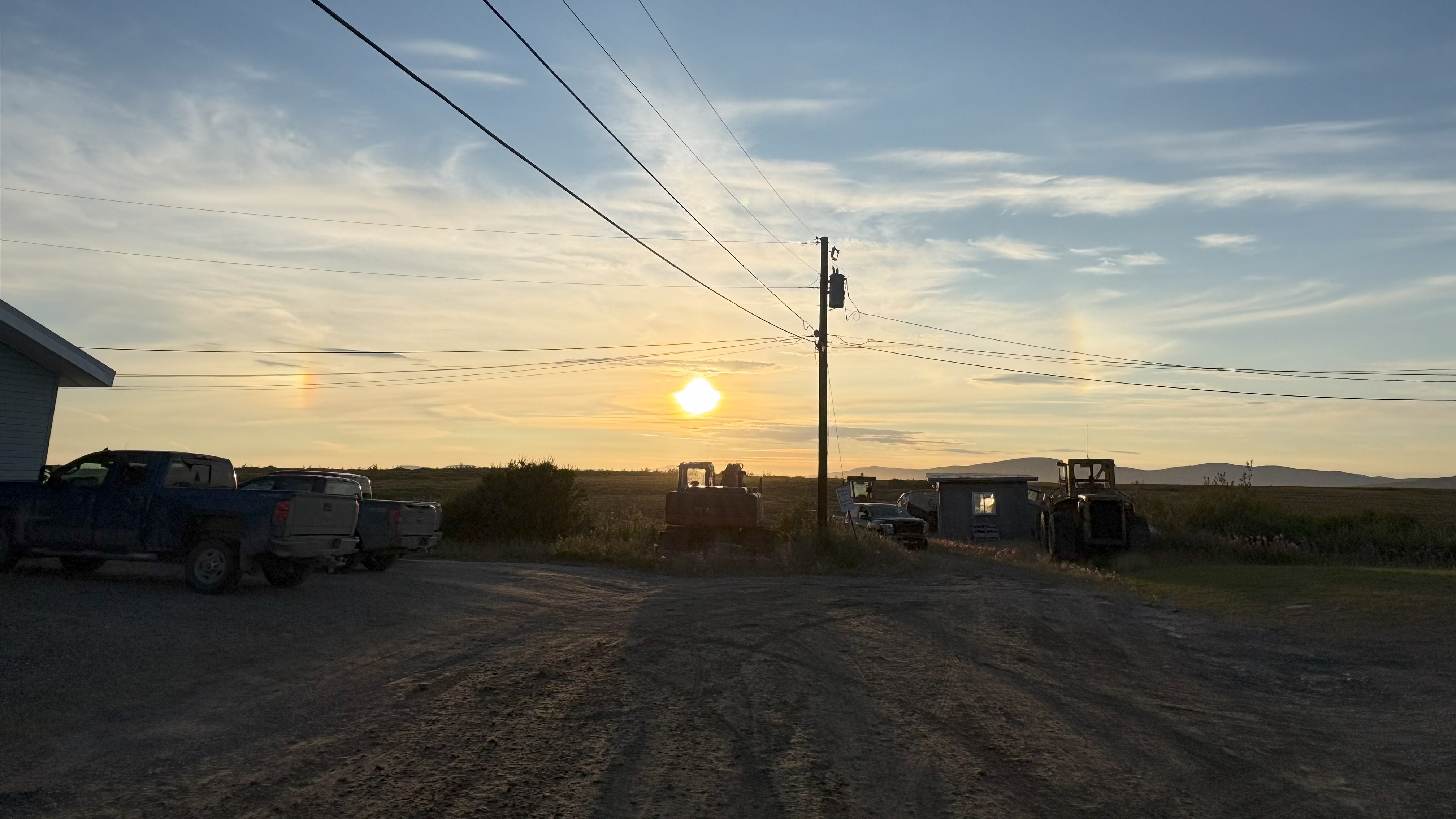
By the end of my time in the Seward Peninsula, I had nearly broken both of my ankles walking through wobbly tussocks, backtracked for misplaced instruments, and eaten the freshest blueberries straight from the ground under the glow of the midnight sun. I had seen sun dogs halo the sky, and I left my own footprints alongside bear tracks in the mud. I walked alongside muskox and even witnessed an angry wolverine doing backflips over the Arctic tundra.
Each moment drove home the same truth: to experience the Arctic is to engage directly with change. Even now, back from the field, I keep returning to Butler’s quote. I went to the Arctic to observe change, but I left understanding that observation is, in fact, a reciprocal interaction. In helping to lug a heavy battery for an underwater camera, steadying a probe, or even just leaving my footprints in the mud alongside bear pawprints, I touched the tundra. And in kind, the tundra touched me. It has deepened my understanding of patience, collaboration, and the persistence required to do science in such remote environments. It replaced these abstract ideas circling in my head about long-term environmental change with more physical and sensory memories: the sight of sun dogs haloing the midnight sun, the taste of wild blueberries, the feeling of the ground giving way beneath me.
As an educator from Texas, this is the story I wanted to share. Not just the data, but the texture of the science and the landscape in which it touches. My goal is to bring that sense of complexity back to my classroom. Change in the Arctic isn’t just a headline in the news or a chapter in a textbook; it is a lived experience. And by witnessing it, even if for a short time, I feel more prepared to discuss what it means to live on a planet where the only truth is change itself.
A big thank you to all who were involved in making this experience a reality:
Polar STEAM; Oregon State University
Melissa Barker; Jami Ivory
University of Alaska Fairbanks
Tom Glass, Sebastian Zavoico, Paige Kehoe, Iris Sutton, Ken Tape, Ben Jones, Robin Spielman
And everyone else!