
The “Tut”
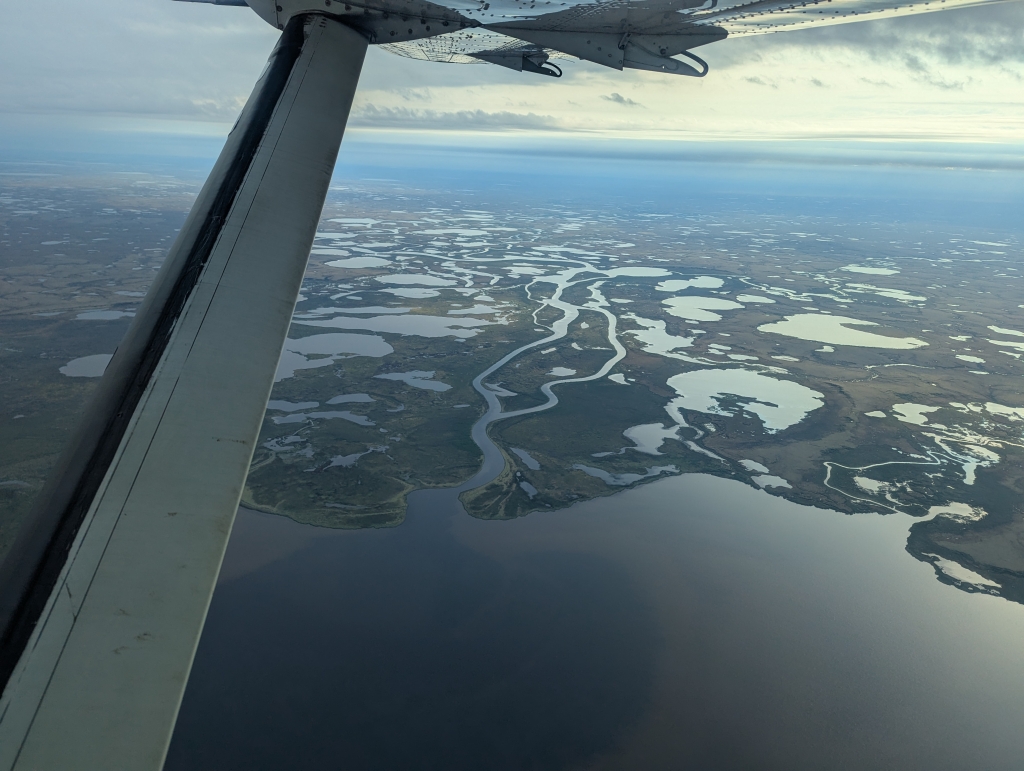
“I am definitely not in Louisiana anymore.” This was the thought that crossed my mind as I watched the vastness of the Alaskan tundra pass beneath from the small window of a bush plane. As I pondered the thousands of ponds and lakes, an innumerable mosaic of glacial melt atop a layer of permafrost, I was very conscious of how lucky I was to be there and how excited I was for the coming adventure.
For a bit of context, I am the Assistant Director of a science museum in Louisiana, and this expedition to the Alaskan tundra stems from the wonderful opportunity I was selected for with Polar STEAM. Strangely enough, I first was interested in the Antarctic Artist and Writers’ program while I was working on my graduate degree in visual arts but the onset of Covid quickly put an end to any hope of applying. Years later, out of curiosity, I checked to see if the program had returned last year and discovered the Educator Fellow application through Polar STEAM. After several interview rounds, I was overjoyed to hear I was selected. These blog posts will chronicle my journey across three weeks in the Alaskan tundra with the researchers in a remote field site of the Yukon-Kuskokwin Delta.
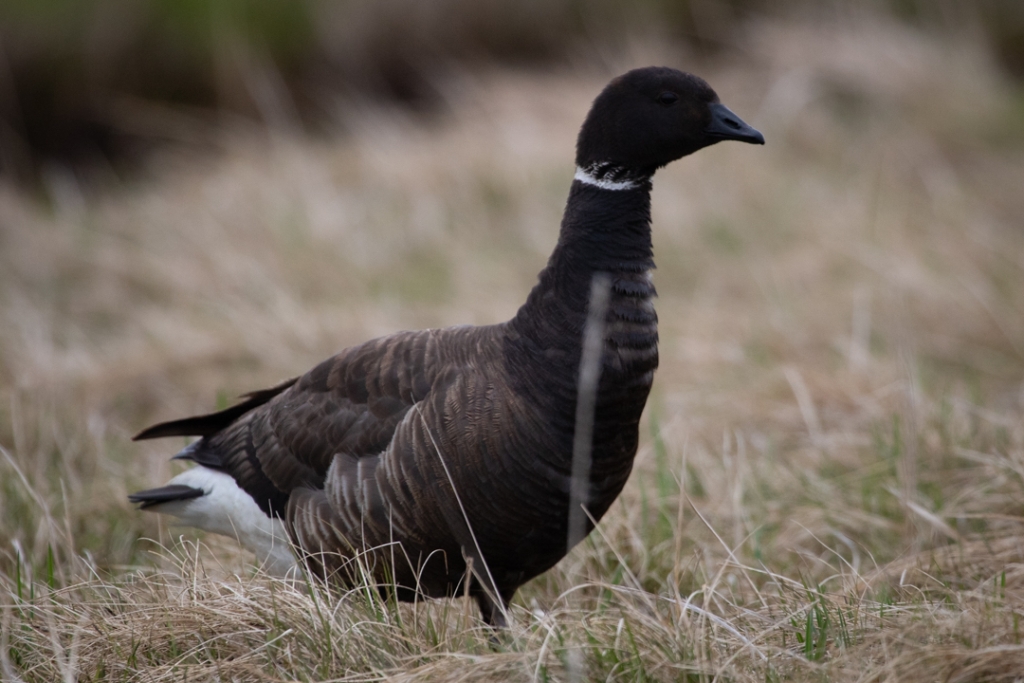
Receiving the notification of my selection was the first domino that began several months of planning and training events with wonderful people and organizations. All that preparation culminated in me sitting on that small bush plane as the only passenger, save for some wrapped pallets of USPS mail. I was on my way to the small village of Chevak to link up with the research team of the Tutakoke River Camp who were collecting data about black brant geese (Branta bernicla) as part of a long-term study under the guidance of Principal Investigator Dr. Koons of Colorado State University.
“Hey, Eric, you just crossed into the Bering Sea!” shouted Ph.D. Student and camp leader James as our small boat cut through frigid waters that occasionally sprayed up over the gunwales. We had been on the water for nearly two hours after James and Bella, an undergraduate researcher on the team, picked me up from the airstrip in Chevak and resupplied vital camp materials like water, fuel, and food.
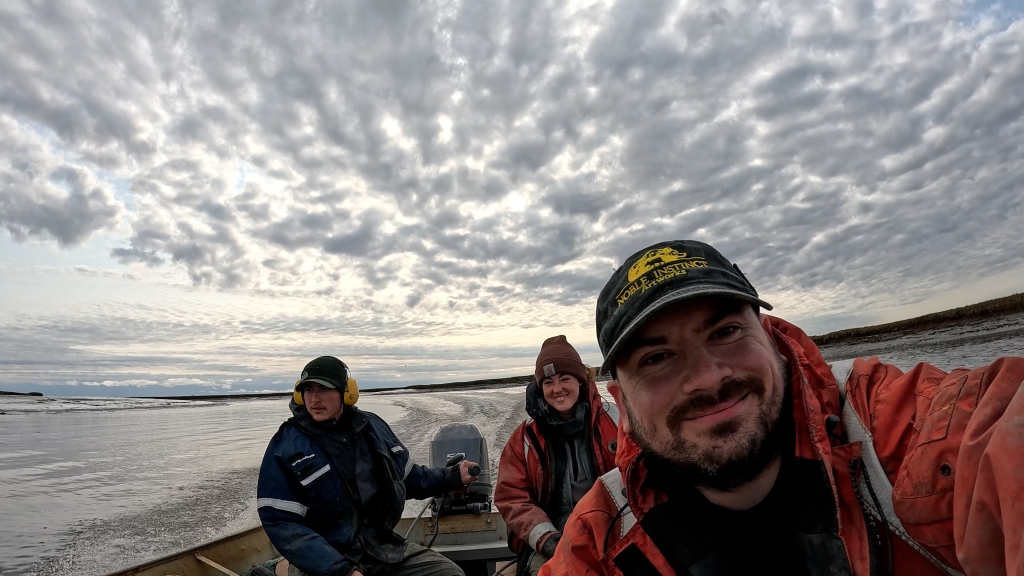
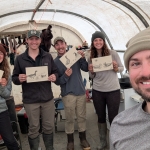
We were approaching the site which I would call home for the next several weeks, the Tutakoke River Camp. Situated on the namesake river, our home was simply referred to as “camp” as there were not any other human structures within hours travel in any direction. The Tutakoke River, with a dramatic fluctuation of daily tides, would recede to reveal vast expanses of mud flats traversed by a vast quantity of birds only to rush back in and swallow up all but the highest blades of grasses nearly seven feet above the low-tide zone. The river dictated much of our day to day life, and it was abbreviated to the shorthand of simply, “The Tut.”
Learning about Geese
Full disclosure: I knew very little about geese prior to becoming a Fellow with Polar STEAM. I’ve always held a very special admiration and love for wildlife of all varieties, but more knowledge of birds was not very deep and even less so when it came to water fowl. When I learned the project was focused on the black brant, I immediately set about to learn more.
If you are anything like me, the first visual that comes to mind at the word goose is the Canada goose. Very quickly, the tundra introduced me to several other wonderful and beautiful species.
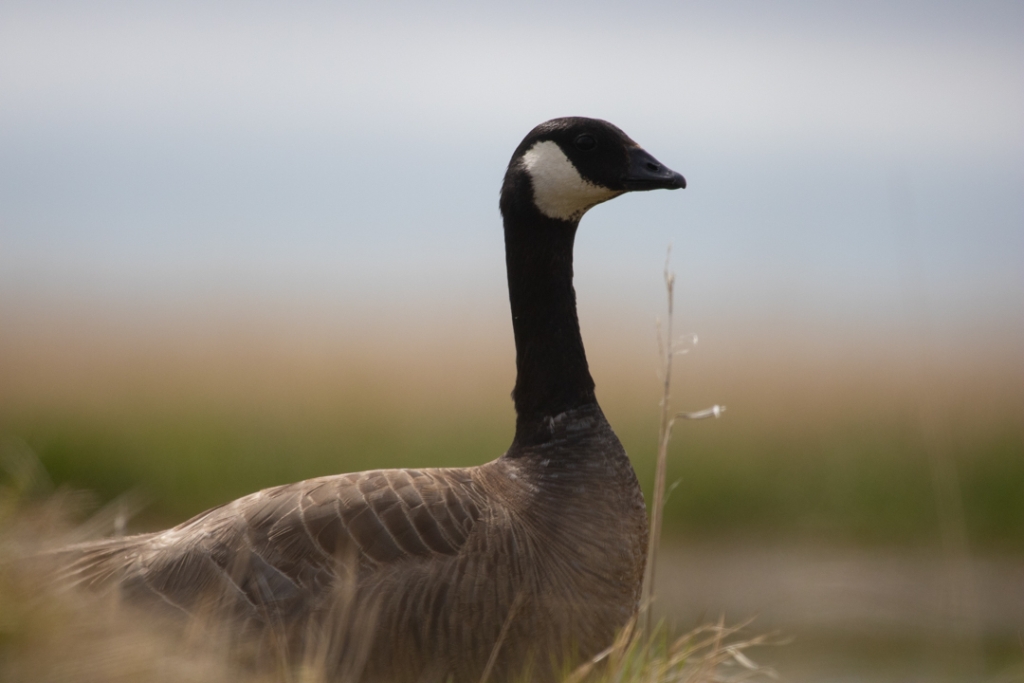
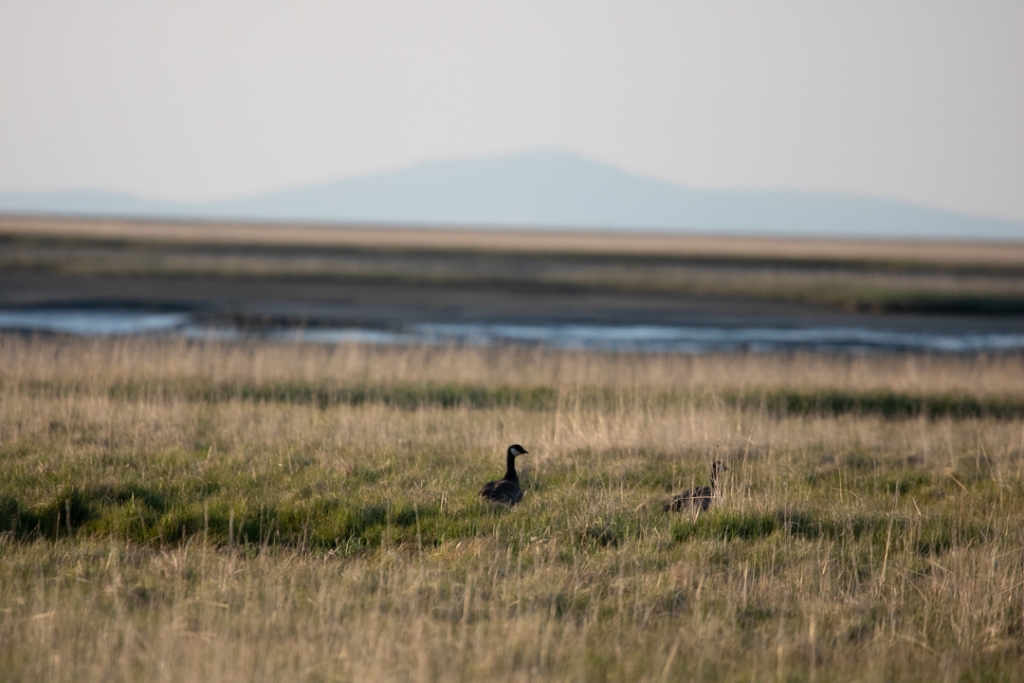
Most abundant were cackling geese (Branta hutchinsii), known affectionately to us as “cacklers.” They look visually similar to the larger Canada goose (Branta canadensis), but have a few distinguishing features such as a shorter neck and more rounded head. Several broods of this species made themselves at home within the perimeter of camp, with nesting parental pairs joined by small lines of fluffy goslings grazing around our tents.
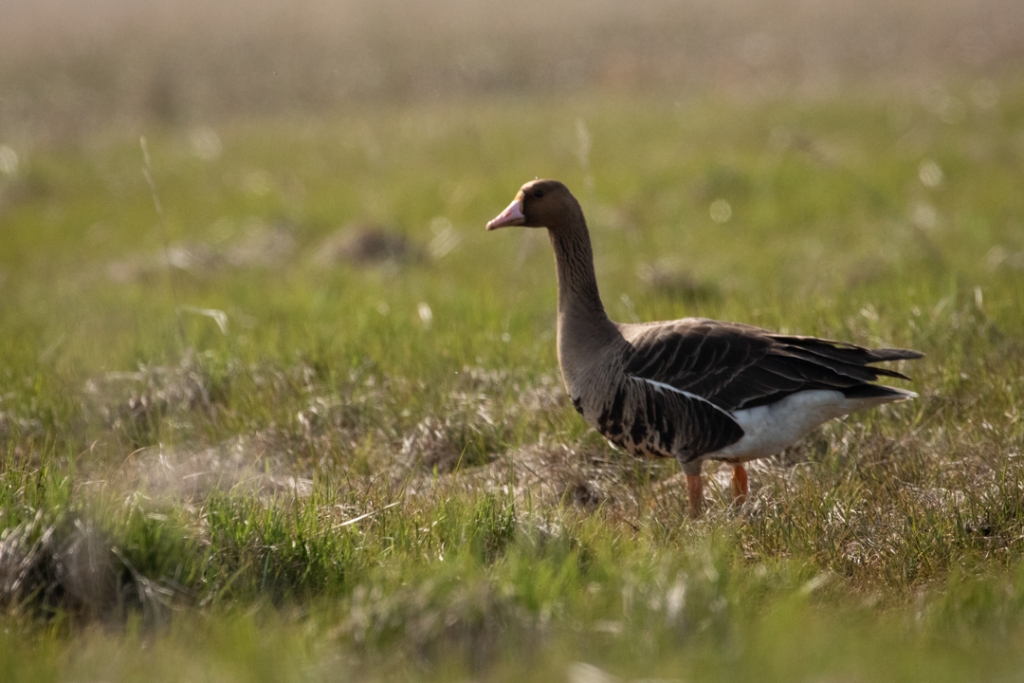
Within our camp we also had one pair of white-fronted geese (Anser albifrons) that were certainly more wary than the camp cacklers. This beautifully adorned species were a little less common, but we saw quite a few parental pairs and goslings over several weeks, but they liked to keep a fair distance from us as we trudged through the mud of the tundra.
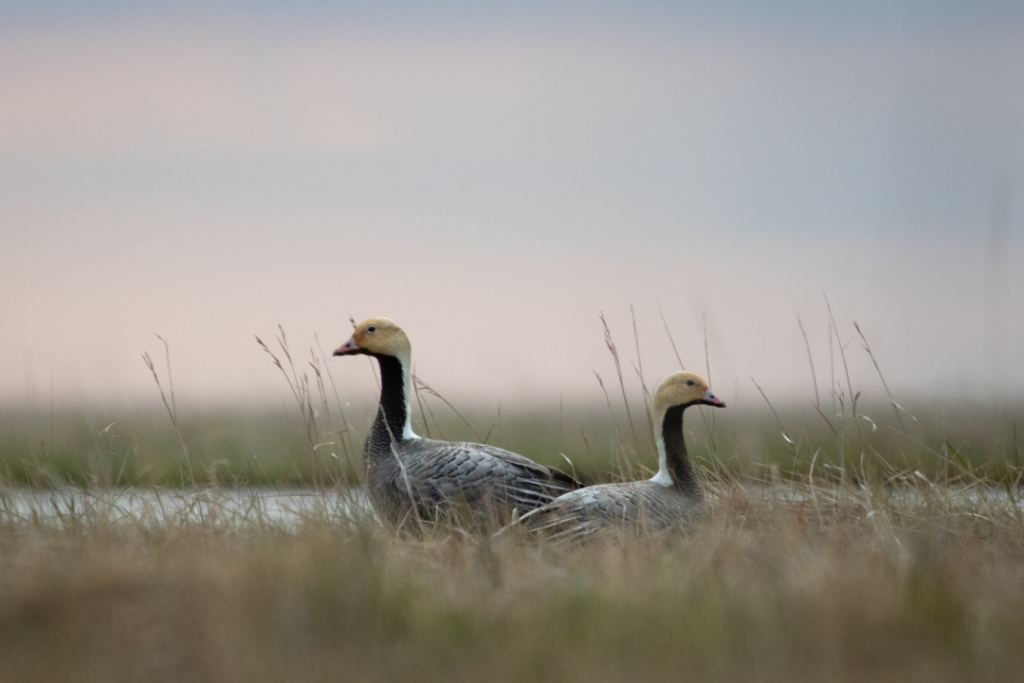
One of my favorite species I observed – and certainly one of the more rare – was the emperor goose (Anser canagicus). I had never seen a goose with these colorations before and they immediately captured my attention. They more than live up to their name, as the golden coloration of their heads in stark contrast with the black and white markings on the neck. I didn’t realize at the time that they do not venture far from the coasts of Alaska and Russia. It was wonderful to see several of these pairs and their broods.
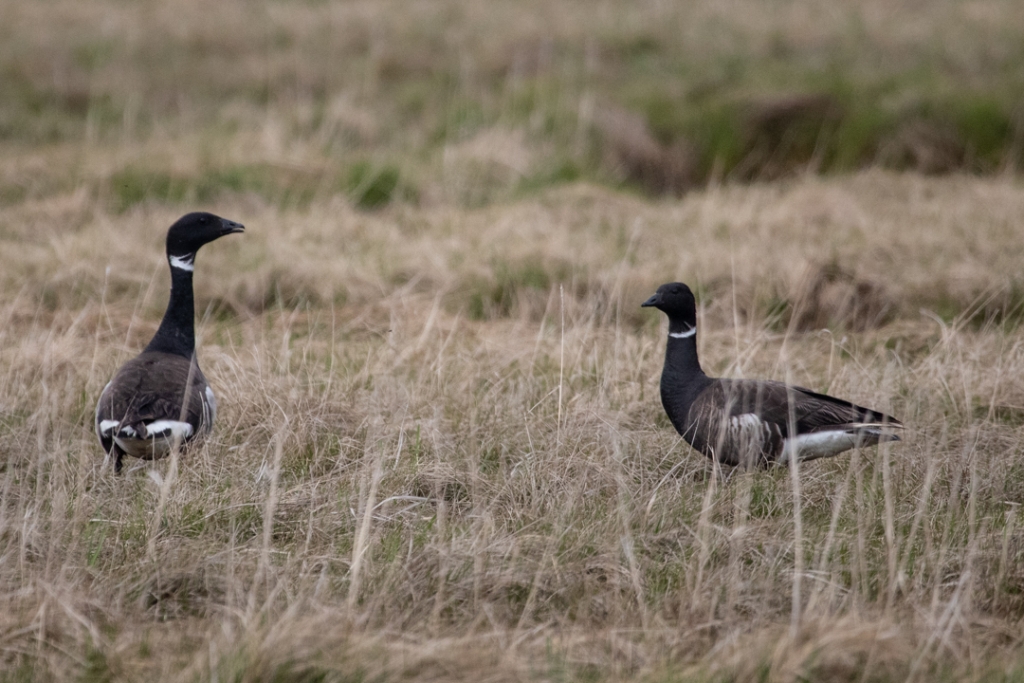
The species of study, however, was the black brant. As I prepared myself for the trip, I wanted to learn more about this interesting species and the research going into their conservation. Through conversations with Dr. Koons, the Principal Investigator, I was informed that the study of brant, their nesting success and patterns, and their banding for identification is a long-term project that has been going on since the 80s.
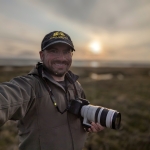
I was excited, equipped with my DSLR and two GoPro cameras, to venture out into the tundra and learn more about these species and this environment that was completely new to me. I was off to explore in the tundra.