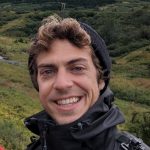

“Do you think they do delivery?” Aleksey asks with a grin as he looks back at our last boxes of cookies. For the past nine days, we’ve been camped out in a Reindeer police cabin in the Varanger Peninsula in northeastern Norway. This is our first cool evening of the trip, and the mosquito net-wrapped windows are coated with what we’ve been calling “yr,” the Norwegian word for mist.
Dr. Aleksey Sheshukov, the lead scientist, is joking of course. However, his quip speaks to the challenge that occupies much brain space for the five scientists cooped up in the cabin. Many of the ecosystems on Earth most affected by climate change are in remote areas of the globe. How do we regularly get the necessary equipment and skilled scientists to these places to collect good data?
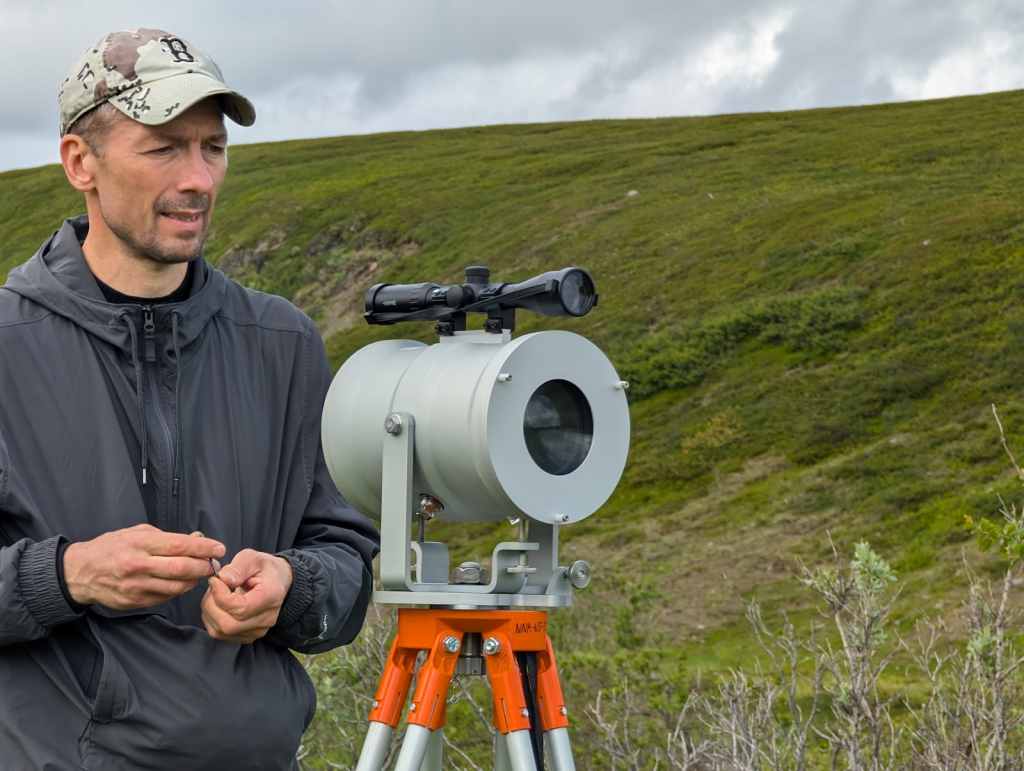
The researchers here are trying to collect enough data points to create a mathematical model of the energy flow in and out of the atmosphere, soil, water, flora, and snowpack throughout the year. The plan is to use a combination of meteorology stations, soil temperature sensors, snowpack sensors, and (the pièce de résistance) a scintillometer to piece together each variable in the basic energy flow equation for Earth’s surface. While some of the equipment is cheap, much of it is not. All of it is heavy. All of it needs bulky protective pelican cases.
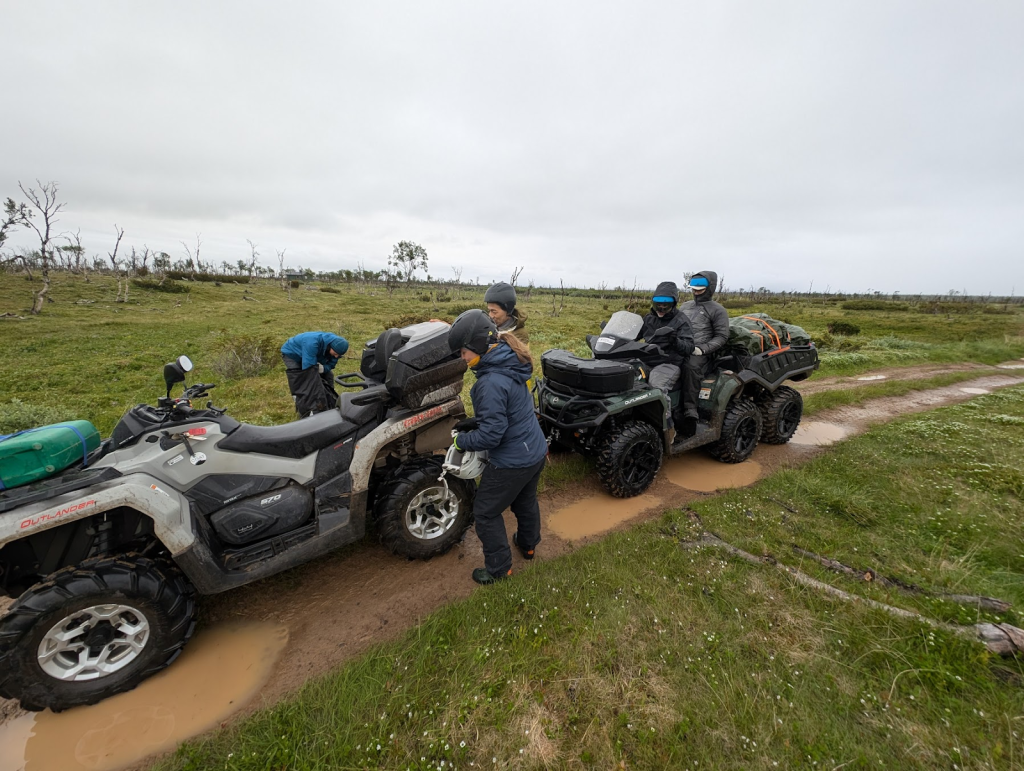
To get here, this team of five flew from three separate universities in the US to Tromsø, took a hopper flight to Vadsø, loaded up a truck of equipment, and drove to the edge of Varanger National Park where they met more scientists at a storage facility maintained by the Climate-ecological Observatory for Arctic Tundra. With the help of these local experts, they carefully moved their supplies and equipment to tarp-wrapped trailers. They then towed these trailers for several hours through mud, creeks, and lots of “yr” to a base camp further into the tundra. There are a limited number of ATVs, so a few of the scientists must hike the 30+ km.
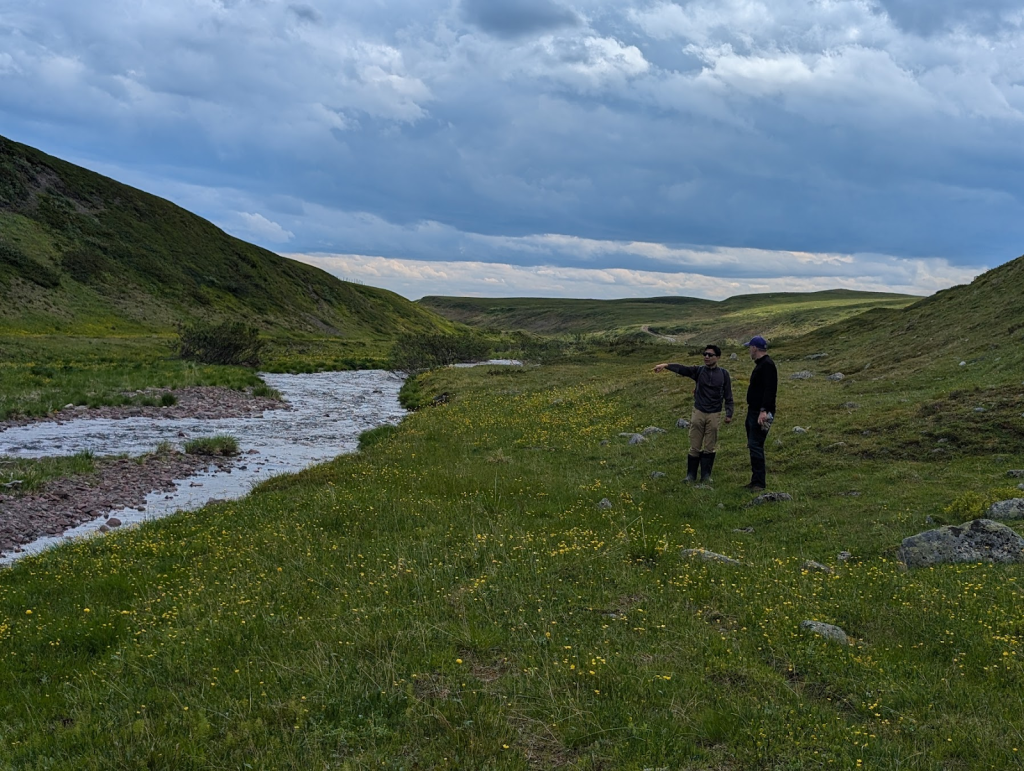
For the last eight days, the team has driven the equipment even further into carefully selected locations in the tundra to check on the soil sensors installed last summer, install new batteries to those sensors, set up a meteorology station, and laboriously align the laser of the scintillometer. Each part of this process requires the eye of an involved scientist. The meteorology station must be carefully aligned and placed over a representative ground-surface sample. The scintillometer is even trickier. Its laser must be shot across nearly uniform flora for hundreds of meters. This may be simple in a corn or alfalfa field, but the wet hills of the tundra make it difficult to find these straight, uniform lines. Several times, the team will begin to set up equipment, only to pace out the sampling area and find water, sending them back to the start.
Notably, some of the equipment can not get wet, which any outside observer would realize by watching the behavior of the scientists. The team spends much of the day anxiously scanning the skies for rain. There are few locations where there is enough cell signal to get a weather report. When rain inevitably does arrive, it’s all hands to tarps and plastic wrap. Ideally, the scintillometer would collect data for hours. Aleksey spends equal amounts of time cursing and praying to Thor for every change in weather.
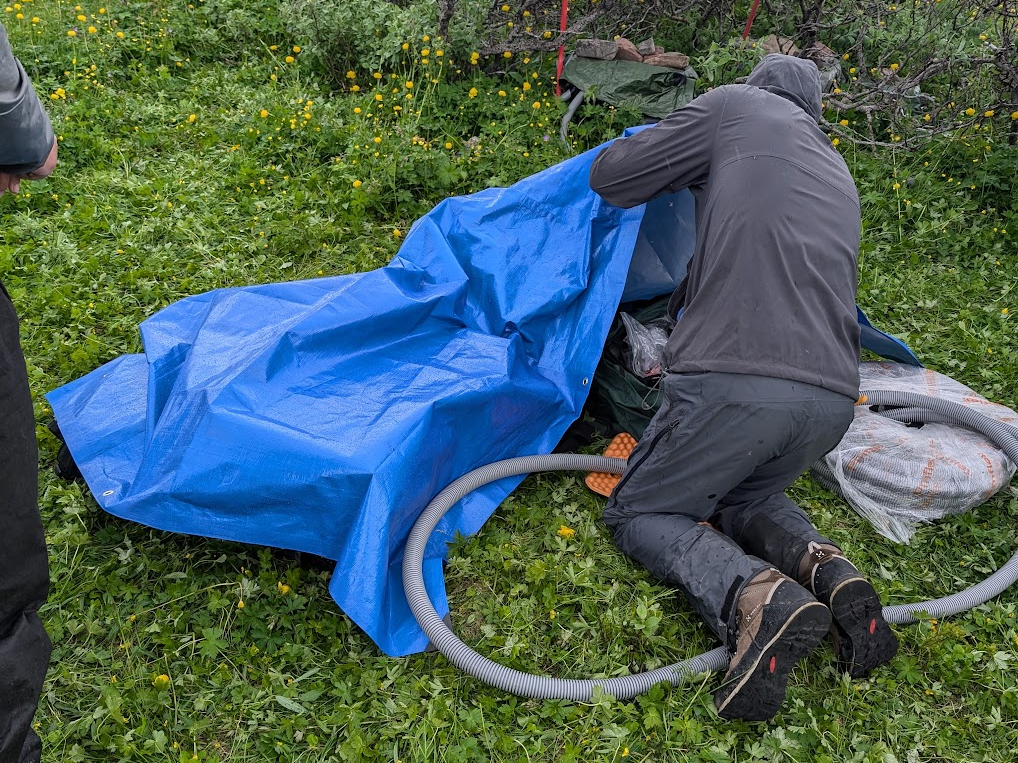
Mud is even worse than rain. The tarps and trailer need to be regularly cleaned, but the only running water for miles is in the few shallow streams that cut valleys into the tundra. Thankfully, this year’s fieldwork is cleaner. Last year, this same team spent days digging deep pits into the rocky soil to install soil sensors. The team members shudder thinking about the days caked in mud with only river baths to clean themselves.
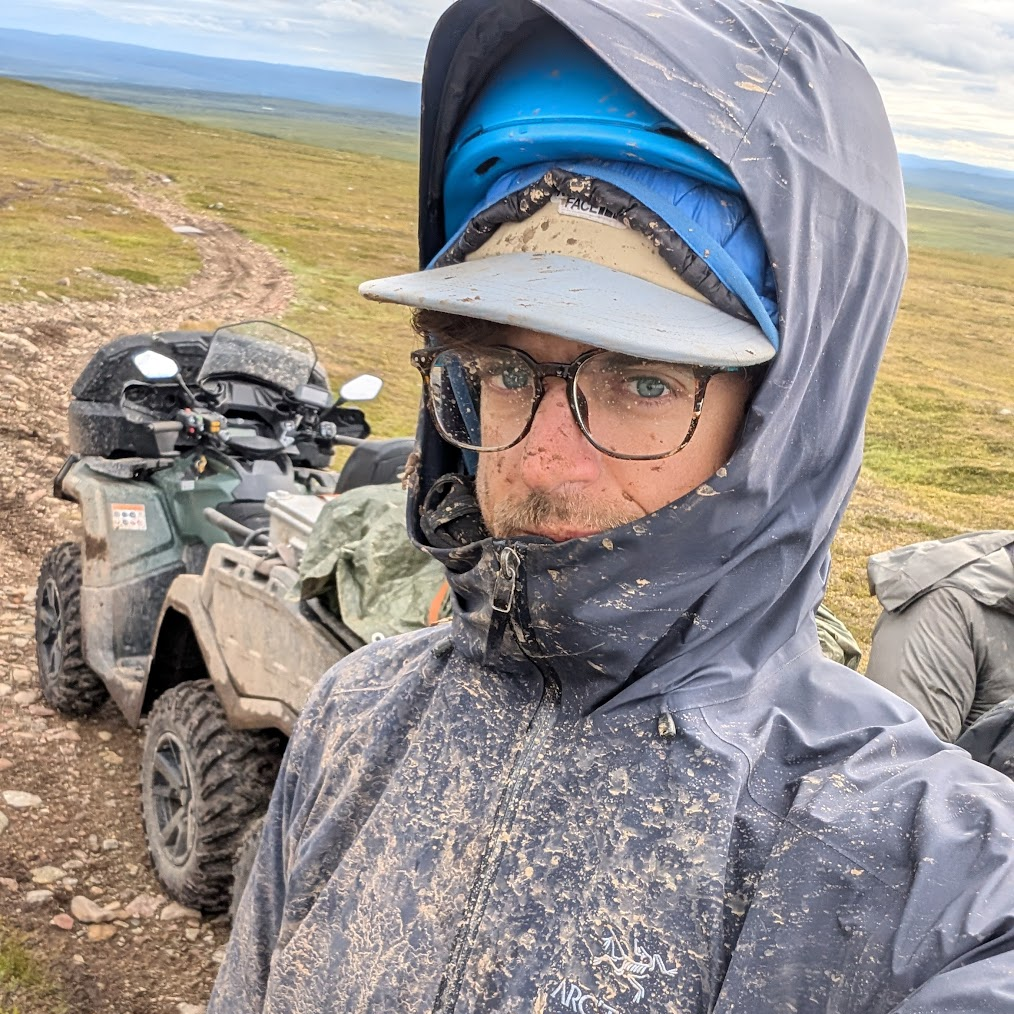
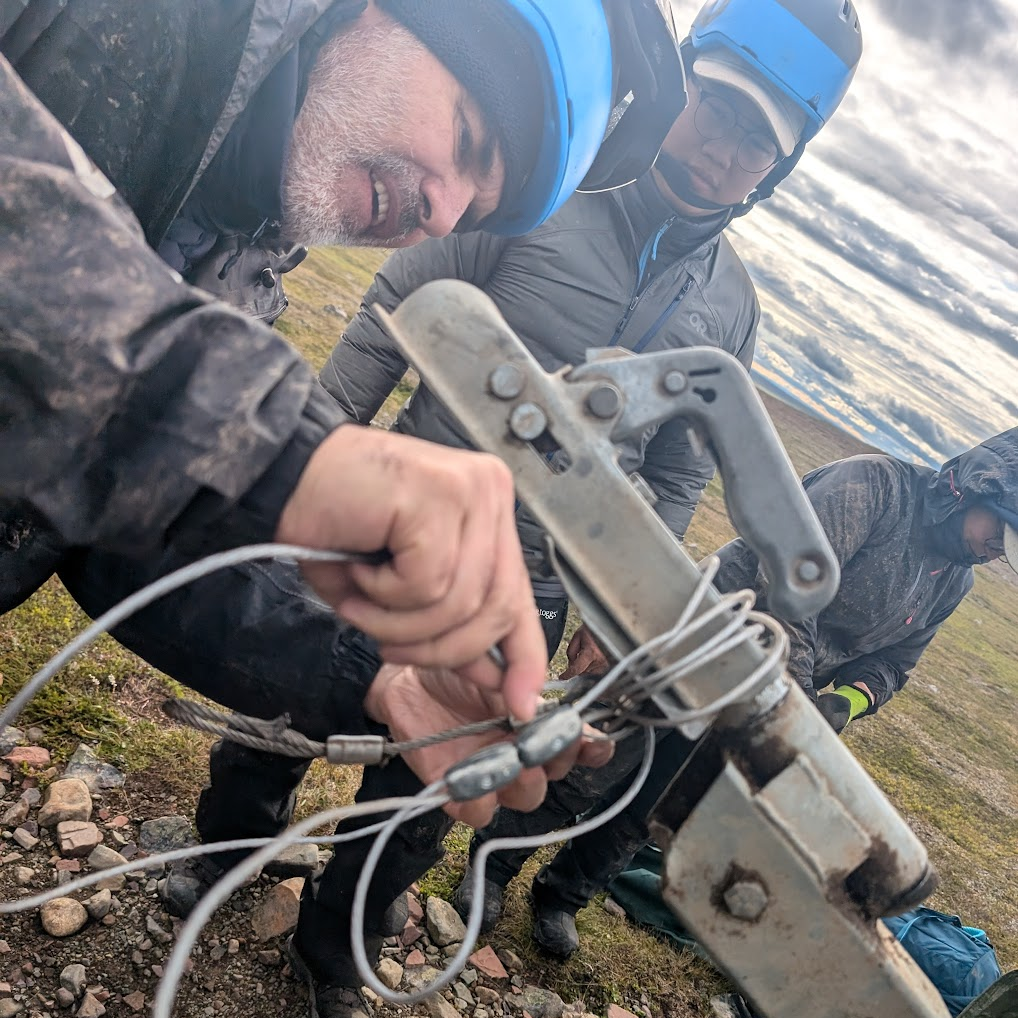
Even when things go to plan, the work is long and complex. But when studying remote environments, things don’t go to plan. If equipment breaks, such as the trailer hitch, the team must McGyver a solution with the guylines for the meteorology station. When there are hardware problems, such as the memory size on the station, the team has to rewrite the data logger’s code to find a sampling-rate workaround. At all times, the team is limited to the tools they brought. Sorry Dr. Sheshukov, they do not do delivery.
Where is all this data going? Each member of this team has a larger team back home. With these scientists and this hard-earned new information, they’ll hopefully be able to publish more accurate climate models. Those models will then be picked up by dozens of other teams for further analysis, drawing new conclusions and generating new questions, ultimately sending more scientists back into the field.
Taking a step back, It’s staggering how much adversity scientists have to overcome to have good data. At times, the team put an entire day of work into a single data point. Every day, there are teams of field scientists in remote locations working through the challenges of logistics, travel, equipment, weather, and funding. At home it’s easy to forget how much hard work and planning goes into data collection, especially in remote locations. This summer reminded me just how much each data point can cost.
I’ve since returned to my classroom in Anchorage. My sixth graders sometimes complain about the distance we bushwack to set up their tree survey. They express frustration when their first anemometer design doesn’t work. I’m reminded regularly of Aleksey and his team, and when the students finally do complete their tables and plot their graphs, I’ve found myself in the habit of saying “How hard was it to get that data point? I bet you feel proud.”