
The glacier is mad at us today.
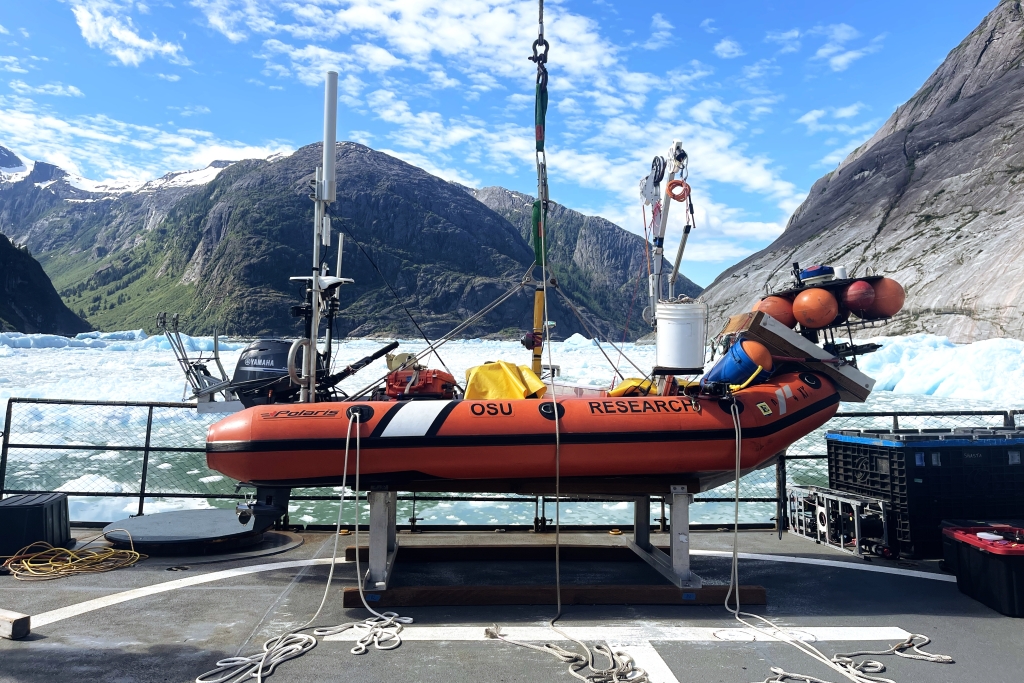
That’s the general assessment making its way through the ship, as calving event after calving event sends ice crashing into the water. The team was hoping to send Polly, the remote-controlled RHIB (Rigid Hull Inflatable Boat) that the team uses to deploy moorings and other instruments along the glacier terminus, back out for another deployment, but the constant choke of new ice off the glacier has made that virtually impossible.
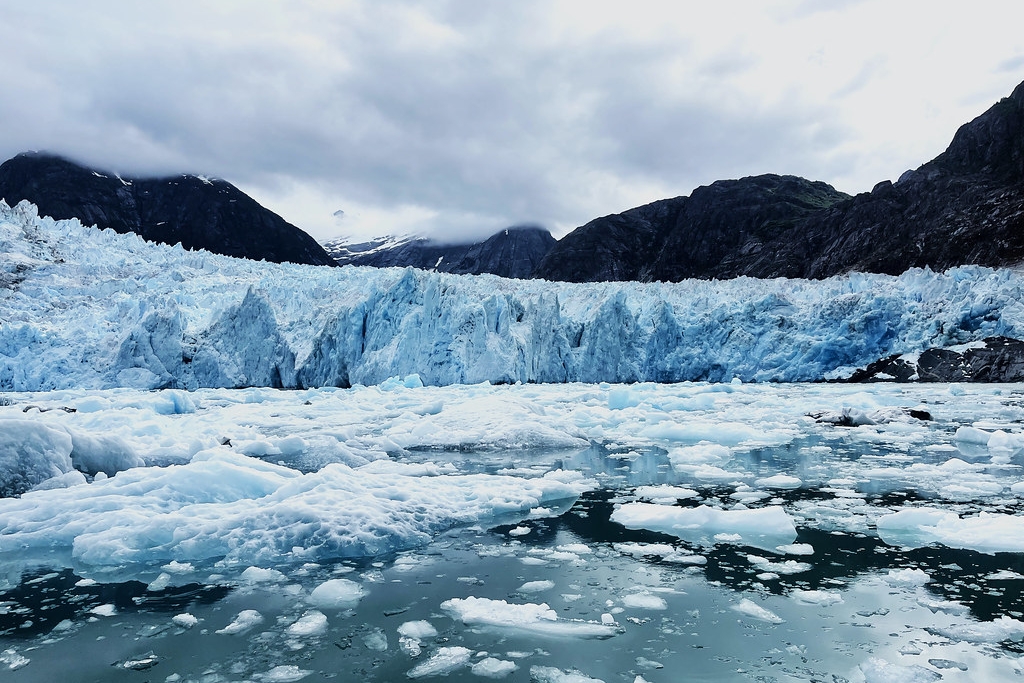
It’s pretty self-evident why tools like Polly are so important; calving events happen with startling regularity, with whole chunks of ice suddenly sloughing off the glacier’s face with a deafening crack. Even now, after hearing the sound over and over for two weeks, I struggle to describe it. The first time I heard it, I likened it to a gunshot, but in hindsight that seems too small and pedestrian. The Tlinglit name of the glacier, Xeitl Sit’, literally means “thunder glacier” – a far better description.
That’s why autonomous vehicles like Polly are vital to expeditions like this one. There is no data point worth sending a human that close to the volatile glacier terminus.
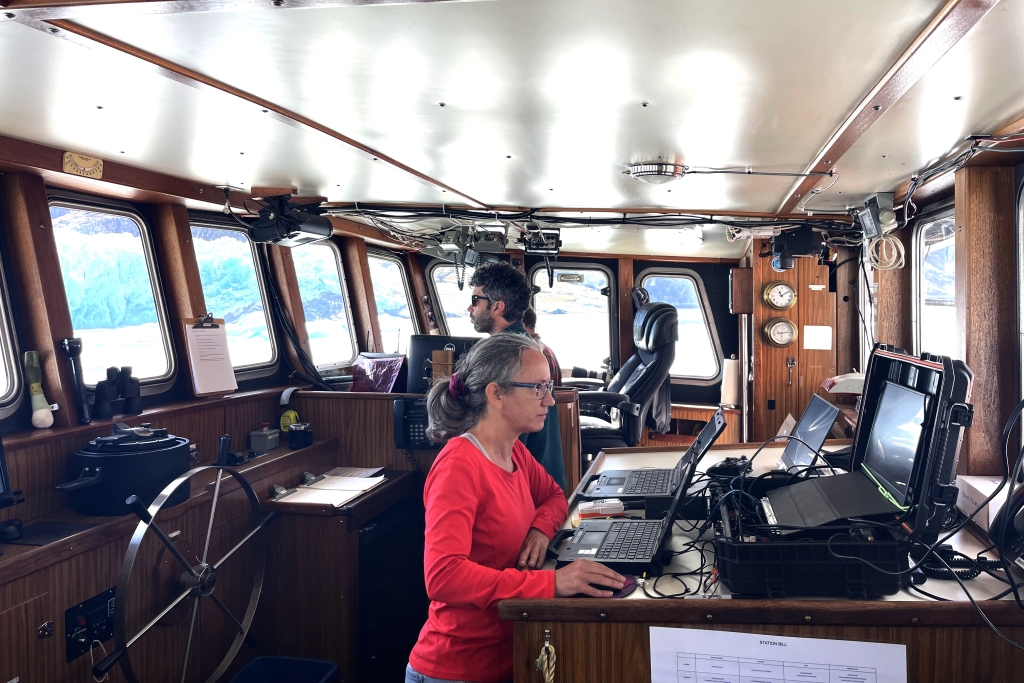
The glacier’s temperamental personality results in a long period of “hurry up and wait”, although there’s always something to be done on ship – the team processes data, repairs equipment, shares new ideas and thoughts about their research projects. This is the lesson the glacier teaches you when you’re trying to study it: you’ll do it on its terms.
Hours later, there’s a sudden break in the weather, and the ice flows begin to clear at the terminus. The Polly team rushes on deck to get her ready to deploy within this tiny, tiny window of opportunity. For my part, I’m getting ready to launch a drone, hoping to catch the moment of deployment on camera.
This is how ship life goes, I realize. Moments of calm, punctuated by furious bursts of activity.
A breath, then a cheer – the moorings have been deployed! Jasmine Nahorniak, an OSU faculty research assistant and Polly’s remote driver, swings the boat around as ice crashes behind it, sending a swell of water up. We clap on the bow and laugh with the sudden release of pent-up anxiety and adrenaline. I had no part in developing the systems so vital in getting this data, but it’s impossible not to get swept up in the joy and the relief. Everyone on board has worked so hard, and it’s incredible to see the fruits of that labor rewarded.
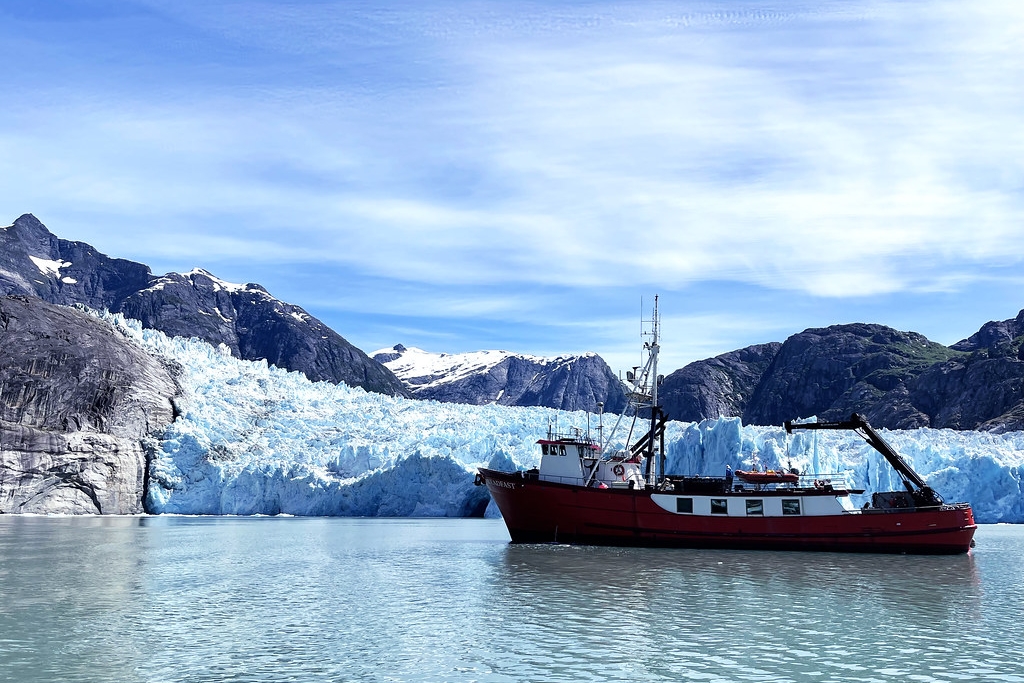
As part of my Polar STEAM fellowship, I was deployed on a research cruise to Xeitl Sit’ (Leconte Glacier) in Southeast Alaska. There were sixteen of us on the research team aboard the R/V Steadfast, and everyone was asking different scientific questions related to the glacier. I’m working with Dr. Jesse Cusack and Vanessa Hawkins from Oregon State University, whose research group is using Leconte Glacier as a natural laboratory for investigating melt processes that are thought to be occurring at many other glaciers globally. Some people aboard were oceanographers, some were engineers, and some were crew – and then there was me, an educator.
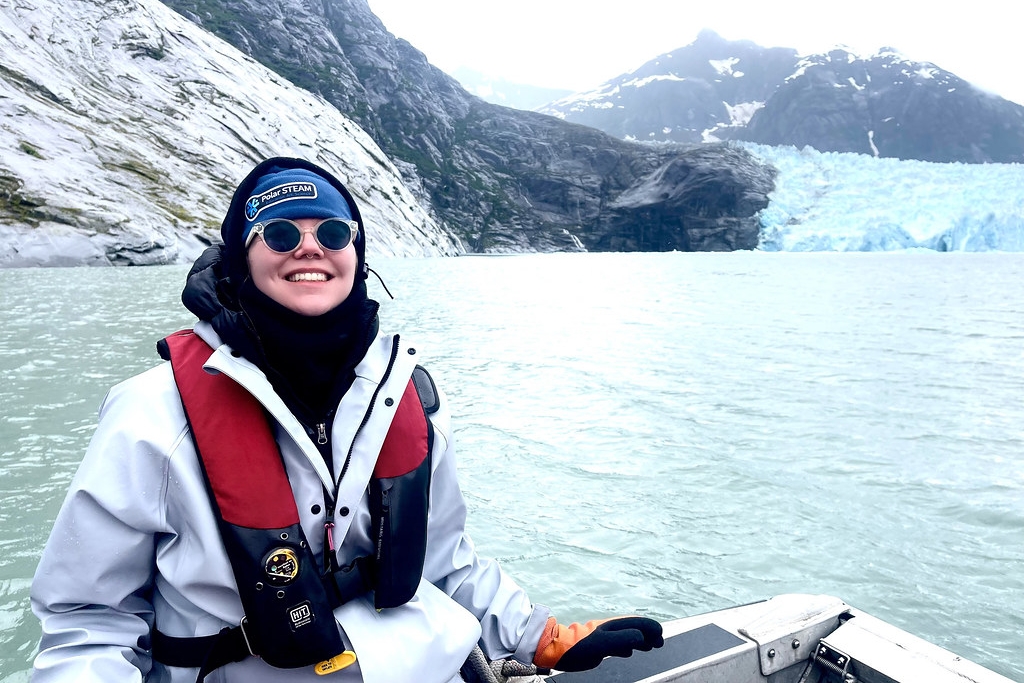
Before my Arctic deployment, I had worried somewhat about being “in the way” – I was completely out of my element (by choice, mind!). While I am a scientist, I have no background in physics, engineering, or oceanography; I had never been on a research cruise before; and I’m from the desert of inland Southern California, about as far away from the polar seas as you can get. As it turned out, I shouldn’t have worried so much. The team welcomed me with open arms, fielding my constant questions with enthusiasm and no small amount of grace. And I was able to contribute in my own way, flying drones and pushing icebergs away from sensitive equipment (and identifying rocks when we took a break to go hiking on shore!).
There’s a lot to learn on a research vessel – how to navigate living in each other’s pockets for weeks at a time or when meal times are. When I reflect on my time at sea, however, I think most about what the glacier itself taught me. How to work with nature, not against it; how to throw myself into new experiences; how to cultivate patience, and then, when the time is right, act.
I also think about the steady rocking of the boat at night, the curious spotted seals that would watch us fish for data in the small boats, the icebergs that looked like glittering shards of glass suspended in the water. I think about the waterfalls and the lichen on the rocks and jumping into the sea when the weather was nice.
I think about the passion of everyone on the team, and I think about how fortunate I was to be part of it – and how lucky I am now to be home and preparing to share their work with others.