
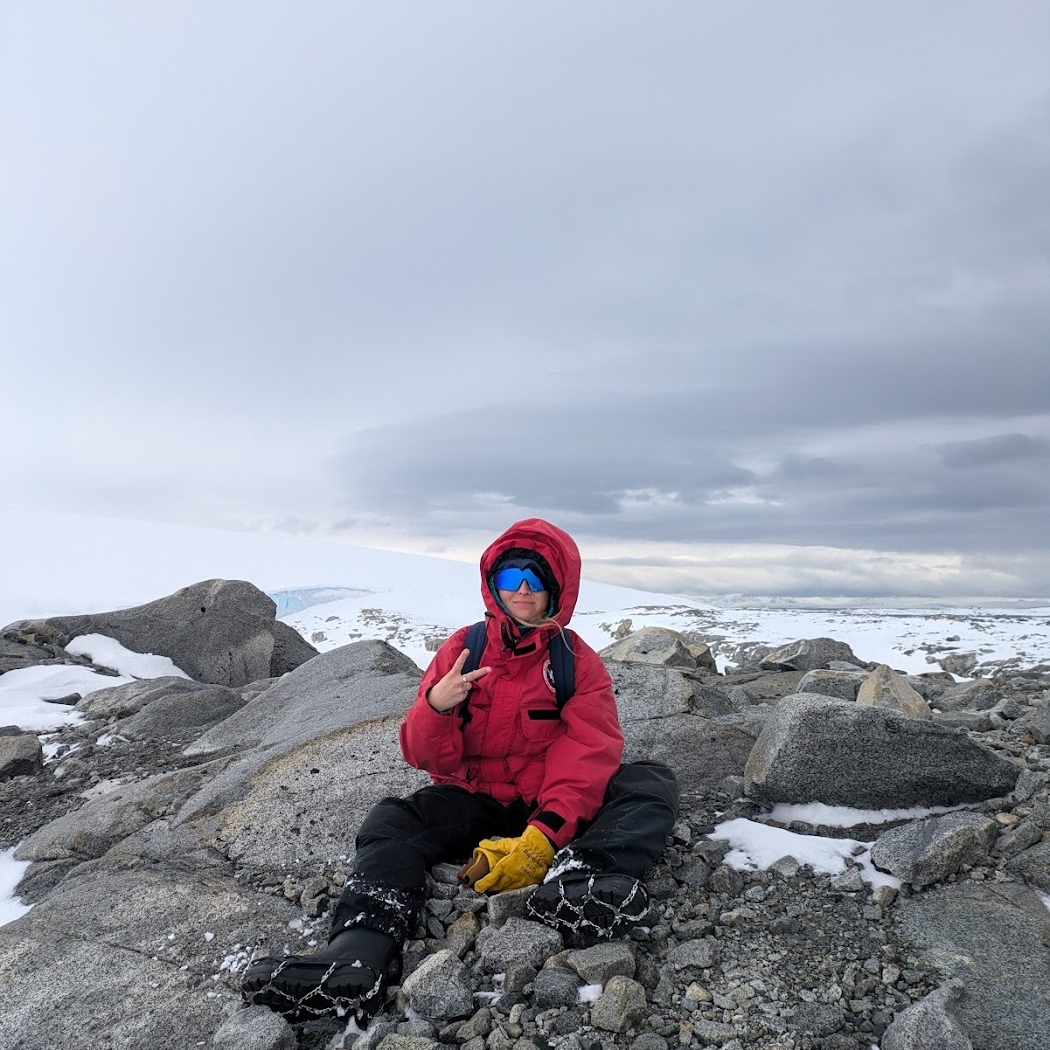
I’m here as an Educator Fellow with Polar STEAM. My goal is to bring the important work that’s happening down here to my students and make it accessible and relevant to us in Kansas.
In order to accomplish that goal, though, I have to actually be a part of the scientific research that’s taking place.
This is how I became the chlorophyll queen.
Why care about chlorophyll?
Chlorophyll is the main pigment found in chloroplasts, which are the structure inside of plant cells responsible for photosynthesis. Plants, however, are not the only photosynthesizers in the world. A vast array of single-celled ocean-dwellers also photosynthesize. These organisms are known as phytoplankton, and they include things like cyanobacteria, dinoflagellates, and diatoms.
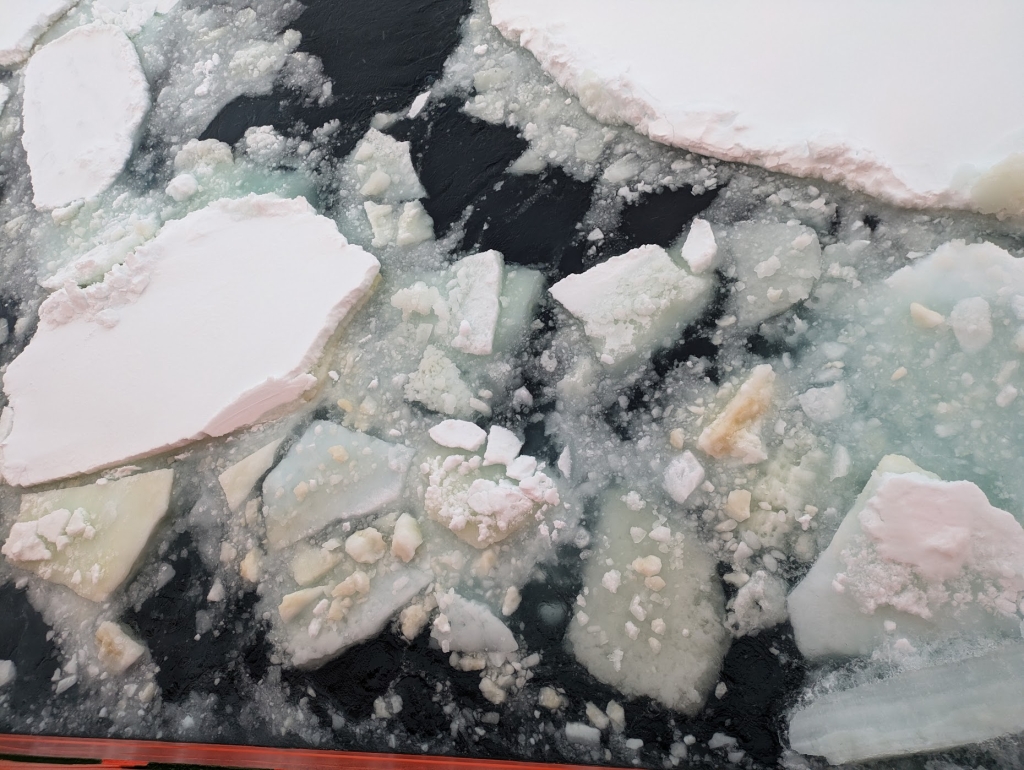
We are interested in the diatoms. Not only do they look insanely beautiful under a microscope (thanks to their varied frustules made of silica), but they are the primary producer in the Southern Ocean. Diatoms comprise the backbone of marine food webs and play a vital role in the cycling of matter on Earth. The life and death of diatoms is intricately woven into critical processes on Earth, like the nitrogen cycle and carbonate-silicate cycle. And because they photosynthesize, diatoms take in carbon dioxide and produce oxygen. A single diatom is microscopic, but their vast quantities, especially in the Southern Ocean, are responsible for a huge chunk of the oxygen on Earth: an estimated 20%. Scientists measure the levels of chlorophyll in the ocean to look for areas of high productivity from phytoplankton; a “bloom“. As we move through our research transect, I look at chlorophyll levels so we can determine where diatoms are currently thriving. This, in turn, helps inform our proxies measurements for past ocean and climate patterns.
The procedure
I was assigned to be in charge of filtering, extracting, and analyzing the chlorophyll from our seawater samples. Since my undergrad degree is in biology, I have a pretty good grasp on chlorophyll and photosynthesis. I did quite a bit of work in the biology and chemistry labs in college, so I’m familiar with some of the instruments and tools we are using. However, many of the practices and procedures were new to me when I stepped on the ship. Luckily, I have had some very patient people with more experience than me to teach me the ropes.
CTD Sampling
The first thing I have to do is collect seawater samples from the CTD early in the morning. CTD stands for conductivity, temperature, and depth, respectively, and the instrument which measures these things and collects seawater while doing so is commonly referred to as “the CTD”.
The CTD has a rosette of 24 Niskin bottles. These bottles can open at certain depths specified by scientists. The electronics technician (ET) controls the sensors on the CTD from a computer, while a ship crew member operates the crane which lowers the CTD into the ocean. Marine technicians (MTs) ensure the CTD is properly attached to the winch and oversee its deployment.
The CTD goes into the ocean at 6:00 AM every morning and moves through the water column at a speed of about 15 meters per minute. This means that it won’t come back up to the surface for an hour or more, depending on how deep we are sampling.
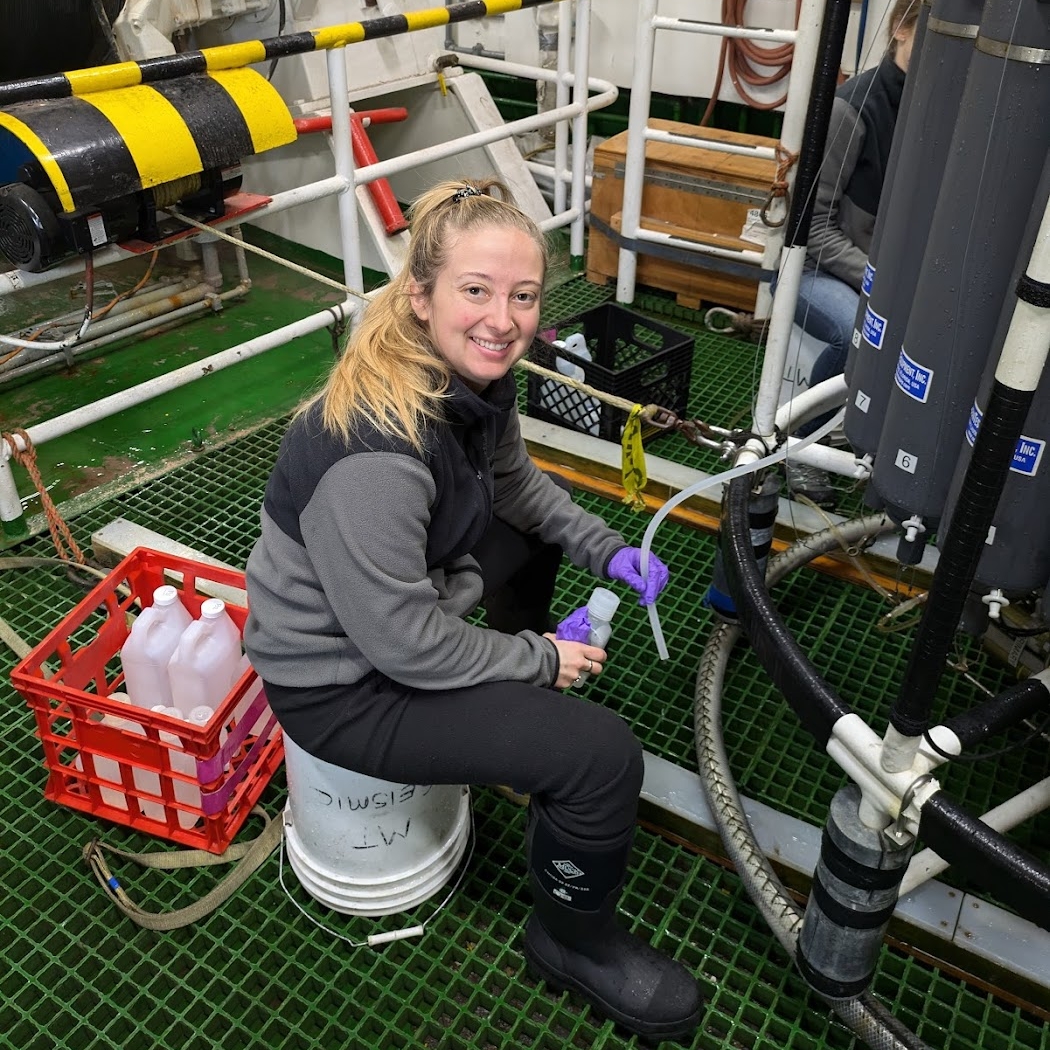
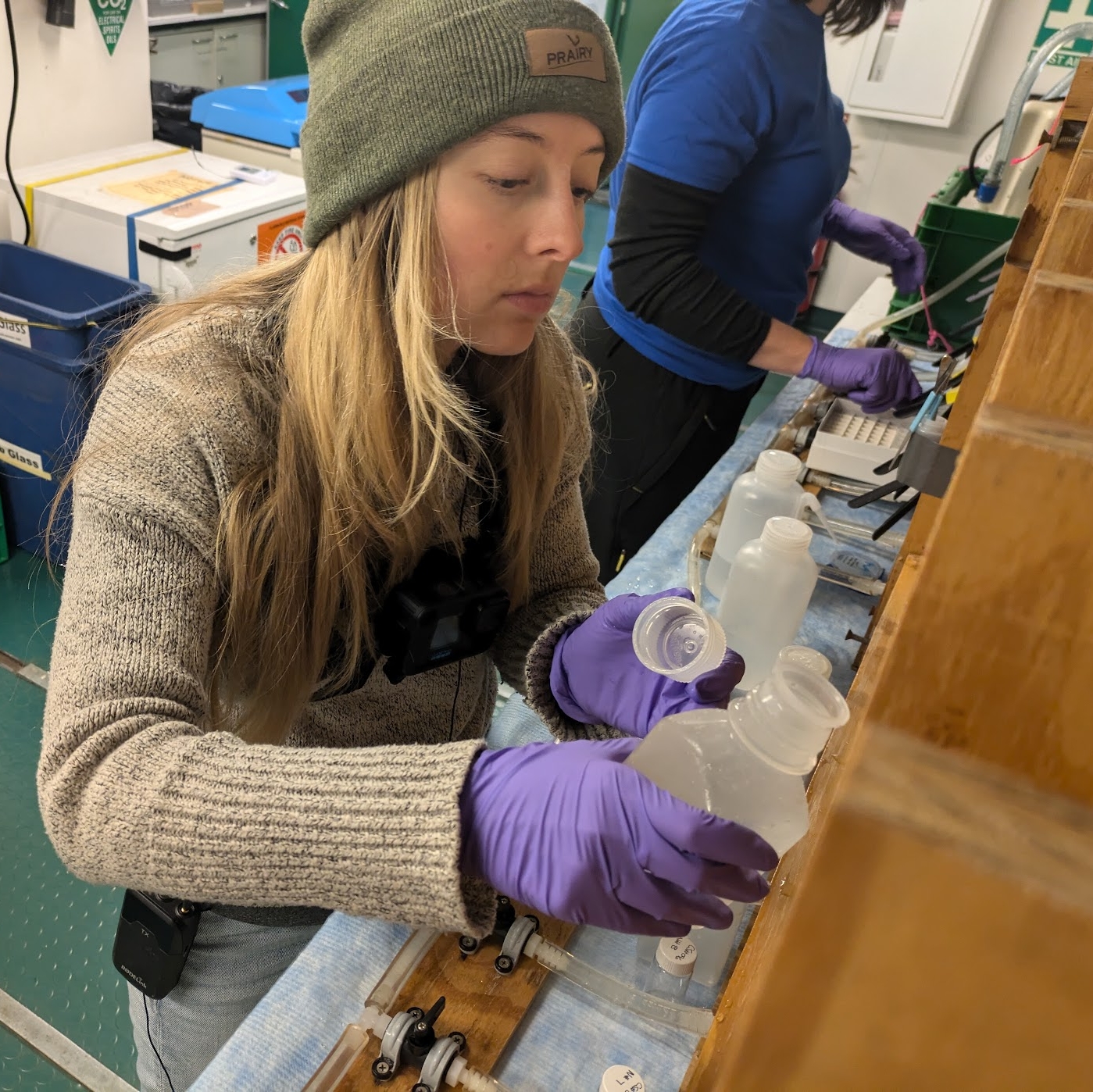
Once the CTD is back to the ship, we can begin collecting samples. Usually, there are about five of us that go in and collect all the samples from the CTD and then distribute them accordingly. We have to stay very organized because there are a lot of bottles which need to be filled with water from different depths.
Some of these samples have to be filtered as soon as they come out of the CTD and others remain unfiltered. The samples go into labeled containers that have to be rinsed with seawater three times before actual collection. It takes about an hour to get all of our samples and the water is really cold, so our fingers are frozen and numb by the end!
Filtering
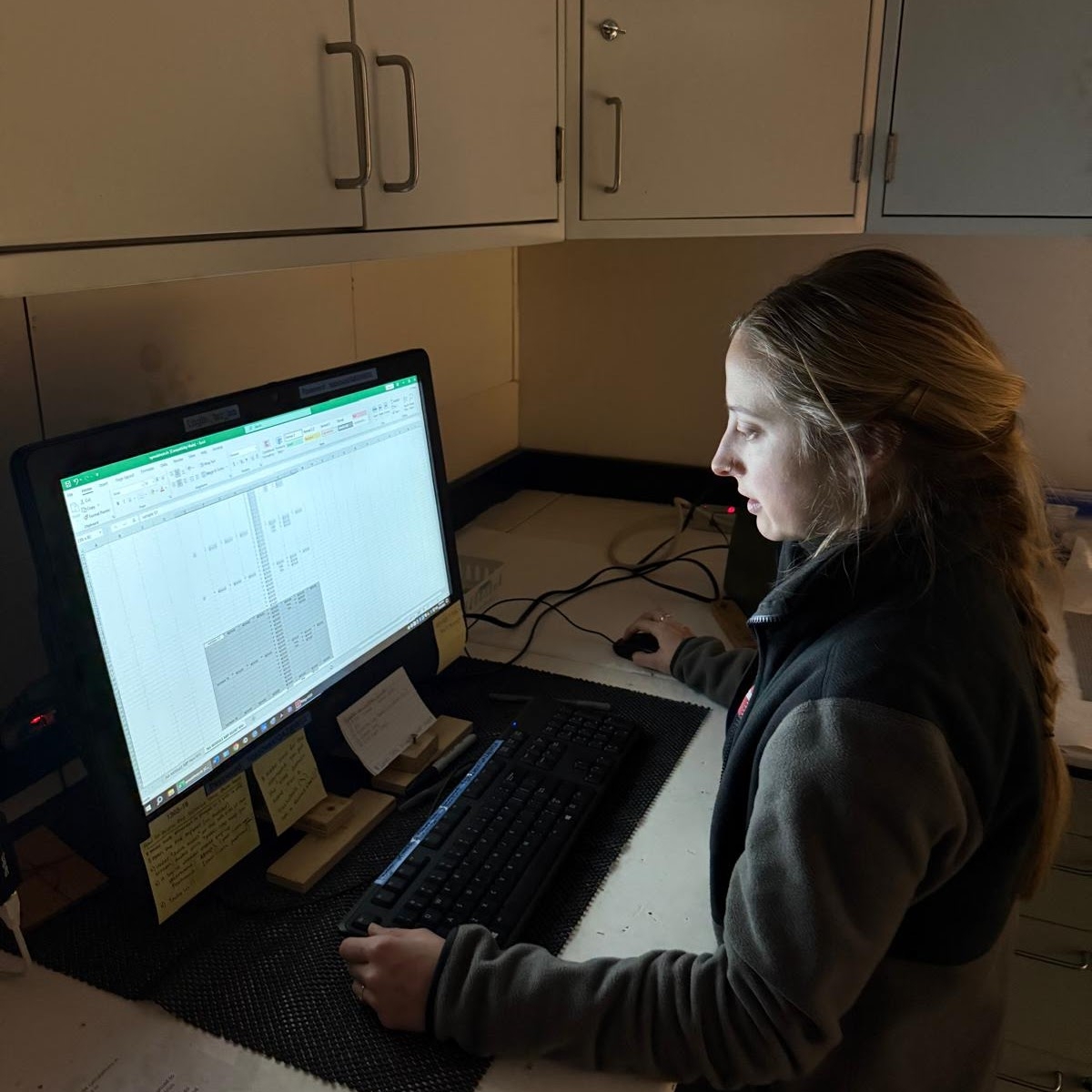
Chlorophyll is light-sensitive, so I have to keep the samples in a dark box until they are all collected. After that, I head to the bio lab to start filtering. I pour each of the bottles into a special cup that has a very fine filter at the bottom. This filter allows water and other types of molecules to pass through, but stops the chlorophyll so it collects on top of the filter. Then I take that filter and put it in a glass scintillation vial in the freezer for 24 hours.
Extraction
Next, I extract the chlorophyll by adding 90% acetone to each of the vials and placing them back in the freezer for another 24 hours.
Fluorometer Reading
After that, the each sample goes into an instrument called a fluorometer, which basically tells us how much chlorophyll is in that sample. These results are compiled with the rest of our data which will ultimately help us understand how diatoms have utilized nitrogen and silicon in the past. Since their frustules are well-preserved in sediment which is readily upwelled in the Southern Ocean, we can use the data we collect here to help us make predictions about future trends in the ocean and climate.
What are other scientists doing?
My chlorophyll collecting, filtering and analyzing is only one small part of the larger research project taking place aboard the Nathaniel B. Palmer. Some of the seawater samples from the CTD get filtered like mine, but with a different type of filter which holds the biogenic silica. Some of the seawater samples are filtered for diatom DNA and RNA analysis. Some of the water goes on to be tested for nitrates, ammonium, or dissolved silica. Other samples are analyzed under a microscope to determine diatom community assemblage. Some of our collected samples even get sent back to California to be further studied in a university lab.
The CTD is not our only method of collection, either. Several scientists are using pumps and nets to collect enough larger amounts of biomass for nitrogen isotope and silicon isotope analysis.
A grow-out experiment is also taking place, which involves a scientist taking diatoms from the ocean and providing them with controlled amounts of light and nutrients in which to grow. A special dye is then added which allows us to see how much silica the diatoms are taking in, further informing our ideas about how they survive under certain limitations.